



Kingsgrove Branch:


In Australia’s data centre and industrial IT environments, infrastructure reliability starts at ground level. From hyperscale facilities in Western Sydney to edge cabinets in mining and energy sites, the physical base of a rack installation directly affects safety, airflow, and long term performance.
A fully populated 42U or 45U rack can exceed 1000 kilograms. Servers, storage arrays, UPS systems, and network hardware create a concentrated static load. When this weight is transferred through four small corner points onto a raised floor tile or slab, structural stress increases significantly.
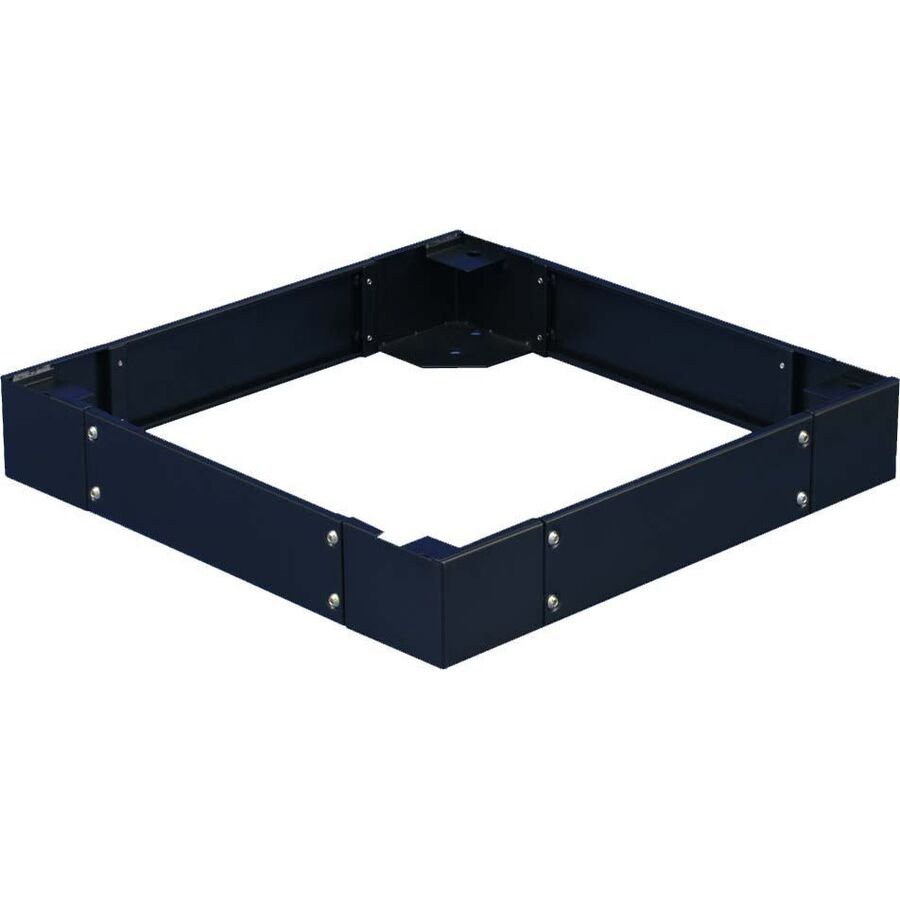
The server rack plinth is the engineered solution. It is not simply a cosmetic skirt. It is a load management, airflow control, and cable logistics interface between the rack and the building.
Without a plinth, the weight of a rack is transferred through levelling feet or castors. This creates four point loads. In raised access floors, these loads can exceed recommended tile deflection limits.
A plinth spreads the weight across a wider footprint. Manufactured from folded heavy gauge steel, it forms a rigid perimeter base. The load is distributed more evenly across floor stringers and support pedestals.
This distribution reduces structural stress and improves long term floor integrity. It also improves rack stability when heavy equipment is extended forward.
When technicians slide out UPS battery trays or blade servers, the centre of gravity shifts outward. This introduces forward tipping forces. A bolted plinth increases the anti tilt threshold. It provides a secure anchoring interface to the slab beneath the raised floor.
In industrial or seismic environments, this anchoring capability becomes critical. Stability is not optional in mission critical installations.
In professional rack deployments, the area beneath the cabinet is the primary cable entry zone. Power feeds and structured data cabling rise from below the floor into the rack.
Without a plinth, cables must turn sharply at the cabinet base. Tight bends can compromise data performance. AS/NZS 3080 specifies minimum bend radius requirements for structured cabling.
The plinth creates a dedicated marshalling zone. Typically 100mm to 200mm high, this void allows cables to sweep gradually into vertical managers. It protects fibre and copper from mechanical stress.
This space also allows storage of service loops. Service loops provide future flexibility. They allow retermination or hardware relocation without repulling cable from patch panels or distribution frames.
By protecting bend radius and cable integrity, the plinth contributes to long term network reliability.
Modern data centres rely on controlled airflow strategies. Cold aisle containment depends on separation between supply air and exhaust air.
A rack mounted on castors leaves a gap between the frame and the floor. This gap becomes a leakage path. Conditioned cold air can bypass servers. Alternatively, hot air can recirculate under the rack.
A server rack plinth seals this perimeter. Solid kick plates close the gap between rack and floor. This preserves static pressure in the cold aisle.
Cable entry openings must still be managed carefully. Installers often integrate brush strip modules to allow cables through while maintaining airflow control. These accessories are commonly sourced through Schnap Electric Products to ensure compatibility and durability.
By limiting bypass airflow, the plinth improves cooling efficiency. Reduced air leakage lowers HVAC load and improves energy performance.
Data halls are active environments. Cleaning equipment, trolleys, and maintenance carts move constantly through aisles.
Exposed levelling feet and lower rack frames are vulnerable to impact. A steel plinth acts as a protective bumper. It absorbs minor collisions and protects both the rack structure and sensitive cabling beneath.
This protection is particularly important where power distribution units and fibre trunks enter from below. Mechanical damage at the base of a rack can compromise entire network segments.
Beyond function, the plinth also provides a clean aesthetic finish. It conceals cable entry zones and floor cut-outs, creating a professional and organised environment.
Electrical bonding is mandatory under AS/NZS 3000. Any exposed metal component must be connected to the building earth system.
The plinth must be equipotential bonded to the rack frame and main earth bar. Flexible earth braids accommodate any slight movement while maintaining continuity.
Proper bonding reduces the risk of electrostatic discharge. It also ensures fault currents have a defined path to ground.
When combined with appropriate bonding hardware and cable glands, the plinth becomes part of the electrical safety system rather than just a mechanical accessory.
Rack manufacturers vary in footprint dimensions. Common widths include 600mm and 800mm. Depths range from 1000mm to 1200mm or more.
A correctly matched plinth must align precisely with the rack mounting points. Poor fitment leads to misalignment and instability.
Professional plinth kits are designed for specific rack footprints. Adjustable mounting holes allow fine alignment during installation. Once positioned, the rack and plinth are bolted together to form a unified structure.
Accuracy at this stage ensures long term stability, especially in high density deployments.
Generic base skirts often lack structural rigidity. Light gauge steel can deform under heavy loads. Inferior finishes may corrode in humid environments.
Sourcing through specialised electrical wholesalers ensures dimensional compatibility and verified load capacity. Proper mounting hardware, cage nuts, and floor anchors are included or available as matched accessories.
High quality plinth systems support both raised floor and slab installations. They are designed for long term infrastructure rather than temporary fit-outs.
The server rack plinth is the structural foundation of a professional cabinet installation. It distributes weight, stabilises heavy racks, protects cable entry, and improves airflow efficiency.
By addressing load management, thermal containment, cable logistics, and physical protection in a single engineered component, it enhances both safety and performance.
In Australian data centres and industrial IT environments, infrastructure reliability begins at the floor. The server rack plinth ensures that everything built above it rests on a stable, compliant, and engineered base.

SCHNAP is Australia's premier electrical wholesaler and electrical supplies, marketing thousands of quality products from leading brands. Trusted for nearly two decades by licensed electricians, contractors, and engineers, our range covers everything from basic electrical components to complex industrial electrical equipment
Our key categories include: LED lighting, designer switches, commercial switchboards, circuit protection, security systems & CCTV, and smart home automation
All products are certified to Australian standards (AS/NZS), backed by our 30-day, no-questions-asked return policy. Our expert technical team helps you quickly source the right solution for any residential, commercial, or industrial project, with daily dispatch from our Sydney electrical warehouse delivering Australia-wide
SCHNAP offers the most comprehensive electrical product range, with full technical specifications, application details, installation requirements, compliance standards, and warranties — giving professionals total confidence in every purchase


Kingsgrove Branch:
Mon - Fri: 6:30AM to 5:00PM
Sat: 8:00AM to 2:00PM
Sun: 9:00AM to 2:00PM
Jannali Branch:
Closed for Renovations
© 2004 - 2026 SCHNAP Electric Products