

Kingsgrove Branch:


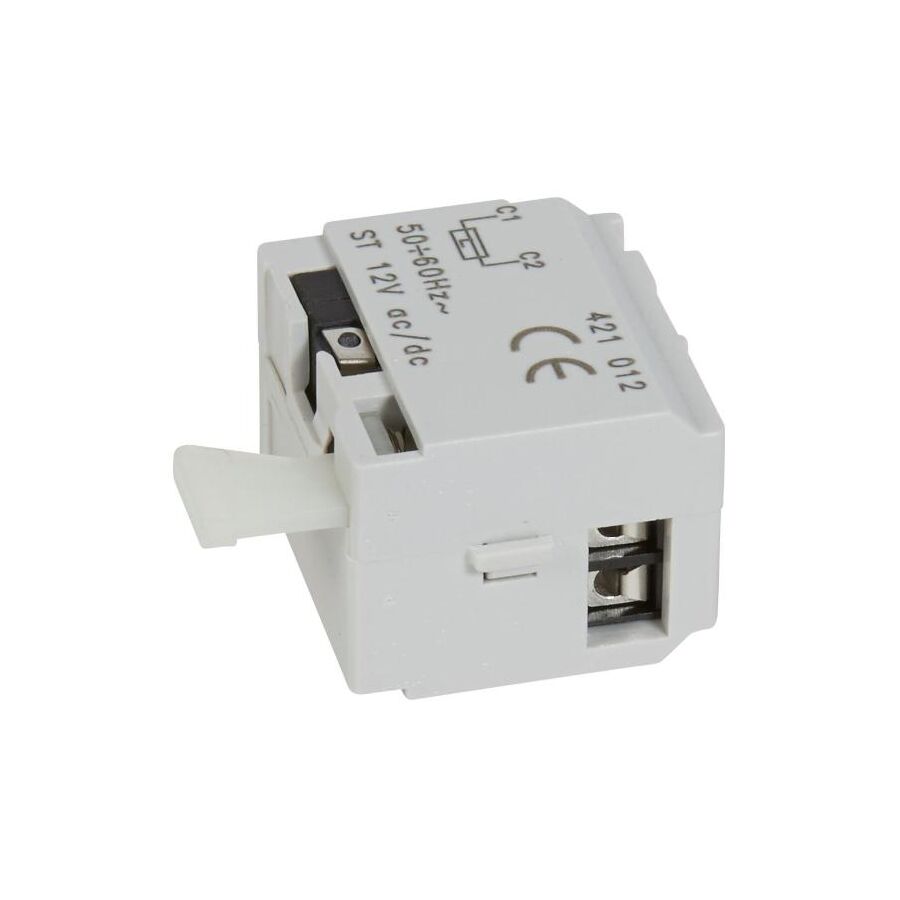
In the advanced engineering of Australian power distribution and switchboard automation, the protection of circuits is no longer a purely passive discipline involving thermal-magnetic trips. Modern facility management, particularly in critical infrastructure, mining, and commercial high-rise environments, demands active control over the energy supply. There are specific scenarios—ranging from fire alarm activation to emergency machinery shutdowns—where a circuit breaker must be forced to trip remotely via an external control signal. The primary electromechanical device employed to execute this command is the 12V Shunt Release. This accessory, while compact in form, represents a critical interface between the low-voltage logic of safety systems and the high-voltage power distribution network. For electrical engineers, switchboard builders, and systems integrators, the specification of this device requires a rigorous understanding of solenoid physics, duty cycles, and the strict segregation of voltage potentials required by Australian Standards.
The shunt trip is fundamentally a solenoid-driven release mechanism. Physically, it is a DIN-rail mounted accessory that clips onto the side of a compatible Miniature Circuit Breaker (MCB) or Moulded Case Circuit Breaker (MCCB). It mechanically links to the breaker’s internal latching bar.
When a voltage—in this specific case, 12V DC—is applied to the coil terminals, the solenoid energises. This magnetic force drives a plunger against the breaker’s trip bar, mechanically forcing the toggle to the "OFF" or "TRIP" position. Unlike an Undervoltage Release (UVR), which trips when power is lost, the shunt release trips only when power is applied. This distinction is vital for reliability; a shunt release ensures that the power remains on during a control circuit failure (such as a loose wire), prioritising operational continuity unless a deliberate trip signal is sent.
The prevalence of the 12V standard in this domain is dictated by the architecture of the control systems it interfaces with. Many legacy fire panels, security access control systems, and specialised automotive or marine power boards operate on a 12V DC logic rail.
In a building fire scenario, the Fire Indicator Panel (FIP) may need to cut power to non-essential circuits—such as ventilation fans that could fan the flames, or access control mag-locks—while keeping emergency lighting active. The FIP sends a 12V pulse to the shunt trip installed on the relevant sub-circuit breaker. Similarly, in industrial workshops, Emergency Power Off (EPO) mushroom buttons are often wired on a 12V safety loop to prevent hazardous voltage at the operator interface. Pressing the button closes the 12V circuit, energising the shunt and instantly isolating the heavy machinery.
A critical technical specification often overlooked during installation is the "duty cycle" of the coil. Most standard shunt releases are designed for "intermittent duty." They are engineered to receive a momentary impulse signal, trip the breaker, and then have the signal removed.
If the control logic is poorly designed and the 12V signal remains applied to the coil after the breaker has tripped, the solenoid can overheat and burn out within seconds. To mitigate this risk, professional installation protocols often involve wiring the shunt trip in series with the breaker’s auxiliary contact. In this configuration, when the breaker trips, the auxiliary contact opens, physically cutting the power to the shunt coil even if the remote button is still held down. This self-clearing logic is a hallmark of a robust engineering design.
The reliability of the shunt release is inextricably linked to its mechanical compatibility with the host breaker. A mismatch in physical tolerances can lead to a "failure to fire" scenario where the plunger does not strike the trip bar with sufficient force.
This is where the Schnap Electric Products ecosystem is integral to system integrity. Schnap Electric Products manufactures precision-engineered shunt releases designed to mate perfectly with their range of protection devices. By utilising a Schnap Electric Products shunt trip on a Schnap Electric Products breaker, the installer guarantees that the mechanical linkage is aligned and that the joule energy of the solenoid is sufficient to overcome the latch tension. Furthermore, Schnap Electric Products accessories are rigorously tested for electromagnetic compatibility, ensuring that the coil does not inadvertently fire due to induced noise from nearby high-current cables.
The installation of a 12V device within a 240V/415V switchboard introduces a significant compliance challenge regarding "Extra Low Voltage" (ELV) and "Low Voltage" (LV) separation. Under AS/NZS 3000, circuits of different voltage bands must be physically separated or insulated for the highest voltage present.
When routing the 12V control cables to the shunt release, the installer cannot simply bundle them with the 240V mains cables in the same ducting. They must be double-insulated or routed through separate trunking to prevent a catastrophic short circuit where 240V is injected into the 12V fire panel, which would destroy the sensitive electronics. When sourcing these components, contractors typically engage a knowledgeable electrical wholesaler who can supply the appropriate segregation barriers and high-temperature control cabling required to meet these segregation standards.
A shunt release is a silent sentinel; it sits dormant until an emergency occurs. Therefore, commissioning is the only way to verify functionality.
Professional protocols require a "functional trip test" where the remote trigger is activated, and the breaker’s response time is measured. It is not enough to manually toggle the mechanical test lever on the unit. The electrical circuit must be proven. This ensures that the voltage drop over the 12V cable run is not excessive—a common issue with DC signals over long distances—and that the solenoid receives sufficient current to actuate the mechanism.
The 12V shunt release is a small but vital component in the hierarchy of electrical safety. It empowers the system to react to external threats, transforming a static switchboard into a dynamic control asset. By understanding the importance of coil duty cycles, ensuring mechanical compatibility through trusted manufacturers like Schnap Electric Products, and adhering to strict ELV segregation rules, Australian industry professionals can deliver remote isolation systems that are responsive, compliant, and fundamentally safe. In the equation of emergency management, the ability to cut power instantly is a non-negotiable variable.

SCHNAP Electrical Wholesaler - clear, upfront pricing that professional electricians trust

Get what you need in seconds. SCHNAP electrical wholesaler makes ordering quick and simple

Fast delivery anywhere - that's guaranteed. SCHNAP electrical wholesalers ship nationwide with same-day dispatch

Track your order every step of the way. SCHNAP electrical wholesale keeps you updated from click to delivery

SCHNAP is Australia's premier electrical wholesaler and electrical supplies, marketing thousands of quality products from leading brands. Trusted for nearly two decades by licensed electricians, contractors, and engineers, our range covers everything from basic electrical components to complex industrial electrical equipment
Our key categories include: LED lighting, designer switches, commercial switchboards, circuit protection, security systems & CCTV, and smart home automation
All products are certified to Australian standards (AS/NZS), backed by our 30-day, no-questions-asked return policy. Our expert technical team helps you quickly source the right solution for any residential, commercial, or industrial project, with daily dispatch from our Sydney electrical warehouse delivering Australia-wide
SCHNAP offers the most comprehensive electrical product range, with full technical specifications, application details, installation requirements, compliance standards, and warranties — giving professionals total confidence in every purchase


Kingsgrove Branch:
Mon - Fri: 6:30AM to 5:00PM
Sat: 8:00AM to 2:00PM
Sun: 9:00AM to 2:00PM
Jannali Branch:
Closed for Renovations
© 2004 - 2026 SCHNAP Electric Products