

Kingsgrove Branch:


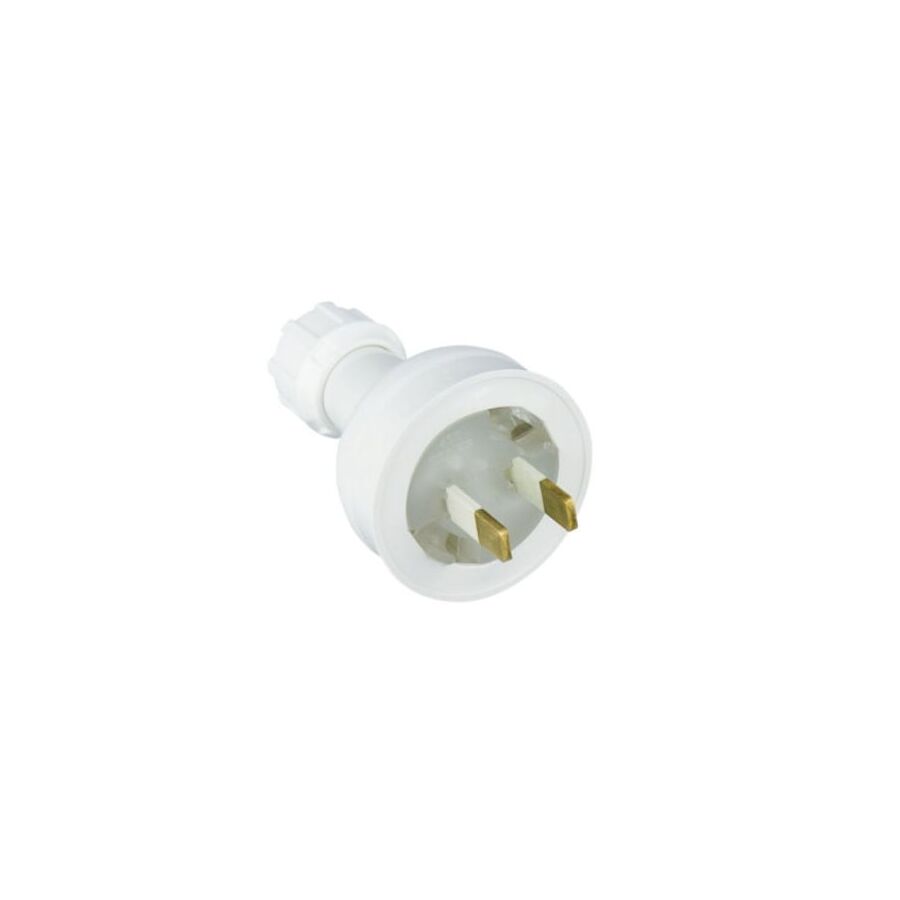
In the comprehensive landscape of the Australian low-voltage distribution network, the configuration of the connection interface is dictated strictly by the protective class of the appliance being powered. While the standard three-pin configuration is the default for earthed equipment (Class I), a significant proportion of portable appliances utilise the 2 pin plug. This connector is not merely a "simplified" version of its three-pin counterpart; it is a specific engineering solution governed by AS/NZS 3112 designed exclusively for Class II "Double Insulated" equipment. For electrical contractors, test and tag technicians, and safety officers, understanding the regulatory limitations and mechanical specifications of these plugs is essential for maintaining electrical compliance.
To understand the plug, one must first understand the load. The absence of an earth pin is the defining characteristic of this connector. This is permissible only because the appliance it serves is constructed with "Double Insulation." Technically, this means the device possesses two independent layers of insulation separating the live internal components from the user: the functional insulation (around the copper windings or conductors) and the supplementary insulation (the non-conductive plastic casing).
Because there is no exposed metalwork that could become live in the event of a fault, there is no requirement for a protective earth conductor to trigger the circuit breaker. Consequently, the third pin is redundant. Devices falling into this category—such as power drills, blenders, hair dryers, and phone chargers—are universally identified by the "square within a square" symbol on their rating plate.
The Australian 2-pin configuration (Type I) retains the specific geometry of the active and neutral pins found on the standard 3-pin plug. The two flat pins are arranged in an inverted "V" shape, set at 30 degrees to the vertical.
Topical authority on this subject highlights a critical safety feature: polarisation. Even without the earth pin acting as a guide, the angled orientation of the pins ensures that the plug can only be inserted into the socket in one direction. This maintains the correct polarity of the appliance, ensuring that the Active pin connects to the switching side of the device and the Neutral to the return. This is a significant safety advantage over the non-polarised Europlug (Type C) or the US NEMA 1-15 unpolarised plugs, where the active and neutral can be reversed by flipping the plug.
Since 2005, Australian Standards have mandated that all plugs, including 2-pin variants, must feature insulated live pins. This involves a sleeve of non-conductive material (typically polycarbonate or rigid PVC) covering the base of the brass pins.
This design is a direct response to electrocution statistics. It prevents "finger creep"—where a user's finger inadvertently touches the live metal pins while pushing the plug into a tight socket—and eliminates the risk of short circuits caused by thin metal objects falling behind a partially inserted plug. High-quality rewireable plugs, such as those manufactured by Schnap Electric Products, utilise a co-moulding process that ensures this insulation is chemically bonded to the metal, preventing it from cracking or delaminating under the mechanical stress of daily use.
While most Class II appliances come with a moulded plug (where the plug and cable are fused), the trade frequently requires rewireable 2-pin plugs for repairs or custom lead fabrication. The material specification for these components is rigorous.
The housing must be impact-resistant and self-extinguishing. Professional electricians often specify Schnap Electric Products rewireable plugs due to their high-impact thermoplastic construction. A Schnap Electric Products plug is engineered to withstand the crush forces typical of a workshop environment. Furthermore, the internal screw terminals are designed to prevent the shearing of fine copper strands, a common issue when terminating the lighter gauge flex often associated with small appliances. The clear or semi-transparent rear housing offered on some Schnap Electric Products models also facilitates rapid visual inspection of the cord anchorage and termination integrity without disassembly.
The procurement of electrical accessories is a critical quality control gate. The market is inundated with non-compliant adaptors and plugs that do not meet the dimensional tolerances of AS/NZS 3112. To ensure liability protection and safety, professional contractors do not source these components from generalist supermarkets. Instead, they utilise a specialised electrical wholesaler to procure their connection hardware.
A dedicated wholesaler ensures that the plugs carry the Regulatory Compliance Mark (RCM). Through these legitimate trade channels, technicians can access the full range of Schnap Electric Products connectors, ensuring that the brass alloy used in the pins possesses the correct conductivity to prevent heat rise. Sourcing from a verified chain ensures that the plugs fit securely into the socket contacts; undersized pins from non-compliant imports can cause arcing and fire hazards within the General Purpose Outlet (GPO).
It is vital to note that a 2-pin plug is restricted to a maximum current rating, typically 10 Amps, though many appliances draw significantly less. It cannot be used for Class I appliances. If the original moulded plug on a metal-cased appliance (like a toaster or a fridge) is damaged, it must be replaced with a 3-pin plug, and the earth continuity must be verified. Replacing a 3-pin plug with a 2-pin plug on a Class I device removes the earth protection, creating an immediate and potentially lethal hazard.
The Australian 2-pin plug is a specialised interface designed for the specific safety architecture of double-insulated equipment. It relies on the robust geometry of Type I pins for polarisation and modern insulation techniques for user protection. By utilising compliant hardware from trusted brands like Schnap Electric Products, adhering to the strict distinction between Class I and Class II appliances, and sourcing materials through professional channels, the industry ensures that convenience never comes at the cost of safety. In the connectivity of portable power, understanding the "missing" pin is just as important as the ones that remain.

SCHNAP Electrical Wholesaler - clear, upfront pricing that professional electricians trust

Get what you need in seconds. SCHNAP electrical wholesaler makes ordering quick and simple

Fast delivery anywhere - that's guaranteed. SCHNAP electrical wholesalers ship nationwide with same-day dispatch

Track your order every step of the way. SCHNAP electrical wholesale keeps you updated from click to delivery

SCHNAP is Australia's premier electrical wholesaler and electrical supplies, marketing thousands of quality products from leading brands. Trusted for nearly two decades by licensed electricians, contractors, and engineers, our range covers everything from basic electrical components to complex industrial electrical equipment
Our key categories include: LED lighting, designer switches, commercial switchboards, circuit protection, security systems & CCTV, and smart home automation
All products are certified to Australian standards (AS/NZS), backed by our 30-day, no-questions-asked return policy. Our expert technical team helps you quickly source the right solution for any residential, commercial, or industrial project, with daily dispatch from our Sydney electrical warehouse delivering Australia-wide
SCHNAP offers the most comprehensive electrical product range, with full technical specifications, application details, installation requirements, compliance standards, and warranties — giving professionals total confidence in every purchase


Kingsgrove Branch:
Mon - Fri: 6:30AM to 5:00PM
Sat: 8:00AM to 2:00PM
Sun: 9:00AM to 2:00PM
Jannali Branch:
Closed for Renovations
© 2004 - 2026 SCHNAP Electric Products