

Kingsgrove Branch:


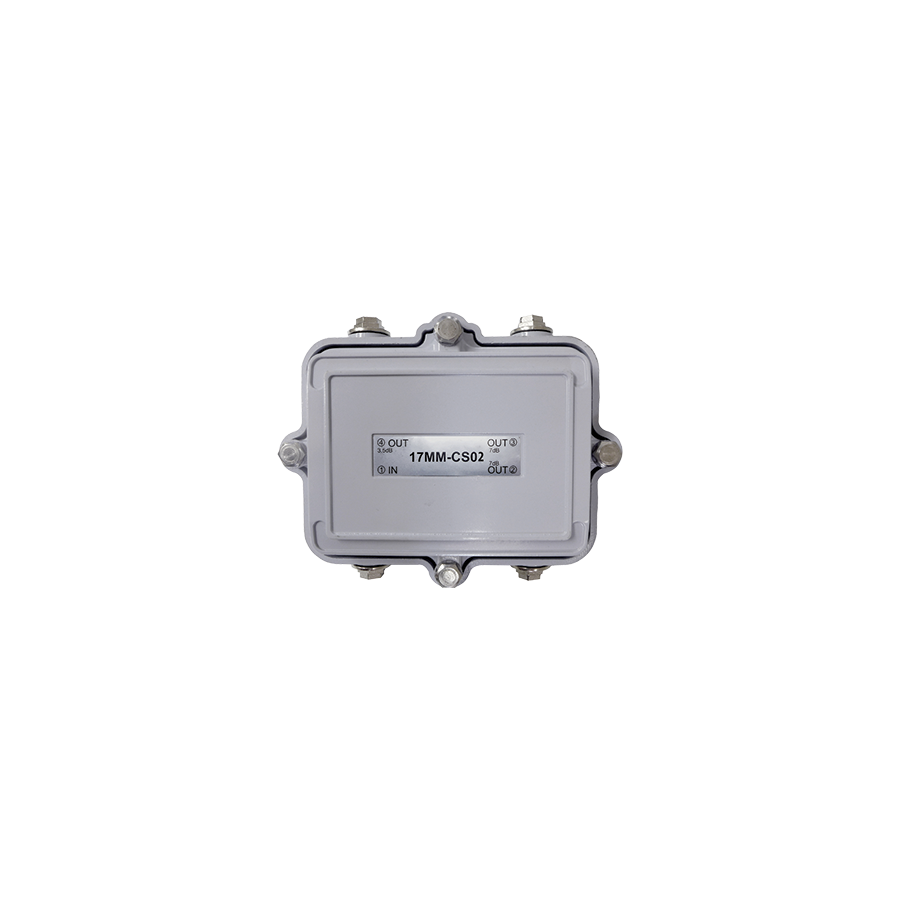
In modern Australian telecommunications, digital broadcasting and broadband services rely on stable coaxial infrastructure. From suburban NBN connections to commercial MATV installations, every passive component in the RF chain influences signal quality.
The 2 Way CATV Splitter is one of the most common yet critical devices in this network. While it appears simple, it is a precision-engineered component designed to divide signal evenly while maintaining 75-ohm impedance stability.
In digital systems using DVB-T2 and DOCSIS technologies, maintaining signal integrity is essential. Poor-quality splitters introduce loss, reflections and noise that can degrade both television and broadband performance.
At SCHNAP Electric Products, we support installers and contractors with compliant RF components and professional accessories aligned with Australian standards.
Splitting an RF signal always results in loss. In a 2-way configuration, the input signal is divided equally between two output ports.
A theoretical 50/50 division results in approximately 3dB loss on each leg. In real-world applications, internal transformer networks and material resistance add additional attenuation.
Professional-grade 2 Way CATV Splitters typically exhibit insertion loss between 3.5dB and 4.0dB across the operating frequency range.
This loss must be accounted for during link budget calculations. Installing a splitter on an already marginal signal may push it below acceptable thresholds, resulting in pixelation, signal dropouts or modem instability.
Accurate signal planning ensures consistent performance across connected devices.
Coaxial cable networks are designed around a 75-ohm impedance standard. Maintaining this impedance across all devices prevents signal reflections.
A poorly manufactured splitter may introduce impedance mismatch. This creates reflection points where RF energy is partially sent back toward the source.
Reflection issues are measured as Return Loss or Voltage Standing Wave Ratio. High VSWR leads to degraded signal clarity and increased bit error rates in digital systems.
A quality 2 Way CATV Splitter maintains consistent 75-ohm impedance across all ports. This ensures signal energy is absorbed by connected devices rather than reflected back into the network.
Stable impedance is fundamental to reliable RF performance.
Modern installations often connect multiple device types to a single splitter. One port may feed a television, while the other supplies a cable modem.
Electronic devices can emit RF noise back into the coaxial line. Without sufficient port-to-port isolation, this noise may transfer between outputs.
Professional splitters provide isolation typically exceeding 20dB to 25dB between ports.
This isolation prevents interference from affecting adjacent devices and maintains the signal-to-noise ratio required for high-speed broadband services.
Strong isolation improves overall network stability and user experience.
In many Australian installations, splitters are positioned downstream from masthead amplifiers requiring DC power.
Splitters may be designed with power passing on all ports, one port or none. Selecting the correct type is critical.
Improper selection may block required DC voltage or unintentionally feed power into sensitive equipment.
Professional installers use splitters with controlled power passing capabilities to ensure proper operation of amplifiers and active devices.
Careful configuration protects both equipment and users.
The Australian RF environment includes high-power LTE and 5G transmissions operating close to television frequencies.
If shielding is inadequate, external signals may penetrate the coaxial network.
High-quality 2 Way CATV Splitters feature die-cast metal housings that provide strong RFI shielding performance.
Shielding effectiveness exceeding 100dB helps prevent ingress and egress interference.
This protection ensures stable performance in both residential and commercial installations.
SCHNAP Electric Products supports installations with compliant shielding accessories and sealing solutions designed for Australian conditions.
The reliability of any RF system depends on connector integrity.
Loose or poorly terminated F-type connectors introduce signal leakage and impedance mismatch.
Professional installations use compression connectors and torque-controlled tools to ensure secure and gas-tight terminations.
SCHNAP Electric Products supplies quality termination tools and 75-ohm connectors suited for modern coaxial systems.
Unused ports must be fitted with 75-ohm terminators to prevent reflections and maintain balanced impedance.
Attention to installation detail reduces service faults and long-term performance issues.
2 Way CATV Splitters are widely used in residential NBN setups, small commercial offices and multi-room television installations.
They allow efficient signal distribution from a single feed to two devices while maintaining system balance.
In MATV systems, they may serve as final distribution points within apartments or office suites.
In commercial broadband installations, they support modem and television coexistence from a shared input feed.
Across all applications, proper splitter selection directly influences signal reliability.
Modern digital services operate across extended frequency ranges. Components must support broadband bandwidth while maintaining flat frequency response.
Low-cost generic splitters may not meet required specifications.
Professional procurement through a trusted electrical wholesaler ensures access to sweep-tested splitters with verified insertion loss and isolation characteristics.
SCHNAP Electric Products supports telecommunications professionals with compliant RF components aligned with Australian carrier standards.
Correct selection protects network integrity and performance.
Routine inspection of connectors and housings supports long-term performance.
Outdoor installations should be protected with weather boots and moisture barriers.
Replacing damaged connectors promptly prevents signal degradation and reflection issues.
Using durable components from SCHNAP Electric Products reduces maintenance frequency and enhances system stability.
The 2 Way CATV Splitter is a fundamental component in digital RF distribution networks. It divides signal evenly while preserving 75-ohm impedance and maintaining port isolation.
Understanding insertion loss, shielding performance and power passing requirements ensures reliable broadband and television services.
By sourcing splitters and installation accessories through SCHNAP Electric Products, Australian professionals build compliant and dependable RF infrastructure.
In digital signal distribution, precision and quality define performance.

SCHNAP Electrical Wholesaler - clear, upfront pricing that professional electricians trust

Get what you need in seconds. SCHNAP electrical wholesaler makes ordering quick and simple

Fast delivery anywhere - that's guaranteed. SCHNAP electrical wholesalers ship nationwide with same-day dispatch

Track your order every step of the way. SCHNAP electrical wholesale keeps you updated from click to delivery

SCHNAP is Australia's premier electrical wholesaler and electrical supplies, marketing thousands of quality products from leading brands. Trusted for nearly two decades by licensed electricians, contractors, and engineers, our range covers everything from basic electrical components to complex industrial electrical equipment
Our key categories include: LED lighting, designer switches, commercial switchboards, circuit protection, security systems & CCTV, and smart home automation
All products are certified to Australian standards (AS/NZS), backed by our 30-day, no-questions-asked return policy. Our expert technical team helps you quickly source the right solution for any residential, commercial, or industrial project, with daily dispatch from our Sydney electrical warehouse delivering Australia-wide
SCHNAP offers the most comprehensive electrical product range, with full technical specifications, application details, installation requirements, compliance standards, and warranties — giving professionals total confidence in every purchase


Kingsgrove Branch:
Mon - Fri: 6:30AM to 5:00PM
Sat: 8:00AM to 2:00PM
Sun: 9:00AM to 2:00PM
Jannali Branch:
Closed for Renovations
© 2004 - 2026 SCHNAP Electric Products