

Kingsgrove Branch:


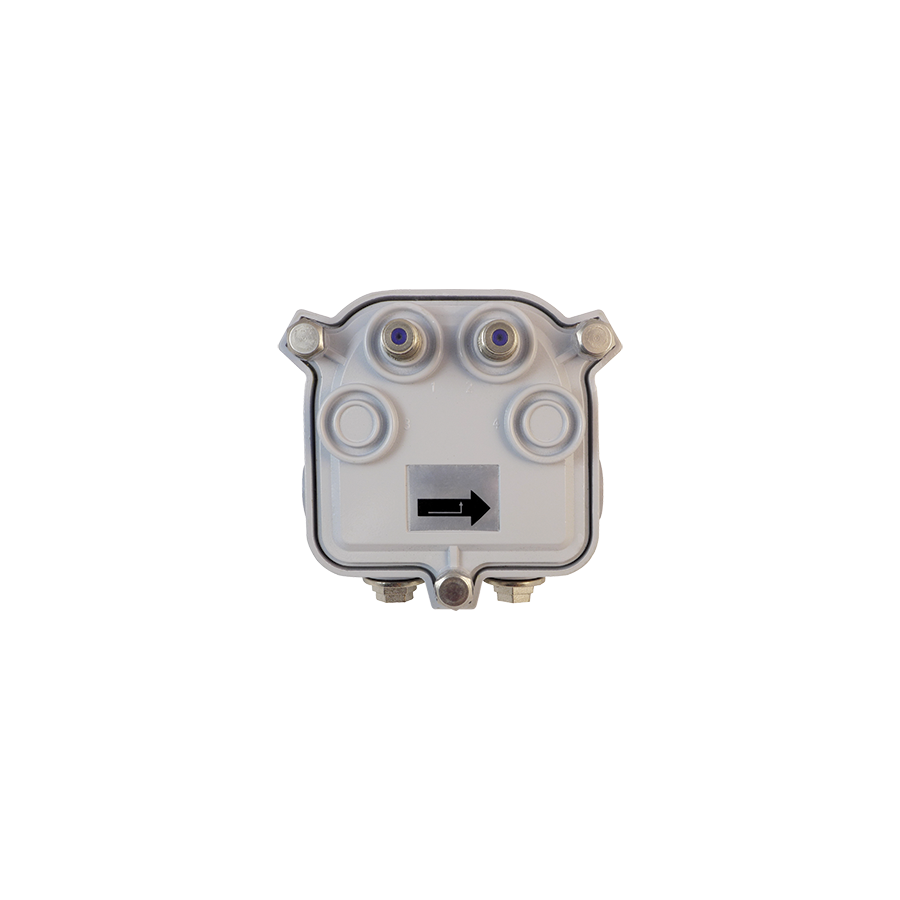
In Australia’s telecommunications and broadcasting infrastructure, Hybrid Fibre Coaxial networks remain essential for broadband and digital television delivery. From multi-storey residential developments to hospitals, hotels and aged care facilities, stable RF signal management determines the quality of service experienced at each outlet.
Unlike simple home installations where a signal may be split once, commercial and multi-dwelling installations rely on structured trunk and drop architectures. In these environments, signal control must be precise and predictable. The 2 Way CATV Tap plays a central role in achieving this balance.
This component is not simply a splitter. It is a directional device designed to extract a controlled portion of signal from a trunk line while preserving downstream strength.
At SCHNAP Electric Products, we support telecommunications professionals with compliant passive components and installation accessories designed for long-term reliability in Australian conditions.
A common misunderstanding is that a CATV tap and a splitter perform the same function. While both feature F-type connectors, their internal operation is very different.
A standard 2-way splitter divides input signal evenly. Each output experiences roughly 3.5dB loss. In a long chain configuration, this loss compounds quickly, leaving downstream outlets with insufficient signal.
A 2 Way CATV Tap operates asymmetrically. It includes one input, one through port and two tap ports. The through port passes most of the signal forward with minimal insertion loss, often below 1dB. The tap ports extract a defined portion of signal based on rated tap value.
For example, a 20dB tap attenuates the signal to the drop ports by 20dB while preserving trunk continuity. This design enables large networks without excessive signal degradation.
Directional coupling ensures efficient signal sampling without compromising overall distribution.
Designing a MATV or HFC network requires precise calculation. RF signals attenuate over distance, and higher frequencies attenuate more rapidly than lower ones.
Engineers must account for cable length, frequency slope and device insertion loss when planning distribution.
In a multi-level building, tap values are selected strategically. Upper floors further from the headend may use lower tap values to extract more of the weakened signal. Lower floors closer to amplifiers may require higher tap values to prevent overload.
The objective is to maintain signal levels within an optimal window at every wall plate, typically between 0dBmV and +10dBmV.
Accurate balancing prevents distortion, pixelation and modem instability.
Modern HFC networks are bi-directional. The return path carries upstream data from cable modems to network nodes.
High-speed broadband services rely on stable return path performance. Poor isolation between drop ports can allow interference from one outlet to affect others.
Professional 2 Way CATV Taps offer strong port-to-port isolation, often exceeding 25dB. This prevents noise bleed and supports advanced modulation schemes used in DOCSIS 3.1 networks.
Reliable isolation maintains signal-to-noise ratio and supports high-speed data performance.
Australia’s RF spectrum includes powerful LTE and 5G transmissions adjacent to CATV frequencies. Poorly shielded taps allow external interference to enter the network.
High-quality taps use die-cast metal housings with sealed construction to achieve strong RFI shielding performance.
Shielding levels above 100dB reduce the risk of ingress that could disrupt television and broadband signals.
In outdoor environments, protection against moisture and dust is essential. Weather-sealed ports and robust enclosures support long-term stability.
SCHNAP Electric Products offers supporting accessories including sealing boots and termination solutions designed for Australian climates.
The most common failure point in coaxial systems is poor termination. Loose or improperly installed connectors create impedance mismatch and signal reflections.
Professional installations require compression connectors and calibrated torque tools to ensure secure connections.
SCHNAP Electric Products supports installers with high-quality coaxial termination tools and accessories that maintain 75-ohm impedance integrity.
Unused tap ports must be terminated with 75-ohm resistors to prevent reflections and maintain network balance.
Attention to detail during installation ensures optimal long-term performance.
2 Way CATV Taps are widely used in multi-dwelling units, commercial complexes and hospitality venues.
In apartment buildings, they distribute broadband and digital television from a central riser to individual units.
In healthcare and aged care facilities, they support stable media and communication services across large campuses.
In hospitality settings, they ensure consistent signal strength to guest rooms while maintaining trunk integrity.
Across these environments, proper signal balancing directly influences user experience.
Not all products marketed as taps meet required bandwidth specifications. Modern networks operate across wide frequency ranges extending beyond traditional analog systems.
Using substandard components can create bottlenecks that limit broadband performance.
Professional procurement through a trusted electrical wholesaler ensures sweep-tested taps with verified return loss and isolation performance.
SCHNAP Electric Products supports network designers with compliant components suited to modern Australian infrastructure.
Correct selection protects network integrity and future readiness.
Periodic inspection of enclosures and connectors helps identify potential moisture ingress or mechanical strain.
Thermal expansion and environmental exposure can affect outdoor installations. Regular checks ensure secure fittings and stable signal performance.
Maintaining proper terminations and replacing damaged connectors promptly preserves system balance.
Using high-quality components from SCHNAP Electric Products reduces maintenance frequency and improves network resilience.
The 2 Way CATV Tap is a precision device designed for controlled RF distribution in complex HFC and MATV systems. Its directional coupler architecture preserves trunk strength while delivering balanced signal levels to subscriber outlets.
Correct tap selection, proper installation and strong shielding are essential for maintaining broadband and digital television quality.
By sourcing components and installation accessories through SCHNAP Electric Products, telecommunications professionals ensure compliant, durable and high-performance network infrastructure.
In RF distribution systems, balance determines performance and reliability.

SCHNAP Electrical Wholesaler - clear, upfront pricing that professional electricians trust

Get what you need in seconds. SCHNAP electrical wholesaler makes ordering quick and simple

Fast delivery anywhere - that's guaranteed. SCHNAP electrical wholesalers ship nationwide with same-day dispatch

Track your order every step of the way. SCHNAP electrical wholesale keeps you updated from click to delivery

SCHNAP is Australia's premier electrical wholesaler and electrical supplies, marketing thousands of quality products from leading brands. Trusted for nearly two decades by licensed electricians, contractors, and engineers, our range covers everything from basic electrical components to complex industrial electrical equipment
Our key categories include: LED lighting, designer switches, commercial switchboards, circuit protection, security systems & CCTV, and smart home automation
All products are certified to Australian standards (AS/NZS), backed by our 30-day, no-questions-asked return policy. Our expert technical team helps you quickly source the right solution for any residential, commercial, or industrial project, with daily dispatch from our Sydney electrical warehouse delivering Australia-wide
SCHNAP offers the most comprehensive electrical product range, with full technical specifications, application details, installation requirements, compliance standards, and warranties — giving professionals total confidence in every purchase


Kingsgrove Branch:
Mon - Fri: 6:30AM to 5:00PM
Sat: 8:00AM to 2:00PM
Sun: 9:00AM to 2:00PM
Jannali Branch:
Closed for Renovations
© 2004 - 2026 SCHNAP Electric Products