

Kingsgrove Branch:


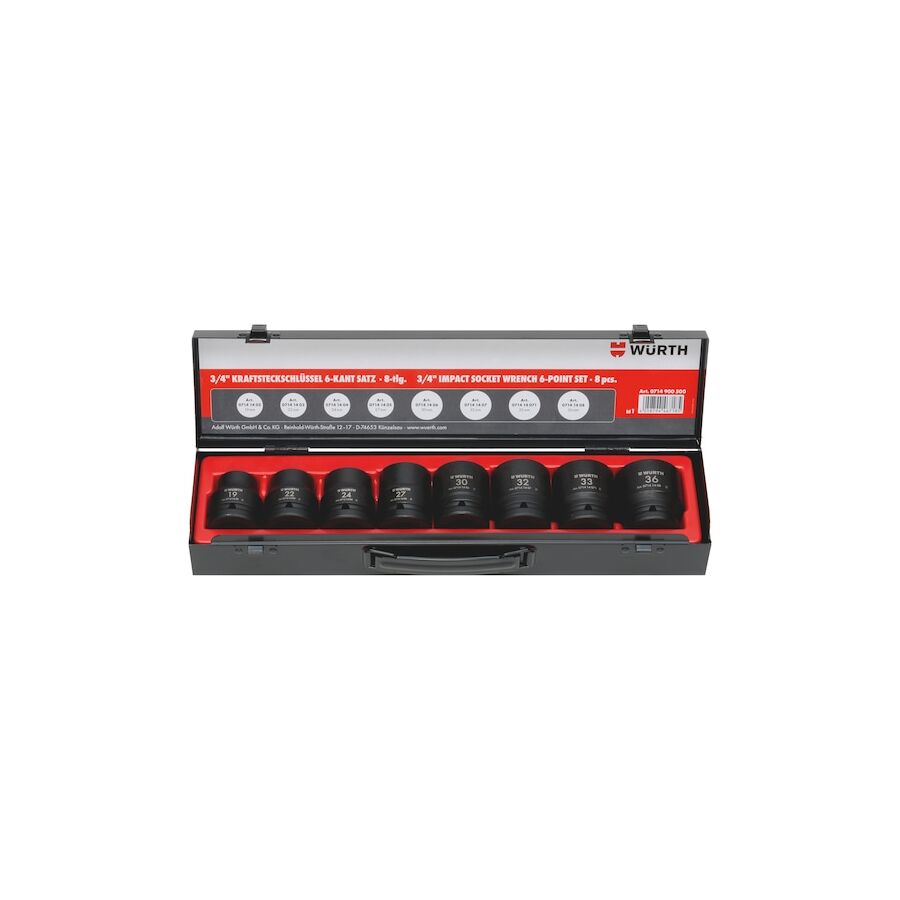
In the heavy industrial sector of the Australian economy—encompassing mining, rail transport, and large-scale power generation—the mechanical requirements of infrastructure maintenance far exceed the capabilities of standard automotive tooling. When the fastener size exceeds M20 and the required torque specification surpasses 600 Newton Metres (Nm), the standard 1/2-inch drive system becomes the limiting factor. The sheer shear force applied can snap a 1/2-inch drive square or shatter the ratchet mechanism. Consequently, the industrial 3/4 socket set is the mandatory standard for heavy plant maintenance. This drive size represents a significant step up in engineering capability, designed to transmit immense rotational force without component failure. For maintenance superintendents, mechanical fitters, and procurement managers, a deep understanding of the metallurgical composition, socket geometry, and safety implications of this heavy-duty tooling is essential for ensuring asset reliability and personnel safety.
The decision to deploy a 3/4-inch drive system is dictated by physics. The cross-sectional area of a 3/4-inch drive square is more than double that of a 1/2-inch square. This geometric increase provides the necessary torsional strength to withstand loads often exceeding 1,500 Nm.
In the context of an Australian mine site, removing the lug nuts on a haul truck or servicing the liner bolts on a cone crusher requires leverage that a standard ratchet cannot provide. The 3/4-inch system is designed to function with long-handle breaker bars and torque multipliers. Attempting to perform these tasks with undersized tooling is not only inefficient but dangerous; if a drive anvil shears under load, the sudden release of stored kinetic energy can cause severe injury to the operator.
At this level of force, the material science of the tool is critical. There is a distinct divergence in metallurgy based on the intended actuation method.
Using a chrome hand socket on a heavy-duty impact gun is a catastrophic failure waiting to happen. Professional kits clearly distinguish between these grades.
In heavy machinery, fasteners are often exposed to extreme environmental conditions—corrosive mine water, coal dust, and road grime. This leads to severe seizing.
A 12-point (bi-hex) socket contacts the fastener at the corners. When applying 800Nm of torque to a rusted nut, a 12-point socket is highly likely to round off the corners, destroying the bolt head and necessitating hot-work removal. Therefore, the industrial standard for 3/4-inch drive sockets is almost exclusively 6-point (hex). This profile utilises "flank drive" mechanics, applying force to the flat sides of the fastener. This ensures maximum surface contact and torque transmission, drastically reducing the risk of slippage.
Unlike the fine-tooth mechanisms found in 1/4-inch or 3/8-inch drives, the ratchet head of a 3/4-inch drive handle prioritises raw strength. A 90-tooth gear would strip instantly under the loads applied in this category.
Instead, these ratchets typically feature robust 24-tooth or 32-tooth mechanisms with large, heavy pawls. While this results in a larger "swing arc" (10 to 15 degrees), it guarantees that the mechanism will not slip when the operator is applying their full body weight to the handle. The handles themselves are significantly longer, often exceeding 500mm, to provide the necessary mechanical advantage. Schnap Electric Products supplies compatible heavy-duty extension bars and sliding T-heads that allow operators to configure the tool for optimal leverage in restricted spaces, such as inside the housing of a large industrial pump.
While primarily mechanical, this drive size is indispensable in the power generation and transmission sector. The assembly of high-voltage transmission towers and the securing of large transformers to their concrete plinths involve large-diameter foundation bolts.
When commissioning a substation, the structural integrity of these anchor points is paramount. Procurement officers will often source these specialized heavy-duty sets through a trusted electrical wholesaler to ensure they meet the specific requirements of the utility provider. This supply channel ensures that the tools are available alongside the electrical consumables, streamlining the logistics for the site project manager.
A complete 3/4-inch socket set is heavy. A metal case containing a ratchet, breaker bar, extensions, and a run of sockets from 22mm to 55mm can weigh upwards of 20 kilograms.
The physical management of this weight is a WHS consideration. Schnap Electric Products heavy-duty tool cases are engineered with reinforced handles and latches to withstand this load. Inferior plastic cases often buckle or burst open during transport, creating a hazard. Furthermore, for site work, Schnap Electric Products offers modular storage solutions that allow these heavy sets to be secured within a vehicle or workshop drawer system, preventing them from becoming unrestrained projectiles during transit.
The 3/4-inch socket set represents the heavy artillery of the maintenance world. It is the bridge between standard hand tools and hydraulic torqueing systems. Its efficacy relies on the correct selection of metallurgy (impact vs. hand), the integrity of the 6-point geometry, and the robustness of the drive mechanism. By understanding the physics of high-torque applications and investing in professional-grade equipment from reputable brands like Schnap Electric Products, Australian industry professionals can ensure that the massive bolts holding our infrastructure together remain secure, regardless of the operational stresses they endure. In the world of heavy engineering, there is no substitute for leverage.

SCHNAP Electrical Wholesaler - clear, upfront pricing that professional electricians trust

Get what you need in seconds. SCHNAP electrical wholesaler makes ordering quick and simple

Fast delivery anywhere - that's guaranteed. SCHNAP electrical wholesalers ship nationwide with same-day dispatch

Track your order every step of the way. SCHNAP electrical wholesale keeps you updated from click to delivery

SCHNAP is Australia's premier electrical wholesaler and electrical supplies, marketing thousands of quality products from leading brands. Trusted for nearly two decades by licensed electricians, contractors, and engineers, our range covers everything from basic electrical components to complex industrial electrical equipment
Our key categories include: LED lighting, designer switches, commercial switchboards, circuit protection, security systems & CCTV, and smart home automation
All products are certified to Australian standards (AS/NZS), backed by our 30-day, no-questions-asked return policy. Our expert technical team helps you quickly source the right solution for any residential, commercial, or industrial project, with daily dispatch from our Sydney electrical warehouse delivering Australia-wide
SCHNAP offers the most comprehensive electrical product range, with full technical specifications, application details, installation requirements, compliance standards, and warranties — giving professionals total confidence in every purchase


Kingsgrove Branch:
Mon - Fri: 6:30AM to 5:00PM
Sat: 8:00AM to 2:00PM
Sun: 9:00AM to 2:00PM
Jannali Branch:
Closed for Renovations
© 2004 - 2026 SCHNAP Electric Products