

Kingsgrove Branch:


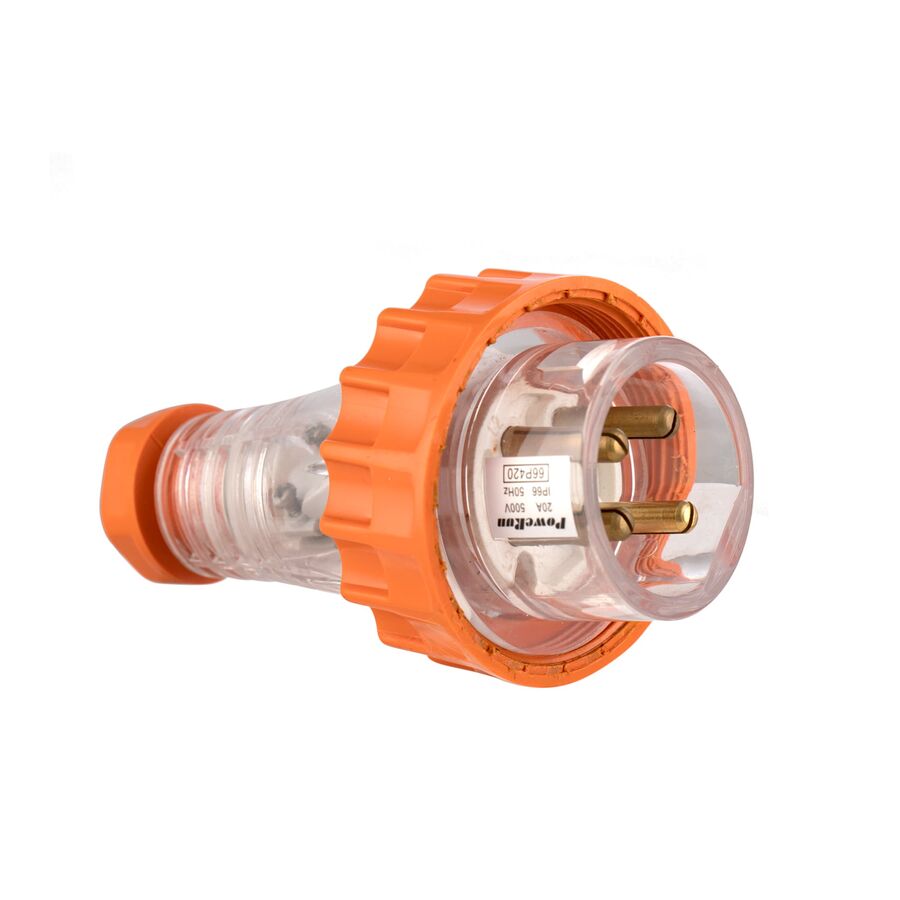
In the dynamic landscape of Australian manufacturing and heavy industry, the distribution of electrical energy is categorised by the specific requirements of the load. While complex machinery often requires a five-pin interface to provide a neutral return for control circuits, a vast array of industrial equipment operates on a purely balanced load. Three-phase induction motors, heating elements, and heavy-duty pumps typically do not require a neutral conductor to function. For these applications, the 4 pin plug is the industry-standard interface. For electrical engineers, plant maintenance managers, and industrial contractors, understanding the specific application, wiring limitations, and environmental protection ratings of these connectors is essential for efficient and compliant plant operation.
The fundamental distinction between the 4-pin and 5-pin variants lies in the circuit topology. The 4-pin connector carries the three active phases (Red, White, Blue or L1, L2, L3) and the protective Earth (Green/Yellow). There is no Neutral pin.
Topical authority on this subject requires an understanding of "balanced loads." In a three-phase motor, the current draws are identical across all three phases, meaning the vector sum of the currents is zero. Consequently, there is no return current to carry, rendering the neutral conductor electrically redundant. By eliminating the unneeded neutral pin, the 4-pin configuration offers a streamlined, dedicated interface for motive power applications. It prevents the accidental connection of machinery requiring 240V control voltage (which needs a neutral) into a supply that cannot provide it, thereby acting as a physical safety barrier against equipment damage.
Governed by AS/NZS 3123, the 4-pin industrial plug is engineered to withstand the rigours of hostile operating environments. Unlike domestic connectors, these units are almost universally rated to IP66 (Ingress Protection).
This rating ensures the unit is completely dust-tight and protected against high-pressure water jets from any direction. This is achieved through a robust screw-locking ring mechanism. When the plug is mated with the socket, the threaded ring compresses a sealing gasket, creating a watertight barrier. This is where the material quality of brands like Schnap Electric Products is critical. Schnap Electric Products industrial plugs utilise high-grade UV-stabilised thermoplastics for the locking ring, ensuring it does not degrade or crack under the harsh Australian sun or aggressive wash-down chemicals, maintaining the integrity of the IP seal over the asset's lifecycle.
Safety in high-voltage industrial applications is reinforced through physical dimensional exclusion. The 4-pin plug series is manufactured in standard current ratings of 10A, 20A, 32A, 40A, and 50A.
Crucially, the physical dimensions of the pins and the housing diameter increase with the amperage rating. A 32A plug physically cannot fit into a 20A socket. This "keying" prevents an operator from inadvertently overloading a circuit. Furthermore, the Earth pin is always larger and longer than the phase pins. This ensures the "Make-First-Break-Last" safety protocol, guaranteeing that the equipment chassis is effectively earthed before the active phases are energised, and remains earthed until the phases are fully disconnected during withdrawal.
The industrial environment is unforgiving. Plugs are dragged across concrete floors, dropped from heights, and exposed to oils, greases, and solvents. Standard PVC housings are often insufficient for these conditions.
Professional specifications demand housings made from high-impact Polycarbonate or Polybutylene Terephthalate (PBT). These materials provide superior mechanical strength and dielectric properties. Schnap Electric Products connectors are engineered to resist impact shock and maintain their structural form even at high operating temperatures. The internal cable clamp in a Schnap Electric Products unit is designed to grip the heavy outer sheath of circular orange industrial cable firmly, preventing strain on the copper terminations even when the cable is under significant tension.
The procurement of industrial switchgear is a matter of strict regulatory compliance. The market contains non-compliant generic imports that may not withstand the glow-wire test requirements of Australian Standards. To ensure the safety and longevity of the installation, professional contractors do not source these critical components from general hardware outlets. Instead, they utilise a specialised electrical wholesaler to procure their industrial connectors.
A dedicated wholesaler ensures that the stock carries the RCM (Regulatory Compliance Mark) and is suited to Australian voltage conditions (415V). Through these verified trade channels, technicians can access the full range of Schnap Electric Products 4-pin plugs and matching switched socket outlets. This supply chain integrity ensures that the brass pins are of sufficient gauge to handle the thermal rise associated with continuous motor loads without oxidation or arcing.
Terminating a 4-pin plug requires strict adherence to phase rotation protocols. For a three-phase motor, the sequence in which the phases are connected (L1, L2, L3) dictates the direction of rotation.
If L1 and L2 are swapped, the motor will run in reverse. In applications such as scroll compressors or centrifugal pumps, running in reverse—even for a few seconds—can cause catastrophic mechanical failure. Professional electricians utilise a phase rotation meter to verify the field direction before energising the equipment. The terminals within Schnap Electric Products plugs are clearly marked to assist with correct termination sequence. Furthermore, the screw terminals are engineered to accept bootlace ferrules, ensuring that every strand of the fine multi-wire conductor is captured, maximising conductivity and minimising the risk of "hot spots" developing within the plug body.
The 4-pin industrial plug is a specialised component designed for the efficient transmission of three-phase power to balanced loads. Its robust design, characterised by the absence of a neutral pin and the inclusion of IP66 sealing, makes it the ideal solution for powering motors and heavy plant equipment. By utilising high-quality hardware from trusted brands like Schnap Electric Products, adhering to the dimensional standards of AS/NZS 3123, and sourcing materials through professional supply chains, facility managers ensure that their industrial operations remain safe, compliant, and productive. In the world of heavy industry, the reliability of the connection drives the productivity of the plant.

SCHNAP Electrical Wholesaler - clear, upfront pricing that professional electricians trust

Get what you need in seconds. SCHNAP electrical wholesaler makes ordering quick and simple

Fast delivery anywhere - that's guaranteed. SCHNAP electrical wholesalers ship nationwide with same-day dispatch

Track your order every step of the way. SCHNAP electrical wholesale keeps you updated from click to delivery

SCHNAP is Australia's premier electrical wholesaler and electrical supplies, marketing thousands of quality products from leading brands. Trusted for nearly two decades by licensed electricians, contractors, and engineers, our range covers everything from basic electrical components to complex industrial electrical equipment
Our key categories include: LED lighting, designer switches, commercial switchboards, circuit protection, security systems & CCTV, and smart home automation
All products are certified to Australian standards (AS/NZS), backed by our 30-day, no-questions-asked return policy. Our expert technical team helps you quickly source the right solution for any residential, commercial, or industrial project, with daily dispatch from our Sydney electrical warehouse delivering Australia-wide
SCHNAP offers the most comprehensive electrical product range, with full technical specifications, application details, installation requirements, compliance standards, and warranties — giving professionals total confidence in every purchase


Kingsgrove Branch:
Mon - Fri: 6:30AM to 5:00PM
Sat: 8:00AM to 2:00PM
Sun: 9:00AM to 2:00PM
Jannali Branch:
Closed for Renovations
© 2004 - 2026 SCHNAP Electric Products