

Kingsgrove Branch:


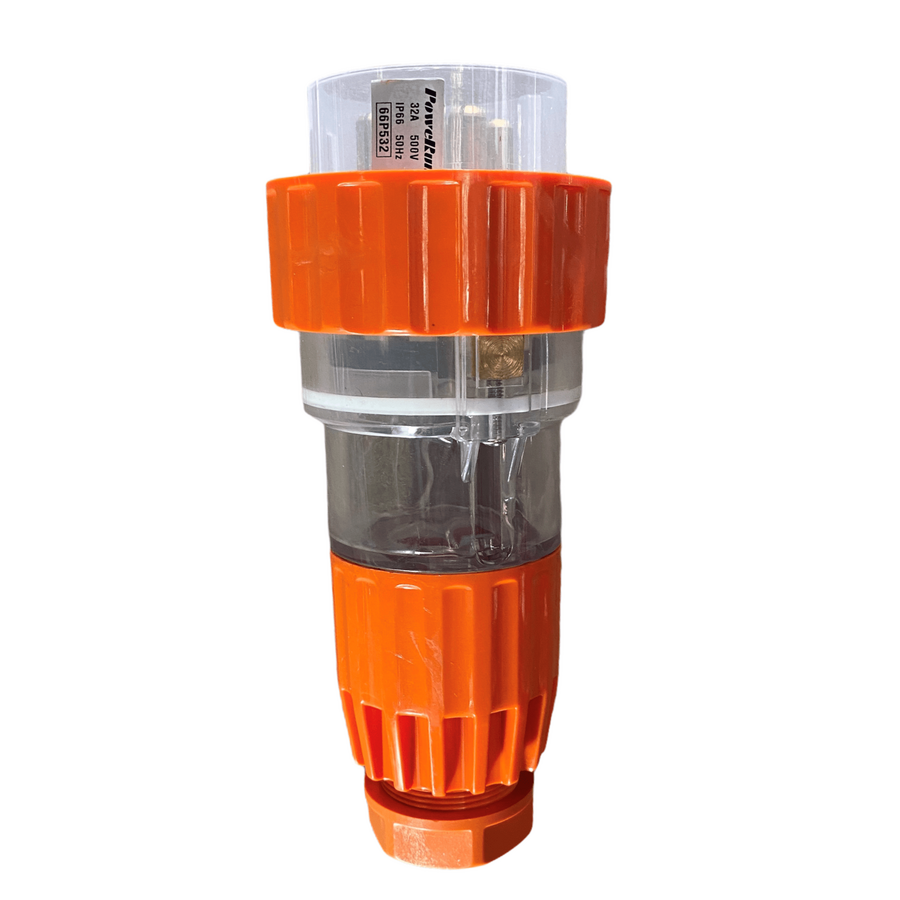
In the heavy industrial and commercial sectors of the Australian economy, the standard single-phase 240V supply is insufficient for the high-torque and high-load demands of machinery. From commercial refrigeration units and injection moulding machines to large-scale induction motors, the distribution of energy relies on a 415V three-phase system. While the fixed wiring handles the distribution, the final connection to portable or semi-permanent plant equipment is facilitated by the industrial 5 pin plug. For electrical engineers, plant managers, and industrial contractors, understanding the pin configuration, environmental ratings, and material science of these connectors is fundamental to maintaining operational continuity and safety compliance.
To the untrained eye, the distinction between a 4-pin and a 5-pin industrial plug may seem trivial, yet it dictates the operational capability of the connected equipment. Both variants are governed by the rigorous standards of AS/NZS 3123 (Plugs, socket-outlets and couplers for general industrial application).
The 4-pin variant carries the three active phases (L1, L2, L3) and Earth. This configuration is sufficient for balanced loads like simple heating elements or motors that do not require a neutral reference. However, the 5-pin configuration introduces a Neutral conductor to the interface. This additional pole is critical for machinery that requires a star-point connection or necessitates a 240V control circuit derived from one of the 415V phases. By providing the neutral return path, the 5-pin interface allows complex machinery to operate onboard electronics, contactors, and digital displays without requiring a separate step-down transformer or a secondary power supply.
Unlike the domestic environment where connectors are protected from the elements, industrial connections are exposed to aggressive contaminants. The standard industrial 5-pin connector is almost universally specified as a "Round Pin" design with an Ingress Protection rating of IP66.
This rating certifies that the connection is dust-tight and protected against powerful jets of water. The mechanical integrity of this seal relies on the threaded locking ring—a captive collar on the plug that screws onto the nose of the socket. When tightened, this ring compresses a silicone or neoprene gasket, hermetically sealing the electrical contacts from the environment. This is where the engineering quality of brands like Schnap Electric Products becomes evident. A Schnap Electric Products industrial plug features a chemically resistant locking ring that does not brittle under UV exposure or strip threads after repeated mating cycles, ensuring the IP66 rating is maintained for the life of the asset.
Safety in industrial connectivity is enforced through physical dimensional exclusion. A 5-pin plug is manufactured in specific current ratings, typically 10A, 20A, 32A, 40A, and 50A. It is physically impossible to insert a 32A plug into a 20A socket due to precise manufacturing tolerances.
This "keying" is achieved by varying the diameter of the circle on which the pins are arranged, as well as the size of the pins themselves. The Earth pin is always larger than the phase pins to ensure earthing priority (Make-First-Break-Last). When specifying connectors for a new facility, engineers must calculate the maximum demand of the machinery to select the correct amperage. Undersizing a plug—such as attempting to run a machine drawing 28A on a 20A plug—is a catastrophic fire risk, as the contact resistance will generate heat beyond the thermal dissipation limits of the brass pins.
The housing of an industrial plug serves as the primary barrier against mechanical impact and chemical attack. In food processing plants or chemical refineries, plugs are often subjected to caustic wash-down procedures involving acidic or alkaline cleaning agents.
Professional specifications call for housings manufactured from high-impact polycarbonate or PBT (Polybutylene Terephthalate). These materials offer superior resistance to hydraulic oils and solvents compared to standard PVC. Schnap Electric Products connectors are engineered with UV-stabilised thermoplastics that withstand the harsh Australian sun without chalking or cracking. Furthermore, the transparent rear housing available on select Schnap Electric Products models allows maintenance teams to inspect the cable termination and gland compression visually, ensuring no strands have escaped the terminal tunnel which could cause an internal short circuit.
The procurement of three-phase consumables is a critical compliance checkpoint. The market has seen an influx of non-compliant industrial plugs that fail glow-wire testing or possess undersized brass terminals. To ensure the integrity of the electrical installation, professional contractors do not source these components from general online marketplaces. Instead, they utilise a specialised electrical wholesaler to procure their industrial switchgear.
A dedicated wholesaler ensures that the products carry the RCM (Regulatory Compliance Mark) and are tested to Australian voltage conditions. Through these legitimate trade channels, technicians can access the full range of Schnap Electric Products extension sockets and wall-mounted outlets. This supply chain verification ensures that the cable glands supplied with the plug are capable of sealing around the heavy-duty circular orange cable typically used in these applications, preventing moisture ingress at the cable entry point.
A critical aspect of terminating a 5-pin plug is observing the correct phase rotation. In a three-phase motor, the direction of rotation is determined by the sequence of the phases (L1, L2, L3). If two phases are swapped within the plug, the motor will run in reverse.
For pumps and fans, reverse operation can cause immediate mechanical damage to impellers and couplings. Professional electricians utilise a phase rotation meter during the termination process to ensure that the clockwise field is maintained. The Schnap Electric Products terminals are clearly marked to facilitate correct termination. Additionally, the cable anchorage must be tightened to torque specifications. The heavy gauge copper conductors used in three-phase cables exert significant force; if the cable clamp is loose, the conductors will twist within the housing, potentially causing a phase-to-phase short circuit or pulling the active conductors out of their terminals.
The 5-pin industrial plug is the lifeline of Australian heavy industry. It enables the versatile delivery of 415V power with the added utility of a neutral return. Its selection demands a rigorous assessment of current ratings, environmental conditions, and mechanical durability. By utilising robust, IP66-rated hardware from trusted brands like Schnap Electric Products, adhering to AS/NZS 3123 standards, and sourcing materials through verified trade suppliers, facility managers ensure that their machinery operates safely, efficiently, and without interruption. In the high-voltage environment, the quality of the connection defines the reliability of the plant.

SCHNAP Electrical Wholesaler - clear, upfront pricing that professional electricians trust

Get what you need in seconds. SCHNAP electrical wholesaler makes ordering quick and simple

Fast delivery anywhere - that's guaranteed. SCHNAP electrical wholesalers ship nationwide with same-day dispatch

Track your order every step of the way. SCHNAP electrical wholesale keeps you updated from click to delivery

SCHNAP is Australia's premier electrical wholesaler and electrical supplies, marketing thousands of quality products from leading brands. Trusted for nearly two decades by licensed electricians, contractors, and engineers, our range covers everything from basic electrical components to complex industrial electrical equipment
Our key categories include: LED lighting, designer switches, commercial switchboards, circuit protection, security systems & CCTV, and smart home automation
All products are certified to Australian standards (AS/NZS), backed by our 30-day, no-questions-asked return policy. Our expert technical team helps you quickly source the right solution for any residential, commercial, or industrial project, with daily dispatch from our Sydney electrical warehouse delivering Australia-wide
SCHNAP offers the most comprehensive electrical product range, with full technical specifications, application details, installation requirements, compliance standards, and warranties — giving professionals total confidence in every purchase


Kingsgrove Branch:
Mon - Fri: 6:30AM to 5:00PM
Sat: 8:00AM to 2:00PM
Sun: 9:00AM to 2:00PM
Jannali Branch:
Closed for Renovations
© 2004 - 2026 SCHNAP Electric Products