

Kingsgrove Branch:


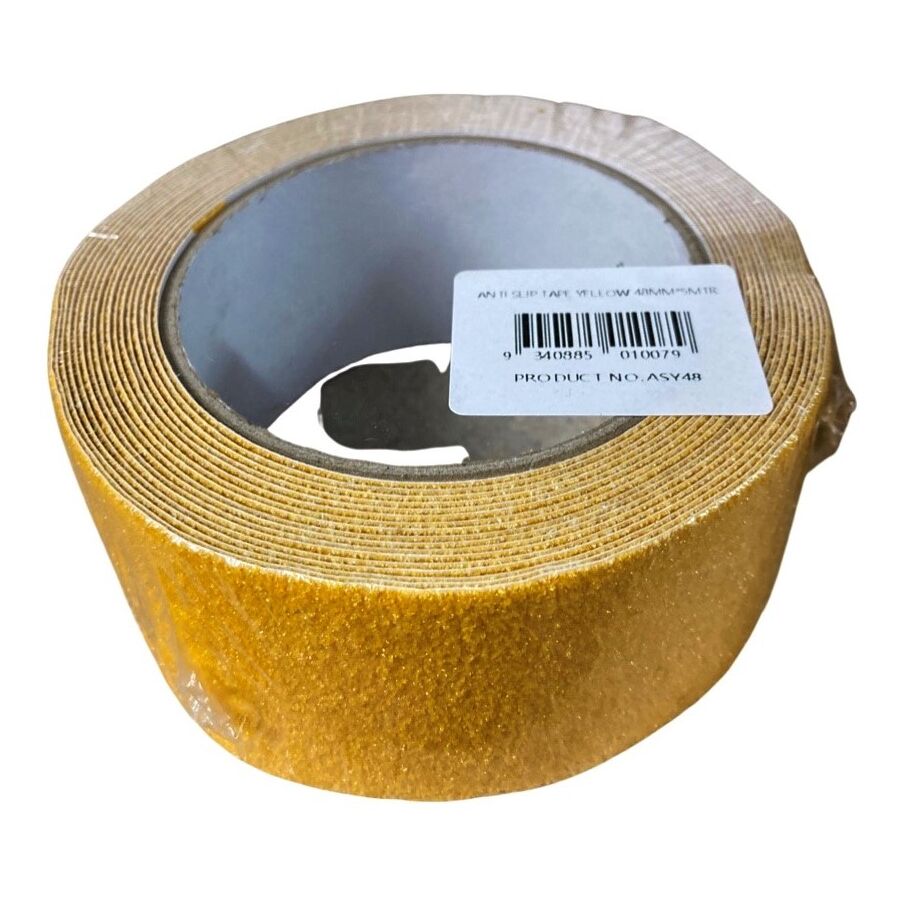
In the rigorous legislative environment of Australian Work Health and Safety (WHS), the prevention of slip, trip, and fall incidents is a primary operational objective. According to Safe Work Australia, falls from height and slips on the same level consistently rank among the most common causes of workplace injury claims. While engineering controls such as drainage and flooring selection are fundamental, the retrofitting of high-traction surfaces using industrial anti slip tape is a critical administrative control. Far from being a simple abrasive strip, professional-grade safety tape is a composite engineering material governed by strict standards regarding friction coefficients, luminance contrast, and adhesive durability. For facility managers, safety officers, and electrical contractors, understanding the classification of slip resistance ratings under AS 4586 is essential for liability management and the protection of personnel.
The efficacy of a traction surface is not subjective; it is quantified by Australian Standard AS 4586 (Slip resistance classification of new pedestrian surface materials). This standard categorises materials based on their ability to generate friction under wet and dry conditions.
Industrial tapes are typically tested using the Oil-Wet Ramp Test, yielding an "R" rating.
Specifying a tape with an insufficient R-rating constitutes a compliance breach. When a facility manager engages an electrical wholesaler to procure safety supplies, they must verify that the technical data sheet of the tape aligns with the specific environmental risks of the installation zone.
The physical structure of the tape defines its longevity. The traction surface is created by embedding a mineral aggregate—typically aluminium oxide or silicon carbide—into a resin bonding coat. The "grit size" determines the coarseness.
In the electrical distribution sector, the application of safety tape requires careful consideration of conductivity. Standard aluminium-backed tapes or carbon-based grits can be conductive. In high-voltage switch rooms or battery storage facilities, introducing conductive paths is a risk.
Schnap Electric Products supplies a range of specialized non-conductive anti-slip tapes. These utilise a plastic film carrier and non-metallic mineral aggregates, ensuring that the safety measure does not compromise the dielectric integrity of the floor. Furthermore, visibility is a key safety factor in these restricted zones. Schnap Electric Products hazard-striped tapes (black/yellow for caution, red/white for danger) allow for the simultaneous demarcation of exclusion zones and the provision of anti-slip protection, streamlining the safety infrastructure.
The primary failure mode for adhesive safety products is edge lift. This is rarely a failure of the adhesive itself, but rather a failure of surface preparation. Australian industrial floors are often impregnated with oil, moisture, or concrete curing agents that act as release agents.
Professional installation mandates a rigorous cleaning protocol using an isopropyl alcohol (IPA) solvent to raise the surface energy of the substrate. For porous surfaces like raw concrete or timber, a primer is essential to seal the surface and provide a key for the adhesive. Additionally, in high-traffic areas, the application of an "edge sealer" is critical. This is a clear compound applied to the perimeter of the tape after installation. It prevents water, detergents, and industrial fluids from migrating under the adhesive layer, which would eventually cause the tape to delaminate.
Under the National Construction Code (NCC), buildings must facilitate safe egress during a power failure. While emergency lighting is the primary system, photoluminescent (glow-in-the-dark) anti-slip tape provides a fail-safe backup.
Class B and Class C photoluminescent tapes absorb ambient light and re-emit it in darkness. Applying these tapes to the leading edge of stair nosings and landing perimeters provides a clear visual guide for evacuation in smoke-filled or pitch-black environments. Schnap Electric Products offers high-performance photoluminescent tapes that exceed the luminance decay requirements of Australian Standards, ensuring that the path to safety remains visible for an extended period after the lighting circuits have failed.
The deployment of traction tapes is a fundamental component of the visual and physical safety ecosystem of a workplace. It bridges the gap between the built environment and human biomechanics. Its effectiveness relies on the correct selection of R-ratings under AS 4586, the use of appropriate substrates for the surface profile, and strict adherence to installation protocols. By utilising high-quality, compliant marking solutions from trusted brands like Schnap Electric Products, industry professionals can ensure that their facilities remain safe, compliant, and operational. In the physics of safety, friction is control.

SCHNAP Electrical Wholesaler - clear, upfront pricing that professional electricians trust

Get what you need in seconds. SCHNAP electrical wholesaler makes ordering quick and simple

Fast delivery anywhere - that's guaranteed. SCHNAP electrical wholesalers ship nationwide with same-day dispatch

Track your order every step of the way. SCHNAP electrical wholesale keeps you updated from click to delivery

SCHNAP is Australia's premier electrical wholesaler and electrical supplies, marketing thousands of quality products from leading brands. Trusted for nearly two decades by licensed electricians, contractors, and engineers, our range covers everything from basic electrical components to complex industrial electrical equipment
Our key categories include: LED lighting, designer switches, commercial switchboards, circuit protection, security systems & CCTV, and smart home automation
All products are certified to Australian standards (AS/NZS), backed by our 30-day, no-questions-asked return policy. Our expert technical team helps you quickly source the right solution for any residential, commercial, or industrial project, with daily dispatch from our Sydney electrical warehouse delivering Australia-wide
SCHNAP offers the most comprehensive electrical product range, with full technical specifications, application details, installation requirements, compliance standards, and warranties — giving professionals total confidence in every purchase


Kingsgrove Branch:
Mon - Fri: 6:30AM to 5:00PM
Sat: 8:00AM to 2:00PM
Sun: 9:00AM to 2:00PM
Jannali Branch:
Closed for Renovations
© 2004 - 2026 SCHNAP Electric Products