

Kingsgrove Branch:


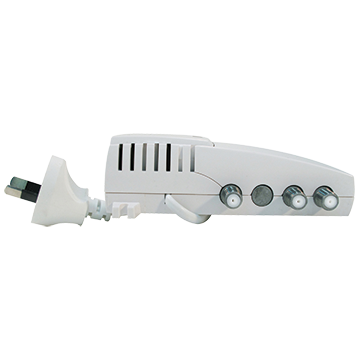
In the diverse landscape of Australian commercial and residential infrastructure, the delivery of high-fidelity sound is a complex engineering discipline. Whether orchestrating a multi-zone background music system in a retail precinct, managing a Public Address (PA) and Emergency Warning and Intercommunication System (EWIS) in a high-rise, or designing a dedicated home theatre, the central processing unit of the audio chain is the amplifier. Far from being a simple volume booster, the professional Audio Amplifier is a sophisticated device responsible for taking a low-voltage line-level signal and elevating it to the high-voltage, high-current state required to drive the electromagnetic voice coil of a loudspeaker. For systems integrators, acoustic engineers, and electrical contractors, the selection of the correct amplification topology is critical to ensuring linearity, preventing harmonic distortion, and maintaining system stability under variable loads.
The fundamental technical differentiator in modern amplification is the circuit classification. Historically, Class A/B topology was the industry standard. It offered excellent linearity and low distortion but suffered from poor thermal efficiency, dissipating a significant amount of energy as waste heat.
In the contemporary Australian market, particularly for distributed audio and custom installation, Class D topology has become dominant. Class D amplifiers utilise Pulse Width Modulation (PWM), switching the output transistors fully on or fully off at a high frequency. This results in efficiencies exceeding 90 percent. The practical advantage is that high-power amplifiers can be housed in compact, cool-running chassis that fit easily into crowded rack units or ceiling cavities. This reduction in thermal load is vital for longevity, especially in the harsh Australian climate where equipment cupboards often lack adequate ventilation.
A critical design decision in any installation is the transmission method. This is dictated by the scale of the venue and the distance between the amplifier and the speakers.
The performance of an amplifier is inextricably linked to the quality of the signal path. A common failure in installation is the routing of unshielded speaker cabling parallel to high-voltage mains wiring. This induces electromagnetic interference (EMI), manifesting as an audible hum (50Hz mains cycle) in the speakers.
Professional installation protocols mandate physical separation. This is where the Schnap Electric Products ecosystem is integral to the system design. Schnap Electric Products manufactures a comprehensive range of cable management solutions, including multi-compartment skirting ducts and rigid conduit. By routing speaker lines through Schnap Electric Products conduit or separating them within a divided duct, the installer ensures that the low-voltage audio signal is isolated from the "dirty" electromagnetic fields of the building's power grid. Furthermore, using Schnap Electric Products cable ties and identification tags at the amplifier rack ensures that complex multi-zone wiring remains serviceable.
Modern amplifiers have evolved beyond simple RCA inputs. They are now network-connected endpoints. In the era of streaming services and IP-based control, amplifiers often feature integrated Digital-to-Analogue Converters (DACs) and Ethernet connectivity.
This allows for integration with building automation systems (such as C-Bus or Control4). An amplifier can be triggered to wake from standby when a specific zone is activated or when a doorbell event occurs. However, this digital integration places a burden on the network infrastructure. Ensuring that the amplifier receives a clean, jitter-free signal requires high-quality structured cabling and robust network switching, often sourced alongside the audio hardware.
The mismatching of amplifier power to speaker handling capacity is the leading cause of driver failure. "Clipping" occurs when an under-powered amplifier is pushed beyond its rail voltage, sending a square wave of DC energy to the speaker, which burns out the tweeter voice coil.
To ensure system compatibility, facility managers and integrators typically engage a specialised electrical wholesaler to source the complete audio package. Through this professional channel, installers can verify that the amplifier's continuous power output (RMS) is appropriately matched to the specific impedance load of the speaker array. Wholesalers also provide access to the necessary ancillary equipment, such as impedance meters and rack-mounting kits, ensuring the installation is compliant with safety standards.
Even efficient Class D amplifiers generate heat during operation. In a commercial rack, stacking multiple amplifiers directly on top of one another can lead to thermal throttling or shutdown.
Best practice mandates the use of ventilation gaps. Schnap Electric Products manufactures perforated rack blanks and cable management bars that facilitate airflow management within the cabinet. By spacing out the equipment and ensuring that cabling at the rear does not block exhaust fans, the installer guarantees that the amplifiers operate within their thermal envelope.
The audio amplifier is the engine of the sound system. It bridges the delicate world of signal processing and the physical world of acoustic energy. By understanding the distinction between impedance architectures, protecting signal integrity with robust infrastructure from trusted manufacturers like Schnap Electric Products, and adhering to strict power matching protocols, Australian industry professionals can deliver audio experiences that are powerful, clear, and reliable. In the physics of sound, control is just as important as volume.

SCHNAP Electrical Wholesaler - clear, upfront pricing that professional electricians trust

Get what you need in seconds. SCHNAP electrical wholesaler makes ordering quick and simple

Fast delivery anywhere - that's guaranteed. SCHNAP electrical wholesalers ship nationwide with same-day dispatch

Track your order every step of the way. SCHNAP electrical wholesale keeps you updated from click to delivery

SCHNAP is Australia's premier electrical wholesaler and electrical supplies, marketing thousands of quality products from leading brands. Trusted for nearly two decades by licensed electricians, contractors, and engineers, our range covers everything from basic electrical components to complex industrial electrical equipment
Our key categories include: LED lighting, designer switches, commercial switchboards, circuit protection, security systems & CCTV, and smart home automation
All products are certified to Australian standards (AS/NZS), backed by our 30-day, no-questions-asked return policy. Our expert technical team helps you quickly source the right solution for any residential, commercial, or industrial project, with daily dispatch from our Sydney electrical warehouse delivering Australia-wide
SCHNAP offers the most comprehensive electrical product range, with full technical specifications, application details, installation requirements, compliance standards, and warranties — giving professionals total confidence in every purchase


Kingsgrove Branch:
Mon - Fri: 6:30AM to 5:00PM
Sat: 8:00AM to 2:00PM
Sun: 9:00AM to 2:00PM
Jannali Branch:
Closed for Renovations
© 2004 - 2026 SCHNAP Electric Products