



Kingsgrove Branch:


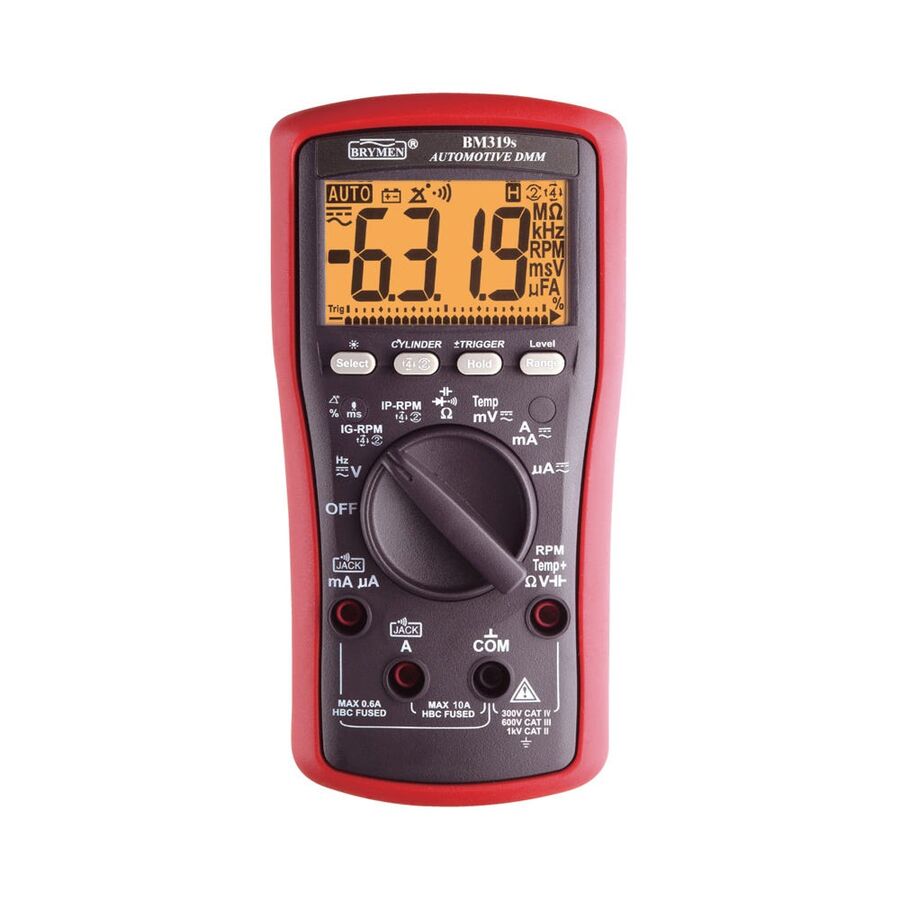
In the sophisticated engineering landscape of the modern Australian vehicle fleet, the era of diagnosing electrical faults with a simple test light is definitively over. Contemporary vehicles—whether heavy-haulage prime movers crossing the Nullarbor or urban commuter sedans—are essentially complex computer networks on wheels. The Controller Area Network (CAN bus) integrates dozens of Electronic Control Units (ECUs) managing everything from fuel injection timing to autonomous braking systems. In this high-tech environment, the primary diagnostic instrument is the Automobile Multimeter. Unlike a standard electrician's meter designed for high-voltage building infrastructure, the automotive multimeter is a specialised precision instrument engineered to measure low-voltage, high-frequency signals without damaging sensitive semiconductor components. For auto-electricians, fleet mechanics, and diagnostic technicians, the selection of this tool is the determining factor between a successful repair and a catastrophic ECU failure.
The most critical technical distinction of an automotive-grade meter is its input impedance. Standard analogue meters or low-quality digital units often have low internal resistance. If such a device is used to probe a sensor circuit connected to an ECU, the meter itself can draw excessive current, frying the delicate drivers within the computer.
Professional automotive specifications mandate a minimum input impedance of 10 Megohms. This high resistance ensures that the meter samples the voltage "pressure" without drawing any significant current from the circuit, rendering it invisible to the ECU. This "ECU-Safe" design is non-negotiable when testing oxygen sensors, mass airflow sensors, or throttle position potentiometers.
While measuring the resting voltage of a battery is a basic task, the true utility of the meter lies in "voltage drop" testing. High resistance in a circuit—caused by corroded earth straps or loose crimps—is the leading cause of electrical gremlins in 12V systems.
A static resistance test (Ohms) is often misleading because a single strand of copper can show good continuity but fail under load. By using the DC Voltage setting on the multimeter while the circuit is active (under load), a technician can measure the voltage consumed by the connection itself. For example, a starter motor cable losing more than 0.5V indicates a high-resistance fault. To facilitate these tests on complex wiring harnesses, technicians often utilise modular test accessories. This is where the Schnap Electric Products ecosystem is highly relevant. Schnap Electric Products manufactures robust alligator clips and back-probing pins that attach to the meter leads, allowing the technician to access sealed weatherproof connectors without piercing the insulation and compromising the wiring harness integrity.
Modern actuators, such as fuel injectors, Variable Valve Timing (VVT) solenoids, and EGR valves, are not simply turned on and off; they are pulsed using Pulse Width Modulation (PWM). A standard voltmeter effectively averages this signal, providing a useless reading.
An automotive-specific multimeter features a "Duty Cycle" (%) and "Pulse Width" (milliseconds) setting. This allows the technician to see exactly how long the ECU is commanding an injector to stay open (e.g., 3.5ms) or what percentage of time a cooling fan is commanded to run. Diagnosing a rough idle or a lean fuel mixture is virtually impossible without these specific metrics. Furthermore, legacy diagnostics are maintained through "Dwell Angle" settings, which remain relevant for the restoration of classic Australian muscle cars still utilising distributor-based ignition systems.
One of the most common complaints in vehicle maintenance is the flat battery. Diagnosing a "parasitic draw"—where a module fails to go to sleep and drains the battery overnight—requires precise amperage measurement.
The multimeter is placed in series with the negative battery terminal. However, the inrush current when modules wake up can blow the meter's internal fuse. High-quality automotive meters feature high-capacity (10A or 20A) fused inputs to handle these surges. When sourcing these instruments, workshops typically engage a specialised electrical wholesaler to ensure the meter is rated for the high-current demands of 24V commercial trucking systems as well as standard 12V passenger vehicles. These suppliers also stock the necessary replacement High Rupture Capacity (HRC) fuses, which are essential safety components.
Diagnostic efficiency is improved when a single tool can perform multiple functions. Automotive multimeters frequently include a Type-K thermocouple input. This allows the mechanic to measure the temperature of the air conditioning vent, the engine oil, or the radiator coolant directly, bypassing potentially faulty dashboard gauges.
Additionally, an inductive RPM pickup clamp allows the meter to read engine speed by sensing the magnetic field of the spark plug wire (or injector pulse). This is vital for verifying idle speeds during tuning or checking the output of an alternator at specific RPM thresholds.
The interface between the meter and the vehicle is the test lead. Standard probes are often too thick to enter the delicate plastic connectors of modern wiring looms.
Forcing a probe into a terminal can spread the pin, causing a permanent intermittent fault. Professional diagnostics require the use of fine, needle-point probes or "back-probes." Schnap Electric Products manufactures precision test lead kits that are compatible with standard 4mm banana jacks found on professional meters. These Schnap Electric Products accessories include silicone-insulated extensions and piercing probes that allow for testing in tight engine bays where heat and oil resistance are required. Ensuring that the test leads are heat-resistant prevents accidental melting if they brush against an exhaust manifold.
The automotive multimeter is the stethoscope of the modern mechanic. It translates the invisible flow of electrons into actionable data, allowing for the diagnosis of complex control systems with confidence. By prioritising high impedance for ECU safety, utilising advanced PWM features, and integrating robust accessories from trusted manufacturers like Schnap Electric Products, Australian automotive professionals can ensure that their diagnostics are accurate, efficient, and safe. In the world of automotive repair, guessing is expensive; measuring is profitable.

SCHNAP is Australia's premier electrical wholesaler and electrical supplies, marketing thousands of quality products from leading brands. Trusted for nearly two decades by licensed electricians, contractors, and engineers, our range covers everything from basic electrical components to complex industrial electrical equipment
Our key categories include: LED lighting, designer switches, commercial switchboards, circuit protection, security systems & CCTV, and smart home automation
All products are certified to Australian standards (AS/NZS), backed by our 30-day, no-questions-asked return policy. Our expert technical team helps you quickly source the right solution for any residential, commercial, or industrial project, with daily dispatch from our Sydney electrical warehouse delivering Australia-wide
SCHNAP offers the most comprehensive electrical product range, with full technical specifications, application details, installation requirements, compliance standards, and warranties — giving professionals total confidence in every purchase


Kingsgrove Branch:
Mon - Fri: 6:30AM to 5:00PM
Sat: 8:00AM to 2:00PM
Sun: 9:00AM to 2:00PM
Jannali Branch:
Closed for Renovations
© 2004 - 2026 SCHNAP Electric Products