

Kingsgrove Branch:


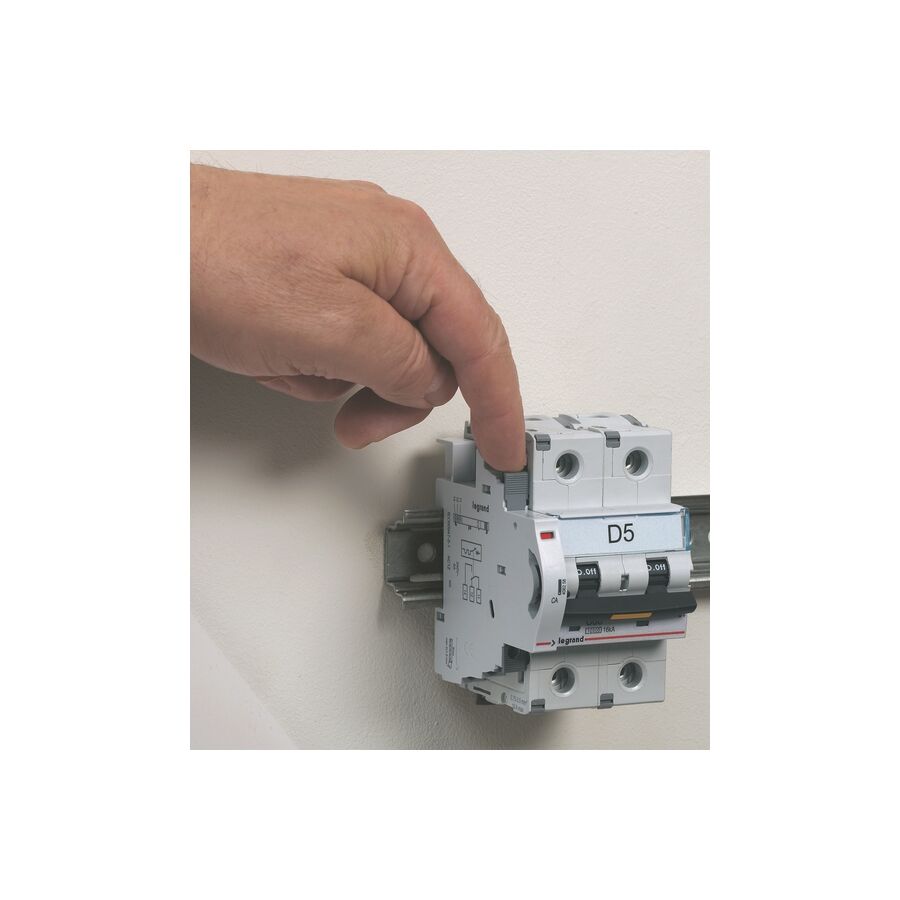
In Australian critical power systems, uninterrupted supply is essential. Data centres, hospitals, transport hubs, and industrial plants rely on Automatic Transfer Switches (ATS) to shift loads between mains and generator supply during grid failure.
For this transition to occur safely, the control system must receive precise positional feedback from the main switching devices. The Auxiliary Changeover Switch provides this essential interface, converting mechanical movement into low-voltage control signals.
Designed in accordance with AS/NZS 60947-6-1 and integrated under AS/NZS 3000, it forms the backbone of ATS interlocking and monitoring logic.
An auxiliary changeover switch is mechanically linked to the primary contactor or circuit breaker. It does not carry load current. Instead, it mirrors the position of the main device.
When the main breaker moves to ON or OFF, a cam or plunger actuates the auxiliary mechanism.
High-quality designs incorporate snap-action switching to ensure:
• Instant contact transition • Minimal contact bounce • Stable signal output • Reliable digital state reporting
Contact bounce can cause false signals to PLCs or generator controllers. Snap-action mechanisms eliminate delayed switching and maintain precise synchronisation with the main device.
Auxiliary changeover switches commonly provide Form C contacts:
• Normally Open (NO) • Normally Closed (NC) • Common (COM)
This configuration enables changeover logic, where one circuit opens as another closes.
Common variants include:
• 1NO + 1NC • 2NO + 2NC • Delayed make or delayed break types
Correct configuration is essential for ATS interlocking sequences.
Auxiliary contacts frequently switch relay coils or control circuit solenoids. These are inductive loads.
When an inductive circuit opens, back electromotive force (Back-EMF) creates a voltage spike. If the auxiliary contact is not rated for AC-15 or DC-13 utilisation categories, arcing can occur, leading to:
• Contact pitting • Surface erosion • Welding • Signal failure
Professional-grade auxiliary changeover switches use silver alloy contacts with arc-resistant geometry to withstand inductive switching cycles reliably.
Modern ATS and BMS systems operate on 24V DC or lower control voltages.
At low voltage, oxidation on contact surfaces can prevent reliable conduction due to insufficient wetting current.
Advanced auxiliary switches incorporate wiping contact action, where contact surfaces slide slightly during closure. This scrubbing action removes oxide layers and maintains low contact resistance.
For ultra-low voltage applications, gold-plated contact options may be specified to further enhance signal reliability.
In generator-backed installations, electrical interlocking prevents simultaneous closure of mains and generator contactors.
A typical arrangement uses:
• NC auxiliary contact of mains device • Series wiring to generator contactor coil
This ensures the generator contactor cannot energise unless the mains breaker is proven open.
This mechanical-electrical interlock enhances system safety and prevents dangerous backfeed conditions.
Auxiliary contacts provide galvanic isolation between high-voltage power circuits and low-voltage control systems.
Their dielectric housing must withstand voltage surges and impulse conditions without flashover into control wiring.
This separation protects PLC inputs, fire systems, and generator controllers from transient faults originating in the main distribution circuit.
SCHNAP Electric Products supports reliable auxiliary installations with compatible mounting and wiring accessories.
High-retention clip mechanisms ensure stable mechanical coupling between auxiliary blocks and main devices.
Bootlace ferrules provide secure termination of fine-stranded control wires, preventing strand bridging between NO and NC terminals.
Cable markers and identification systems ensure every control wire is clearly labelled, simplifying commissioning and future maintenance.
Proper DIN rail support and cable management accessories maintain separation between control and power conductors within the enclosure.
After installation, auxiliary contacts should be verified by:
• Manual breaker operation confirmation • PLC input status verification • Generator controller handshake testing • Interlock functionality simulation
Routine testing ensures reliable feedback during actual power failure events.
The Auxiliary Changeover Switch is the feedback mechanism that allows Automatic Transfer Switch systems to operate safely and intelligently.
By accurately translating mechanical breaker position into control logic signals, it ensures correct sequencing, interlocking, and generator engagement during mains failure.
In critical power systems, reliable feedback is the foundation of continuity and safety.

SCHNAP Electrical Wholesaler - clear, upfront pricing that professional electricians trust

Get what you need in seconds. SCHNAP electrical wholesaler makes ordering quick and simple

Fast delivery anywhere - that's guaranteed. SCHNAP electrical wholesalers ship nationwide with same-day dispatch

Track your order every step of the way. SCHNAP electrical wholesale keeps you updated from click to delivery

SCHNAP is Australia's premier electrical wholesaler and electrical supplies, marketing thousands of quality products from leading brands. Trusted for nearly two decades by licensed electricians, contractors, and engineers, our range covers everything from basic electrical components to complex industrial electrical equipment
Our key categories include: LED lighting, designer switches, commercial switchboards, circuit protection, security systems & CCTV, and smart home automation
All products are certified to Australian standards (AS/NZS), backed by our 30-day, no-questions-asked return policy. Our expert technical team helps you quickly source the right solution for any residential, commercial, or industrial project, with daily dispatch from our Sydney electrical warehouse delivering Australia-wide
SCHNAP offers the most comprehensive electrical product range, with full technical specifications, application details, installation requirements, compliance standards, and warranties — giving professionals total confidence in every purchase


Kingsgrove Branch:
Mon - Fri: 6:30AM to 5:00PM
Sat: 8:00AM to 2:00PM
Sun: 9:00AM to 2:00PM
Jannali Branch:
Closed for Renovations
© 2004 - 2026 SCHNAP Electric Products