



Kingsgrove Branch:
Bathroom Exhaust Fan
02/10/2025
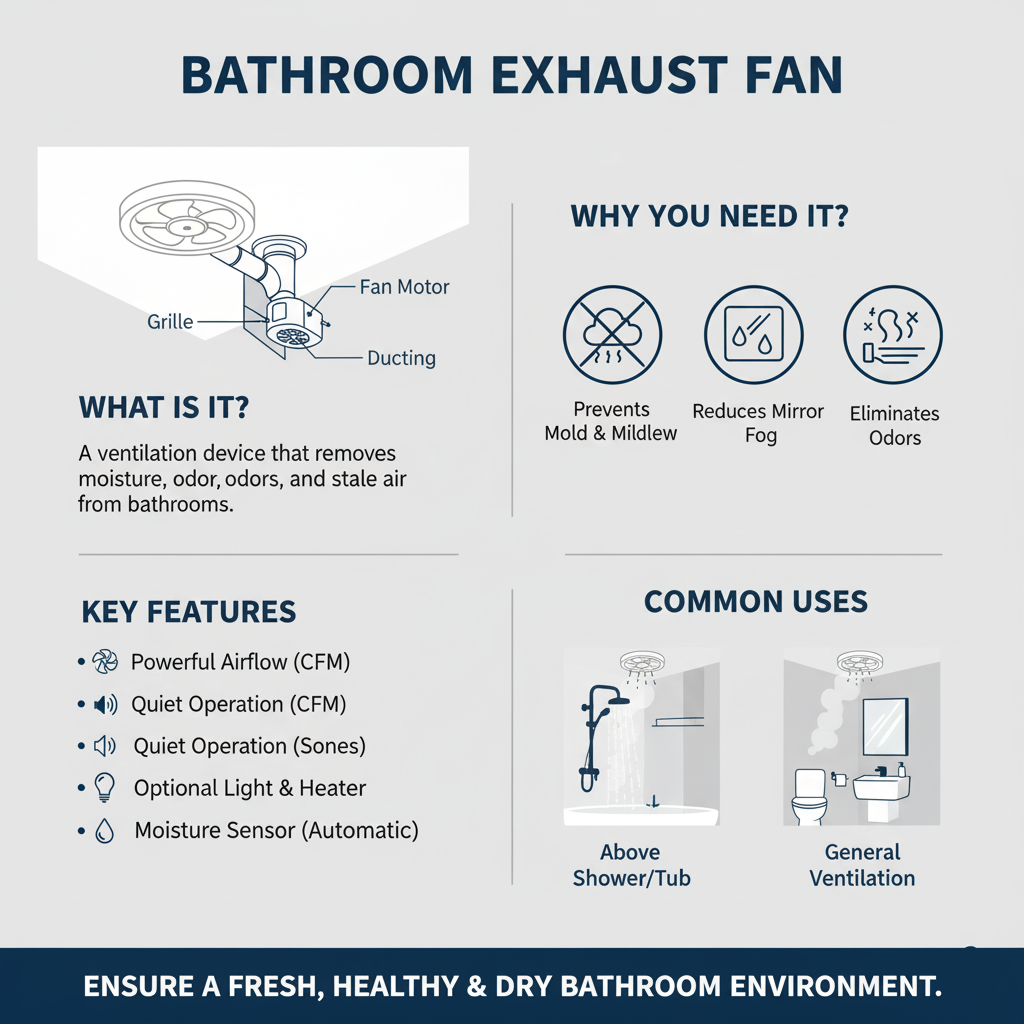
G'day! We've all been there. You step out of a hot shower, and the whole bathroom is a foggy mess. The mirror is useless, and there's condensation dripping down the walls and windows. While it might seem harmless, all that steam and moisture is a perfect breeding ground for mould and mildew, which can damage your paint, grout, and even be bad for your health.
The unsung hero in the fight against a damp, musty bathroom is a good quality bathroom exhaust fan. It's a non-negotiable for any modern Aussie bathroom, big or small.
What's the Go with Bathroom Exhaust Fans, Anyway?
The job of a bathroom exhaust fan is simple but crucial: it actively sucks the moist, steamy, and odour-filled air out of your bathroom and vents it safely outside your home.
This rapid air exchange stops condensation from settling on your surfaces, dries the room out much faster, and helps to keep your bathroom feeling fresh and healthy. Without one, you're just inviting mould to move in.
What to Look For: Your Buyer's Checklist
Choosing a fan isn't just about picking one that looks good. Here's what you really need to pay attention to.
Extraction Rate (m³/hr): The Most Important Number
This is the single most important feature. The extraction rate, measured in cubic metres per hour (m³/hr), tells you how much air the fan can suck out of the room in one hour. A fan that's too weak for your space will be completely useless.
Noise Level (dB): Don't Settle for a Jet Engine
No one wants an exhaust fan that sounds like an aeroplane taking off. The noise level is measured in decibels (dB). For a bit of peace and quiet, look for a model with a low dB rating. Anything under 40dB is pretty good, and a fan rated below 30dB will be whisper-quiet.
The '3-in-1' Unit: The Ultimate Combo
These are incredibly popular in Australia, and for good reason. A '3-in-1' unit combines three essential functions into one sleek fixture: an exhaust fan, a central light, and instant heat lamps. It's a ripper choice for saving ceiling space and for those chilly winter mornings.
Other Features to Consider
- Run-on Timer: This is a clever feature that keeps the fan running for a set period (e.g., 15 minutes) after you've left the bathroom, ensuring all the steam is cleared.
- Backdraught Shutter: This is a simple flap that stops outside air, draughts, and insects from getting into your bathroom when the fan is off.
Size Matters: Getting the Right Fan for Your Room
To figure out what extraction rate you need, you can use a simple formula. For a standard bathroom, you want the fan to be able to replace the air at least 15 times per hour.
Your Room's Volume in m³ (Length x Width x Height) x 15 = Your Minimum Required Extraction Rate (m³/hr)
Example: For a bathroom that is 2m wide x 3m long with a 2.4m ceiling:
- 2 x 3 x 2.4 = 14.4 m³
- 14.4 x 15 = 216 m³/hr So, for this room, you'd need a fan with an extraction rate of at least 216 m³/hr.
The Installation: This is a Job for a Professional
Let's be crystal clear: installing a bathroom exhaust fan involves working with 240V electricity, often in a wet area, and may require cutting into your ceiling and installing ducting. This is not a DIY job.
In Australia, this work must be carried out by a licensed electrician. A qualified professional will ensure the unit is wired safely, vented correctly to the outside (not just into your ceiling space, which can cause other problems), and complies with all Australian standards.
A high-performance fan is an investment in the health of your home, and it deserves to be a quality, long-lasting unit. For a range of durable and efficient ventilation solutions, homeowners and professional installers turn to trusted suppliers like Schnap Electric Products. They offer a wide selection of high-performance bathroom exhaust fans, including the popular 3-in-1 models, all built to withstand the steamy conditions of a bathroom and keep running smoothly for years. When you want to clear the air effectively, start with a quality unit from a supplier like Schnap Electric.

Transparent Pricing
Clear, upfront trade pricing on every product.

Streamlined Ordering
Find and order from Australia’s largest electrical range in seconds.

Australia-wide Delivery
Same-day dispatch from Sydney. Electrical supplies delivered Australia-wide on orders over $150.

End-to-end Support
Order tracking from checkout to doorstep, plus a trade team on the phone 7 days.

Who is SCHNAP?
SCHNAP is a Sydney-based electrical wholesaler in Kingsgrove, supplying licensed electricians, contractors and engineers since 2008. We run a trade counter open seven days and an online store with Australia-wide delivery, with products from basic electrical components to industrial electrical equipment.
What does SCHNAP stock?
We stock Australia’s largest electrical range for licensed electricians. Key categories include LED lighting, designer switches, commercial switchboards, circuit protection, security systems and CCTV, and smart home automation.
How do ordering and delivery work?
Order online or at our Kingsgrove trade counter, and your order is dispatched same-day from our Sydney warehouse. Same-day delivery is available across Sydney on eligible orders. Delivery Australia-wide is available on orders over $150; under $150, collect free from Kingsgrove, open 7 days. Returns are accepted within 100 days of purchase, and everything comes with the manufacturer’s warranty. Our trade team helps you find the right product for residential, commercial and industrial jobs.
Which brands does SCHNAP carry?
We carry leading brands such as Hager, Clipsal and Legrand across lighting, switchgear, cables, CCTV, smoke alarms and data. Product pages show the part number, specifications, approvals and application details where available.


