

Kingsgrove Branch:


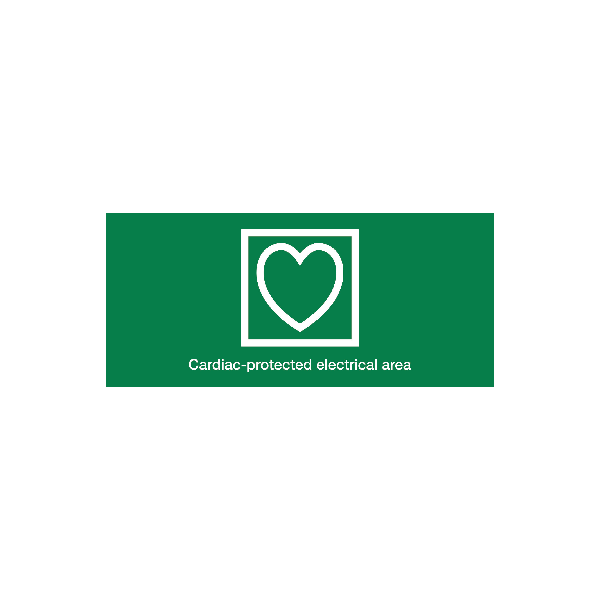
In Australian healthcare facilities, certain patient treatment rooms require the highest level of electrical protection. These areas are governed by AS/NZS 3003 and are specifically engineered to prevent microshock hazards during invasive or intracardiac procedures.
The Cardiac Arrest Area Sign (commonly aligned with “Cardiac Protected Electrical Area” classification) serves as the formal visual declaration that the room’s electrical infrastructure meets the stringent protection requirements defined by Australian standards.
This signage is not decorative. It is a compliance instrument indicating that enhanced protective measures are installed and commissioned.
The distinction between general electrical safety and medical-grade safety lies in human physiology.
In normal environments, protection is designed to prevent macroshock—external current flow through the body, typically measured in milliamps (mA).
In cardiac procedure environments, conductive medical devices such as catheters may contact heart tissue directly. This bypasses the skin’s natural resistance.
In such conditions, currents as low as 10 microamps (µA) can induce ventricular fibrillation.
A Cardiac Arrest Area Sign indicates that the room includes:
• Enhanced equipotential bonding systems • Low earth resistance infrastructure • Dedicated medical RCD protection (Type 1, <40ms trip) • Line Isolation Monitoring (LIM) systems where required
Only appropriately rated medical equipment—such as Type CF (Cardiac Floating)—should be connected within these zones.
AS/NZS 3003 requires permanent and clearly visible identification of patient areas.
The signage must:
• Be durable and non-removable • Display correct classification wording • Be positioned near socket outlets or at room entry • Match commissioning documentation
Before signage is installed, the area must undergo verification including:
• Equipotential bonding resistance testing (typically <0.1 ohms) • RCD trip time confirmation • Isolation monitoring validation
The presence of the sign confirms the room has passed commissioning and is suitable for cardiac-level electrical protection.
Cardiac-protected areas rely heavily on equipotential bonding.
All exposed conductive parts within the patient vicinity are bonded to a central earth reference point to eliminate voltage potential differences.
This includes bonding of:
• Bed frames • Gas outlets • Equipment rails • Metallic wall structures • Protective earth terminals
The signage communicates that this bonding system is active and verified.
Healthcare environments involve rigorous chemical cleaning. Surfaces are exposed to:
• Sodium hypochlorite (bleach) • Quaternary ammonium disinfectants • Alcohol-based cleaners • UV sterilisation systems
Professional Cardiac Arrest Area Signs are manufactured from:
• Reverse-printed polycarbonate • Engraved multi-layer phenolic laminates (Traffolyte) • Smooth, non-porous materials
These materials resist chemical degradation and prevent bacterial accumulation, supporting infection control requirements.
SCHNAP Electric Products supports compliant medical installations with infrastructure components designed for patient areas.
Medical-grade socket outlets may be colour-coded to distinguish supply sources such as:
• Normal supply • Generator-backed supply • UPS systems
Integrated service panels can incorporate signage directly into the faceplate for hygienic, flush mounting.
Equipotential earth studs provide dedicated testing connection points for biomedical equipment verification.
RCD test switches and status indicators assist in maintaining ongoing compliance and monitoring within cardiac-protected zones.
Incorrect signage can render a treatment room non-compliant during inspection or accreditation audits.
Proper sourcing ensures:
• Correct wording aligned with AS/NZS 3003 • Appropriate colour coding • Durable medical-grade construction • Compatibility with healthcare fitouts
Signage must accurately reflect whether the area is classified as body-protected or cardiac-protected.
The Cardiac Arrest Area Sign represents the visible certification of a high-integrity medical electrical installation.
It confirms that the environment is engineered for the strictest level of patient electrical safety, including microshock protection and equipotential bonding.
In healthcare infrastructure, clear identification is not administrative—it is a critical component of life-safety compliance.

SCHNAP Electrical Wholesaler - clear, upfront pricing that professional electricians trust

Get what you need in seconds. SCHNAP electrical wholesaler makes ordering quick and simple

Fast delivery anywhere - that's guaranteed. SCHNAP electrical wholesalers ship nationwide with same-day dispatch

Track your order every step of the way. SCHNAP electrical wholesale keeps you updated from click to delivery

SCHNAP is Australia's premier electrical wholesaler and electrical supplies, marketing thousands of quality products from leading brands. Trusted for nearly two decades by licensed electricians, contractors, and engineers, our range covers everything from basic electrical components to complex industrial electrical equipment
Our key categories include: LED lighting, designer switches, commercial switchboards, circuit protection, security systems & CCTV, and smart home automation
All products are certified to Australian standards (AS/NZS), backed by our 30-day, no-questions-asked return policy. Our expert technical team helps you quickly source the right solution for any residential, commercial, or industrial project, with daily dispatch from our Sydney electrical warehouse delivering Australia-wide
SCHNAP offers the most comprehensive electrical product range, with full technical specifications, application details, installation requirements, compliance standards, and warranties — giving professionals total confidence in every purchase


Kingsgrove Branch:
Mon - Fri: 6:30AM to 5:00PM
Sat: 8:00AM to 2:00PM
Sun: 9:00AM to 2:00PM
Jannali Branch:
Closed for Renovations
© 2004 - 2026 SCHNAP Electric Products