

Kingsgrove Branch:


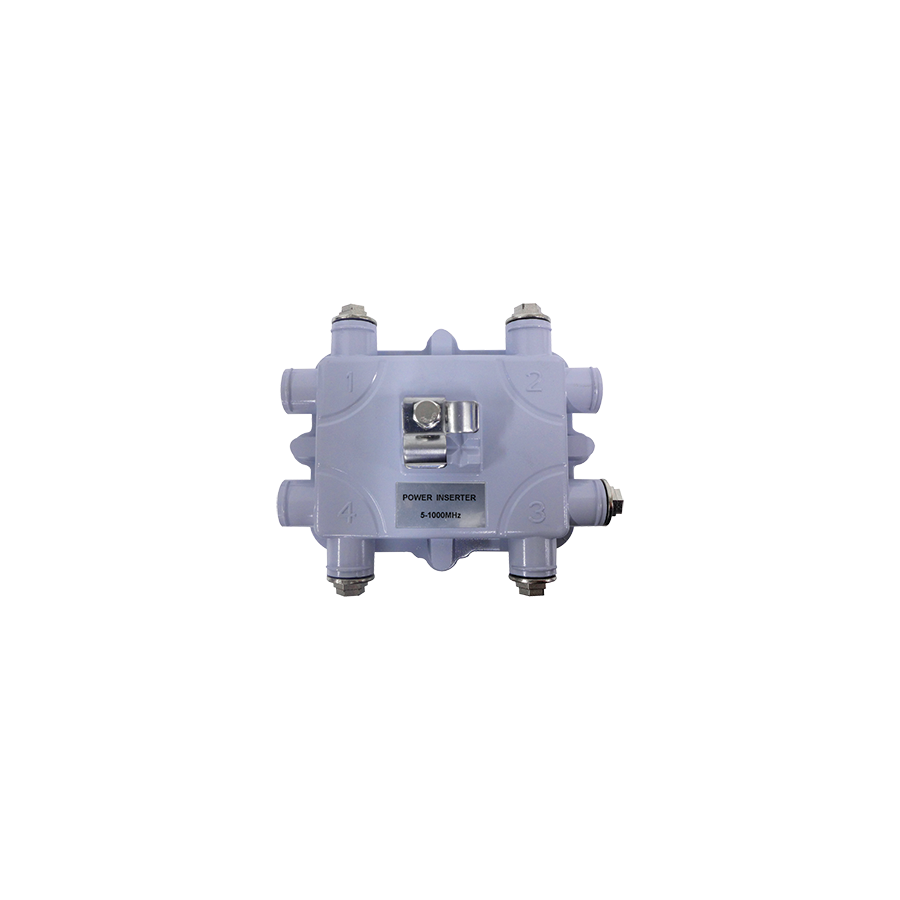
Across Australia’s telecommunications infrastructure, signal distribution often begins at elevated or remote locations. Rooftop antennas, masthead amplifiers and remote distribution nodes must be powered reliably to overcome cable attenuation and maintain signal strength.
Running a dedicated 230V AC circuit to these locations is often impractical and introduces compliance and safety concerns. The engineering solution used across HFC and MATV systems is the CATV Power Inserter.
Also known as a bias tee, this compact device injects DC voltage onto a coaxial cable while allowing high-frequency RF signals to pass without distortion. It ensures that amplifiers receive stable power without compromising signal quality.
At SCHNAP Electric Products, we support installers with compliant RF components and robust installation accessories aligned with Australian broadcasting standards.
A CATV Power Inserter operates by combining DC power and RF signal onto a single coaxial conductor while keeping both electrically isolated.
Internally, the device uses an inductor and capacitor network. The inductor connects the DC input to the combined RF and DC output. It allows DC current to flow upstream to the amplifier while blocking RF frequencies from entering the power supply.
At the same time, a capacitor connects the RF output port to the receiver. The capacitor allows RF signals to pass while blocking DC voltage from entering sensitive tuner circuits.
This L-C filtering arrangement ensures power flows to the amplifier and signal flows to the television or modem without interference.
The result is efficient energising of remote devices without separate power wiring.
Signal strength in RF systems is measured in decibels. Every component in the signal chain contributes to insertion loss.
A poorly designed power inserter may introduce excessive loss, reducing the effective gain of a masthead amplifier.
Professional CATV Power Inserters maintain insertion loss below 1dB across operating frequencies.
Equally important is maintaining 75-ohm impedance throughout the device. Impedance mismatch causes signal reflection, measured as Return Loss or Voltage Standing Wave Ratio.
Reflections degrade signal quality, leading to pixelation in television reception and instability in broadband data streams.
High-quality inserters are engineered for flat frequency response and consistent impedance across the full operating band.
Australia’s RF environment includes strong LTE and 5G transmissions adjacent to broadcast television frequencies.
If a power inserter lacks adequate shielding, external interference may couple into the network.
Commercial-grade units feature die-cast metal housings that act as a Faraday cage, offering shielding effectiveness greater than 100dB.
Strong shielding protects against ingress and preserves modulation quality in digital systems.
Proper housing construction also reduces the risk of electromagnetic leakage from internal circuitry.
SCHNAP Electric Products supports installations with compliant enclosures and protective accessories suited for Australian conditions.
Not all CATV Power Inserters are rated for the same current.
A small masthead amplifier may draw minimal current, while larger distribution amplifiers require higher supply levels.
Using an undersized inserter can cause overheating and component failure.
Installers must verify current requirements and select an inserter with adequate amperage capacity.
Voltage drop over long coaxial runs must also be considered. In extended installations, higher supply voltage at the inserter may be necessary to ensure sufficient voltage reaches the remote amplifier.
Correct sizing supports stable and reliable operation.
The performance of a power inserter depends heavily on connector integrity.
Loose F-type connectors introduce impedance mismatch and intermittent faults.
Professional installations use compression connectors and torque-limiting tools to achieve secure and gas-tight terminations.
SCHNAP Electric Products provides quality termination tools and coaxial accessories designed to maintain 75-ohm system stability.
Unused ports should be terminated appropriately to prevent reflections and maintain network balance.
Proper installation ensures consistent performance and reduces service issues.
CATV Power Inserters are commonly used in residential NBN installations, commercial MATV systems and rural broadcast distribution networks.
They enable masthead amplifier operation without running separate mains supply to rooftop locations.
In multi-dwelling units, they support stable broadband and television reception across multiple apartments.
In regional installations, they provide a practical and compliant solution for powering remote signal equipment.
Across these applications, reliable DC injection ensures uninterrupted amplification.
Modern digital systems operate across wide frequency bands extending to satellite and broadband ranges.
Low-quality inserters may not support full bandwidth or provide adequate shielding.
Professional procurement through a trusted electrical wholesaler ensures sweep-tested devices with verified insertion loss and impedance characteristics.
SCHNAP Electric Products supports telecommunications professionals with compliant RF solutions aligned with Australian standards.
Selecting verified components protects system performance and longevity.
Routine inspection of power supplies and connectors ensures ongoing reliability.
Installers should verify stable DC output voltage and check for signs of overheating.
Outdoor installations should be protected against moisture ingress using appropriate sealing accessories.
Replacing worn connectors promptly prevents signal degradation and power instability.
Using durable components from SCHNAP Electric Products reduces maintenance frequency and supports long-term system stability.
The CATV Power Inserter is an essential device in modern RF distribution systems. It enables safe and efficient DC injection onto coaxial lines while preserving signal integrity.
Low insertion loss, stable impedance and strong shielding ensure consistent performance in both residential and commercial networks.
By sourcing power inserters and installation accessories through SCHNAP Electric Products, Australian professionals build compliant, durable and high-performance telecommunications infrastructure.
In RF distribution systems, power and signal must coexist without interference, and precision engineering ensures that balance is maintained.

SCHNAP Electrical Wholesaler - clear, upfront pricing that professional electricians trust

Get what you need in seconds. SCHNAP electrical wholesaler makes ordering quick and simple

Fast delivery anywhere - that's guaranteed. SCHNAP electrical wholesalers ship nationwide with same-day dispatch

Track your order every step of the way. SCHNAP electrical wholesale keeps you updated from click to delivery

SCHNAP is Australia's premier electrical wholesaler and electrical supplies, marketing thousands of quality products from leading brands. Trusted for nearly two decades by licensed electricians, contractors, and engineers, our range covers everything from basic electrical components to complex industrial electrical equipment
Our key categories include: LED lighting, designer switches, commercial switchboards, circuit protection, security systems & CCTV, and smart home automation
All products are certified to Australian standards (AS/NZS), backed by our 30-day, no-questions-asked return policy. Our expert technical team helps you quickly source the right solution for any residential, commercial, or industrial project, with daily dispatch from our Sydney electrical warehouse delivering Australia-wide
SCHNAP offers the most comprehensive electrical product range, with full technical specifications, application details, installation requirements, compliance standards, and warranties — giving professionals total confidence in every purchase


Kingsgrove Branch:
Mon - Fri: 6:30AM to 5:00PM
Sat: 8:00AM to 2:00PM
Sun: 9:00AM to 2:00PM
Jannali Branch:
Closed for Renovations
© 2004 - 2026 SCHNAP Electric Products