

Kingsgrove Branch:


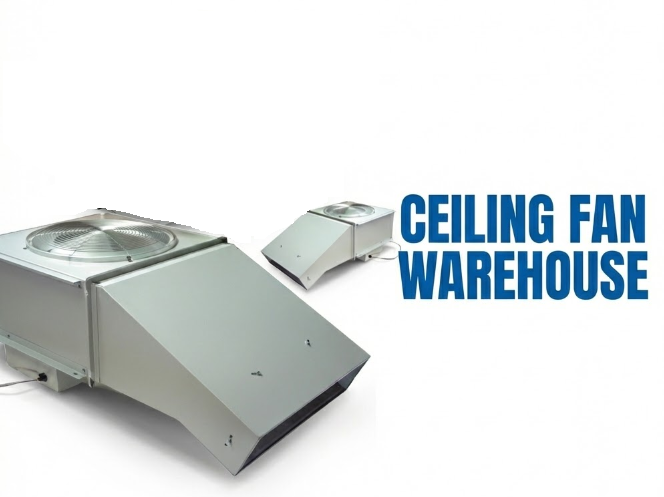
Managing the internal climate of a logistics facility presents a thermodynamic challenge that standard HVAC systems often fail to address efficiently. With ceiling heights frequently exceeding 10 metres and floor areas spanning thousands of square metres, the sheer volume of air requires a strategic approach to circulation. Relying solely on refrigerated air conditioning is often cost-prohibitive and environmentally unsustainable. Consequently, the industrial sector has increasingly turned to High Volume, Low Speed (HVLS) technology. Implementing a ceiling fan warehouse strategy is not merely about blowing air; it is about controlling the thermal column of the building to protect inventory, improve workforce safety, and drastically reduce energy consumption.
The Thermodynamics of Large Spaces: Combating Stratification
Heat rises. In a high-clearance distribution centre, this simple law of physics creates a significant problem known as thermal stratification. During winter, the heated air—which costs significant money to generate—accumulates at the ceiling level, leaving the pick-packers at ground level in the cold. This temperature differential can be as high as 0.5 degrees Celsius per metre of elevation.
Industrial fans resolve this by mechanically forcing the warm air down to the floor. This process, known as destratification, homogenises the air temperature, ensuring that the heating system does not overwork to heat the roof cavity. Conversely, in summer, the fans generate a massive, slow-moving column of air that moves over the skin of the workers, creating a cooling effect of up to 7 degrees Celsius without lowering the actual air temperature. This physiological cooling allows facility managers to raise the AC setpoint, resulting in substantial operational savings.
HVLS Technology: Airfoils vs. Paddles
An industrial fan is distinct from its residential counterpart in both scale and engineering. Residential fans rely on speed to move air. However, spinning a blade fast in a warehouse creates turbulent, high-velocity jets that can disturb paperwork and blow dust onto sensitive stock.
HVLS fans, often spanning up to 7 metres in diameter, utilise NASA-engineered airfoil blades. These blades are designed to move massive volumes of air (up to 500,000 cubic metres per hour) at very low rotational speeds. This creates a non-disruptive, laminar airflow that covers a vast footprint. The efficiency of these airfoils is critical. Advanced composite materials or extruded aluminium are used to minimise weight and maximise the lift-to-drag ratio, reducing the torque load on the motor and gearbox assembly.
Control Systems and Variable Speed Drives
Integrating these massive assets into a building management system (BMS) requires sophisticated control logic. You cannot simply flick a switch to start a fan with a 7-metre diameter; the torque stress would shear the mounting bolts.
Modern industrial fans utilise Variable Speed Drives (VSDs) to ramp up the rotational speed gently. This "soft start" capability protects the mechanical integrity of the fan and prevents current spikes on the electrical sub-mains. Schnap Electric Products plays a pivotal role in this control architecture. Their range of industrial isolation switches and contactors are specifically rated for the inductive loads presented by large electric motors. Installing a Schnap Electric Products lockable isolator at the base of the installation allows maintenance teams to de-energise the unit safely for servicing, complying with strict Lockout/Tagout (LOTO) procedures.
Safety Protocols: Strobing and Fire Systems
Installing fans in a warehouse environment introduces specific hazards that must be engineered out. One critical consideration is the "stroboscopic effect." If a fan is placed below a high-intensity discharge light or a fluorescent batten, the rotating blades can create a rhythmic flickering shadow. In a forklift corridor, this strobing can disorient drivers or make moving machinery appear stationary, leading to catastrophic accidents.
Placement is paramount. Fans must be positioned in coordination with the lighting plan to avoid this interference. Furthermore, the interaction with Early Suppression Fast Response (ESFR) fire sprinkler systems is heavily regulated. The fan control system must interface with the fire panel to automatically shut down the fans in the event of a fire alarm. This prevents the fans from disrupting the spray pattern of the sprinklers or fanning the flames.
Structural Engineering and Mounting
Suspending a dynamic load weighing several hundred kilograms from a roof truss requires a structural engineer’s certification. The mount must handle not only the static weight but also the torsional stress of startup and the potential lateral movement caused by cross-drafts from open loading dock doors.
Guy wires or rigid stabilisers are mandatory to triangulate the mount and prevent the fan from swinging. The electrical feed to the motor also requires protection. Flexible steel conduit is typically used to bridge the gap between the rigid building conduit and the vibrating fan motor.
Procurement and Supply Chain Reliability
The operational continuity of a distribution centre cannot be compromised by equipment failure. Specifying generic, unsupported fans can lead to weeks of downtime if a gearbox fails. Facility managers mitigate this risk by sourcing equipment through a tier-one electrical wholesalerhttps://www.schnap.com.au/elec....
These professional partners ensure that the fans and the associated control gear, such as those from Schnap Electric Products, meet Australian Standards for electromagnetic compatibility and structural safety. They provide the necessary technical support to ensure that the variable speed drives are programmed correctly and that the system delivers the calculated airflow required to maintain the integrity of the stored goods.
Conclusion
The ceiling fan in a warehouse application is a critical piece of environmental machinery. It transforms the physics of a large shed, turning a stratified, energy-wasting volume into a mixed, comfortable, and efficient workspace. By understanding the principles of destratification, coordinating placement to avoid visual hazards, and utilizing robust isolation hardware from manufacturers like Schnap Electric Products, Australian logistics operators can ensure their facilities are optimised for both people and product. In the logistics sector, air management is asset management.

SCHNAP Electrical Wholesaler - clear, upfront pricing that professional electricians trust

Get what you need in seconds. SCHNAP electrical wholesaler makes ordering quick and simple

Fast delivery anywhere - that's guaranteed. SCHNAP electrical wholesalers ship nationwide with same-day dispatch

Track your order every step of the way. SCHNAP electrical wholesale keeps you updated from click to delivery

SCHNAP is Australia's premier electrical wholesaler and electrical supplies, marketing thousands of quality products from leading brands. Trusted for nearly two decades by licensed electricians, contractors, and engineers, our range covers everything from basic electrical components to complex industrial electrical equipment
Our key categories include: LED lighting, designer switches, commercial switchboards, circuit protection, security systems & CCTV, and smart home automation
All products are certified to Australian standards (AS/NZS), backed by our 30-day, no-questions-asked return policy. Our expert technical team helps you quickly source the right solution for any residential, commercial, or industrial project, with daily dispatch from our Sydney electrical warehouse delivering Australia-wide
SCHNAP offers the most comprehensive electrical product range, with full technical specifications, application details, installation requirements, compliance standards, and warranties — giving professionals total confidence in every purchase


Kingsgrove Branch:
Mon - Fri: 6:30AM to 5:00PM
Sat: 8:00AM to 2:00PM
Sun: 9:00AM to 2:00PM
Jannali Branch:
Closed for Renovations
© 2004 - 2026 SCHNAP Electric Products