

Kingsgrove Branch:


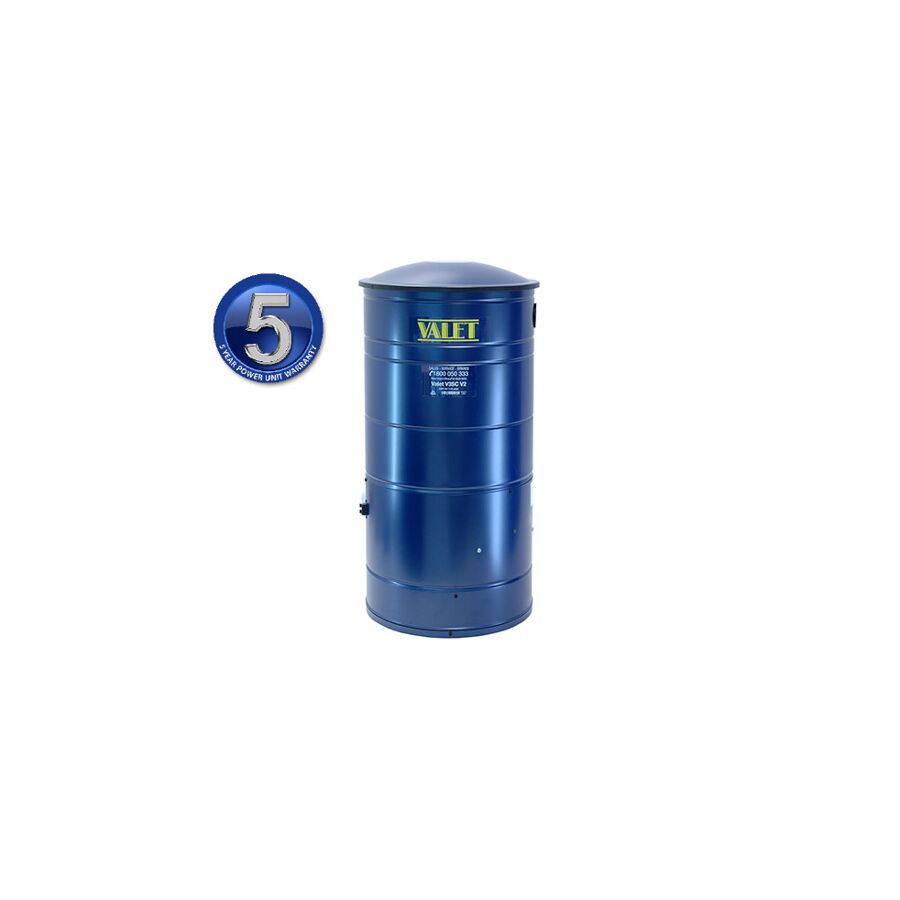
Indoor Air Quality is now a major focus in modern Australian homes. With rising awareness of asthma, dust sensitivity and allergens, traditional portable vacuum cleaners are no longer seen as the best solution for premium builds. Many portable units recirculate fine dust particles back into the room. This undermines cleaning performance and affects long-term air quality.
A ducted vacuum system solves this problem by removing dust completely from the living space. At the heart of that system is the Central Vacuum Power Unit. Installed in a garage, plant room or basement, this stationary appliance provides industrial-grade suction and exhausts vacuumed air outside the habitable area.
For electricians and builders aligned with SCHNAP’s strategy of delivering smarter residential infrastructure, the central vacuum power unit represents a practical upgrade in both hygiene and long-term property value.
The key difference between a central power unit and a portable vacuum lies in the motor design. Portable units typically use a thru-flow motor, where dusty air passes directly over the motor windings for cooling. Over time, fine particles damage insulation and bearings.
Professional central units use a tangential bypass motor. In this configuration, the dirty vacuum air is completely separated from the clean cooling airflow. A dedicated fan cools the motor while a separate airflow path handles debris.
This separation improves longevity and reliability. It prevents abrasive dust from eroding motor components. These motors are also larger in diameter, commonly 5.7 inch or 7.2 inch, allowing for larger impellers.
The result is significantly higher sealed suction, known as water lift, and stronger airflow. This power is essential for pulling debris through long pipe runs of up to fifty metres of PVC ducting.
For high-end residential projects, this performance ensures consistent suction at every inlet point.
Filtration design directly affects efficiency and maintenance. Two main systems dominate the market: cyclonic and bagged.
Cyclonic filtration uses centrifugal force to separate dust from the airstream. The intake is angled to create a vortex inside the collection chamber. Heavier particles are forced outward and drop into the dust bucket.
This design maintains airflow performance even as the container fills, since no physical filter blocks the intake. Hybrid systems often combine cyclonic separation with secondary HEPA filtration or a self-cleaning membrane.
Bagged systems, by contrast, rely on disposable filter bags to trap debris. While simple, airflow may reduce as the bag fills.
For Australian homes focused on long-term efficiency and lower maintenance, cyclonic systems are often preferred.
Correct sizing of the Central Vacuum Power Unit is critical. The performance metric commonly referenced is Airwatts. This combines airflow and sealed suction into a single measurement.
However, relying only on Airwatts can be misleading. In large single-level homes with long pipe runs, water lift is the more important factor. High water lift ensures debris can travel against friction and gravity over extended distances.
In compact double-storey homes, airflow volume may take priority to ensure rapid cleaning across multiple inlets.
Engineers must calculate pipe length, number of bends and total inlet count. Suction at the furthest inlet should remain above a minimum performance threshold to effectively power turbo heads and electric brushes.
Correct sizing prevents underperformance and ensures homeowner satisfaction.
While the power unit delivers suction, a low-voltage control network activates the system. A 2-core 24V control cable runs alongside the PVC ducting.
When the hose is inserted into a wall inlet, the circuit closes and signals a relay in the power unit to energise the motor.
The integrity of this control wiring is essential. Damage during rough-in stages can cause intermittent faults or continuous running.
Licensed electricians should secure and protect the control wiring properly. SCHNAP Electric Products provides cable management accessories that support tidy and protected installations.
Reliable low-voltage connections ensure long-term system operation without call-backs.
A Central Vacuum Power Unit is a high-load appliance, often drawing between 1500W and 2000W. It must be installed on a dedicated circuit to prevent nuisance tripping.
Electrical protection is critical for safety and compliance.
SCHNAP Electric Products RCBOs provide residual current and overcurrent protection. Installing a dedicated RCBO in the main switchboard protects both the motor and fixed wiring.
A weatherproof isolator near the unit allows safe local disconnection for maintenance tasks such as emptying the dust bucket or replacing motor brushes.
This approach aligns with SCHNAP’s strategy of supporting electricians with compliant, reliable and easy-to-install protection solutions.
The mechanical installation of the power unit and ducting affects noise levels and long-term durability. PVC ducting must be secured firmly to framing members. Poorly supported pipework can cause vibration and rattling during operation.
Conduit straps and ducting supports ensure rigid installation. A muffler system may also be added to reduce exhaust noise.
Professional installation practices enhance system performance and homeowner satisfaction.
For builders delivering premium homes, these details distinguish a high-quality ducted system from a basic installation.
The market includes low-cost units with exaggerated horsepower claims and lightweight plastic construction. These products often lack verified motor performance curves and may fail prematurely.
For residential projects aligned with long-term reliability, sourcing through a reputable electrical wholesaler is essential.
SCHNAP Electric Products supports trade professionals with quality-assured components and dependable supply. Our focus is helping electricians complete installations on time while maintaining performance standards.
By combining reliable power units with compliant electrical protection and secure ducting accessories, contractors can deliver systems that meet modern expectations for hygiene and efficiency.
The Central Vacuum Power Unit is a core component of modern residential infrastructure. It removes dust and allergens completely from the living space, improving indoor air quality and supporting healthier homes.
Through tangential bypass motor technology, cyclonic filtration and correct system sizing, ducted vacuum systems deliver powerful and consistent performance.
When supported by dedicated electrical protection, low-voltage control wiring and secure mechanical installation, the system operates safely and reliably for years.
At SCHNAP Electric Products, we support Australian electricians and builders with compliant, practical solutions that enhance residential projects. Cleaner air, smarter infrastructure and dependable installation standards define today’s premium homes.

SCHNAP Electrical Wholesaler - clear, upfront pricing that professional electricians trust

Get what you need in seconds. SCHNAP electrical wholesaler makes ordering quick and simple

Fast delivery anywhere - that's guaranteed. SCHNAP electrical wholesalers ship nationwide with same-day dispatch

Track your order every step of the way. SCHNAP electrical wholesale keeps you updated from click to delivery

SCHNAP is Australia's premier electrical wholesaler and electrical supplies, marketing thousands of quality products from leading brands. Trusted for nearly two decades by licensed electricians, contractors, and engineers, our range covers everything from basic electrical components to complex industrial electrical equipment
Our key categories include: LED lighting, designer switches, commercial switchboards, circuit protection, security systems & CCTV, and smart home automation
All products are certified to Australian standards (AS/NZS), backed by our 30-day, no-questions-asked return policy. Our expert technical team helps you quickly source the right solution for any residential, commercial, or industrial project, with daily dispatch from our Sydney electrical warehouse delivering Australia-wide
SCHNAP offers the most comprehensive electrical product range, with full technical specifications, application details, installation requirements, compliance standards, and warranties — giving professionals total confidence in every purchase


Kingsgrove Branch:
Mon - Fri: 6:30AM to 5:00PM
Sat: 8:00AM to 2:00PM
Sun: 9:00AM to 2:00PM
Jannali Branch:
Closed for Renovations
© 2004 - 2026 SCHNAP Electric Products