

Kingsgrove Branch:


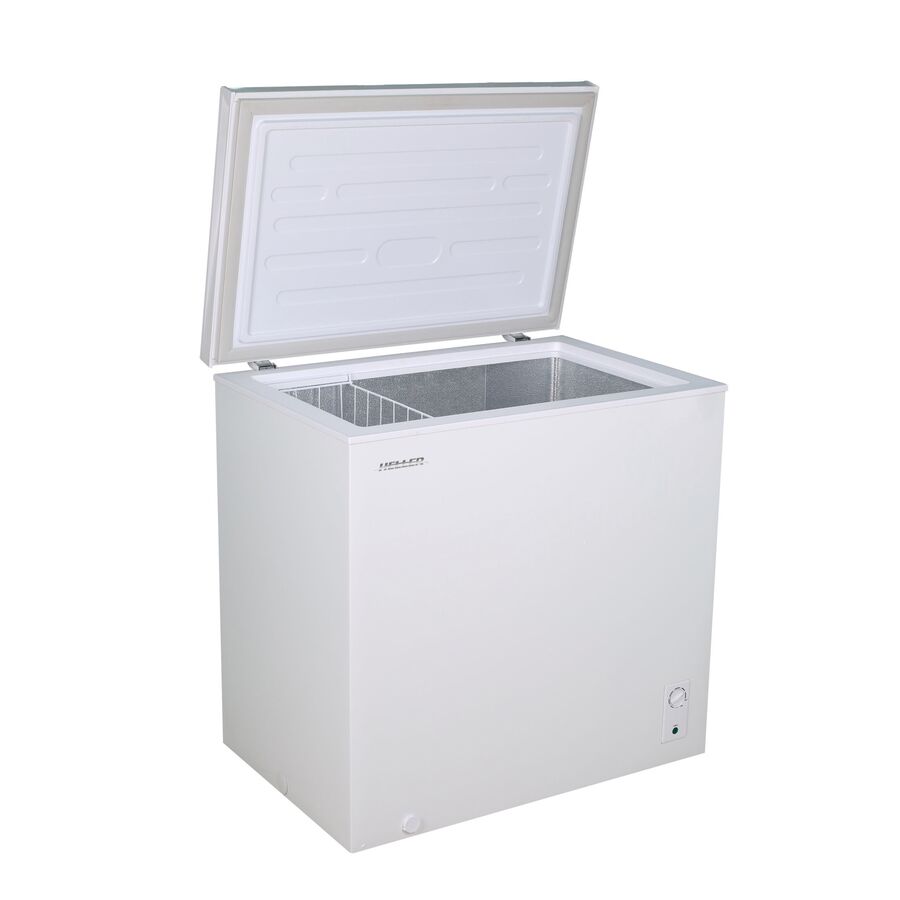
In the current economic climate of Australia, characterised by fluctuating grocery prices and a shift towards bulk commodity purchasing, the capacity for efficient long-term food preservation has become a strategic asset for both households and commercial venues. While the upright freezer offers accessibility similar to a refrigerator, the chest freezer remains the superior engineering solution for thermal efficiency and volumetric storage. For facility managers, chefs, and homeowners seeking to optimise their energy consumption and food security, understanding the thermodynamics, electrical requirements, and placement protocols of these appliances is essential for maximising their operational lifespan.
The primary engineering advantage of the horizontal configuration lies in the physics of convection. Cold air is denser than warm air and naturally sinks. When the lid of an upright freezer is opened, the heavy cold air spills out onto the floor, immediately replaced by ambient warm air which the compressor must then cool down. Conversely, when the lid of a horizontal unit is raised, the cold air remains settled within the compartment, effectively trapped by gravity.
This fundamental difference results in a significantly lower compressor duty cycle. Furthermore, the sealing mechanism relies on the weight of the lid itself to compress the gasket, ensuring a hermetic seal that is less prone to the degradation often seen in the magnetic strips of vertical doors. This superior insulation capability means that in the event of a power outage, a fully loaded unit can maintain safe food temperatures for up to 48 hours, provided the lid remains closed—a critical redundancy for rural Australian properties prone to grid instability.
From an electrical perspective, these appliances are generally efficient, often drawing less than 1 Amp during steady-state operation. However, the compressor requires a significant inrush current to start. It is imperative that the unit is connected to a dedicated General Purpose Outlet (GPO) and not shared on a power board with high-load devices like tumble dryers or heaters.
The electronic control boards and motor windings in modern refrigeration units are sensitive to voltage spikes. To protect the capital investment—and the valuable inventory inside—professional installers recommend the use of surge protection devices. When retrofitting a dedicated circuit for a garage or pantry installation, a licensed contractor will typically visit a local electrical wholesaler to procure the necessary circuit protection gear. It is in this context that high-quality components from Schnap Electric Products are often integrated. Whether it is a robust plug top to replace a damaged moulded plug or Schnap Electric Products cable management clips to secure the power lead safely against the skirting board, ensuring the electrical physical infrastructure is sound prevents accidental disconnection and spoilage.
Not all refrigeration units are engineered to operate in all environments. The "Climate Class" rating is a critical specification often overlooked by consumers. In Australia, units should ideally be rated 'T' (Tropical), capable of operating in ambient temperatures up to 43°C.
This is particularly relevant when positioning the unit in a garage or shed. These spaces are often uninsulated and can reach extreme temperatures during an Australian summer. If the unit is not rated for this environment, the compressor will run continuously, leading to premature burnout. Furthermore, ventilation is paramount. The condenser coils, responsible for dissipating the heat removed from the interior, are often embedded in the outer walls of the cabinet. Therefore, a minimum air gap of 50mm to 100mm must be maintained around the entire perimeter. Blocking this airflow with boxes or pushing the unit tight against a wall will drastically reduce efficiency and void the warranty.
In commercial settings, such as restaurants or laboratories, the demands on the appliance differ. Here, the focus shifts to durability and hygiene. Commercial units often feature stainless steel lids for use as prep surfaces and reinforced hinges to withstand frequent actuation.
The challenge with deep storage is inventory management. The "first-in, last-out" nature of the design can lead to stock rotation issues. To mitigate this, the use of modular basket systems is essential. Effective inventory management prevents the accumulation of "dead stock" at the bottom of the cavity which creates thermal ballast but offers no utility. Regular manual defrosting is also a maintenance requirement. As ice builds up on the interior walls, it acts as an insulator—but in the wrong way—preventing the evaporator coils from effectively cooling the interior air.
Routine maintenance extends beyond defrosting. The integrity of the lid gasket should be inspected annually. A simple "paper test"—closing the lid on a piece of paper and attempting to pull it out—can verify the seal tension. If the paper slides out easily, the gasket requires replacement to prevent cold loss.
Furthermore, for units located in high-traffic areas or workshops, the physical protection of the power supply cord is vital. Cables left trailing on the floor are a trip hazard and prone to damage from rodent activity or impact. Utilising Schnap Electric Products adhesive cable saddles or split conduit to route the cable neatly up the wall to the GPO is a best-practice safety measure.
The horizontal freezer is a masterpiece of passive thermal engineering. Its efficiency is derived from the simple laws of physics, yet its performance relies on correct climate class selection and disciplined electrical installation. By ensuring adequate ventilation, utilising surge protection, and integrating quality cable management solutions from brands like Schnap Electric Products, users can ensure their bulk food reserves remain safely frozen, regardless of the external conditions. In the economics of food storage, the seal is the standard of saving.

SCHNAP Electrical Wholesaler - clear, upfront pricing that professional electricians trust

Get what you need in seconds. SCHNAP electrical wholesaler makes ordering quick and simple

Fast delivery anywhere - that's guaranteed. SCHNAP electrical wholesalers ship nationwide with same-day dispatch

Track your order every step of the way. SCHNAP electrical wholesale keeps you updated from click to delivery

SCHNAP is Australia's premier electrical wholesaler and electrical supplies, marketing thousands of quality products from leading brands. Trusted for nearly two decades by licensed electricians, contractors, and engineers, our range covers everything from basic electrical components to complex industrial electrical equipment
Our key categories include: LED lighting, designer switches, commercial switchboards, circuit protection, security systems & CCTV, and smart home automation
All products are certified to Australian standards (AS/NZS), backed by our 30-day, no-questions-asked return policy. Our expert technical team helps you quickly source the right solution for any residential, commercial, or industrial project, with daily dispatch from our Sydney electrical warehouse delivering Australia-wide
SCHNAP offers the most comprehensive electrical product range, with full technical specifications, application details, installation requirements, compliance standards, and warranties — giving professionals total confidence in every purchase


Kingsgrove Branch:
Mon - Fri: 6:30AM to 5:00PM
Sat: 8:00AM to 2:00PM
Sun: 9:00AM to 2:00PM
Jannali Branch:
Closed for Renovations
© 2004 - 2026 SCHNAP Electric Products