

Kingsgrove Branch:


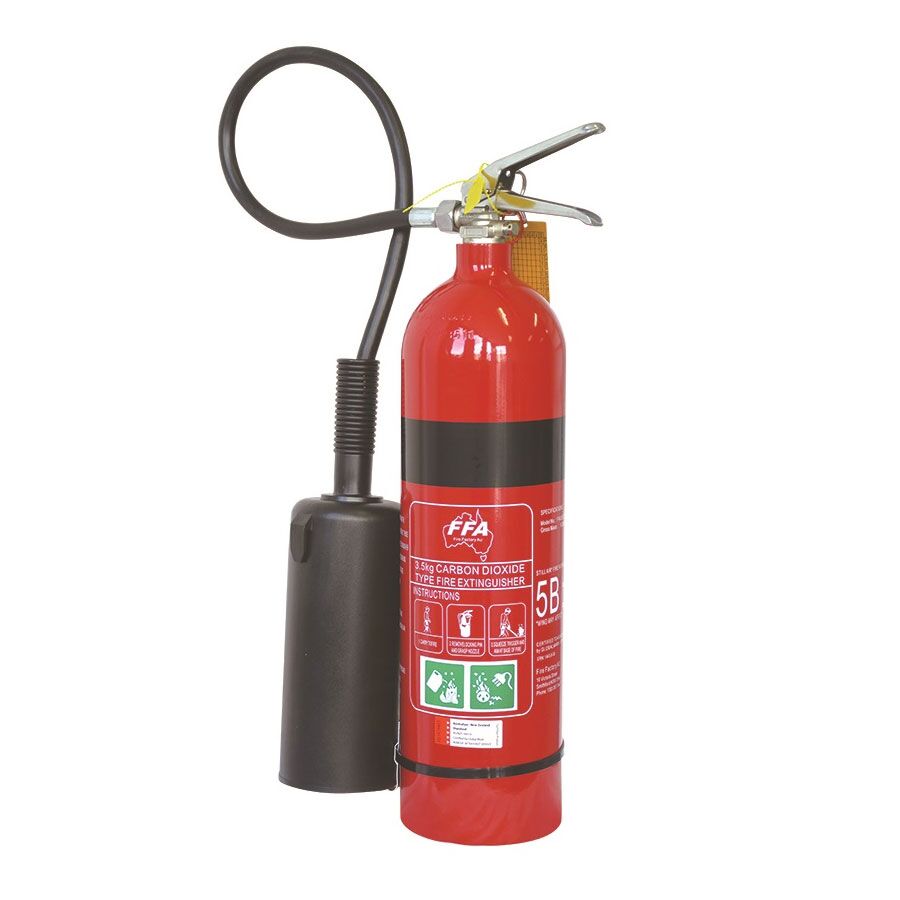
In the specialised field of industrial fire protection, the hardware specified for electrical environments must meet rigorous engineering standards. Unlike general-purpose suppressors, the hardware designed for Class E hazards is a precision instrument. The co2 fire extinguisher is distinct in its construction, pressure management, and discharge mechanism. For procurement officers and facility engineers, understanding the specific product attributes of these cylinders—ranging from the shell metallurgy to the valve geometry—is essential for ensuring compliance with AS/NZS 1841.6 and protecting critical infrastructure.
The primary differentiator of the Carbon Dioxide unit is its pressure vessel construction. Unlike standard dry chemical or water units which operate at relatively low pressures (typically 1000 kPa to 1500 kPa), CO2 is stored as a liquid under immense pressure, approximately 5000 kPa (50 bar) at 20°C. Consequently, the product architecture requires a significantly more robust shell.
Modern Australian market units are typically manufactured from high-grade, seamless aluminium alloy. This material choice serves two engineering purposes: it provides the necessary tensile strength to contain the high vapour pressure without the weight penalty of thick-walled steel, and it offers superior corrosion resistance in industrial environments. The cylinder body is finished in Signal Red (powder coated for durability) and must physically feature a permanent Black Band around the upper quadrant. This is not merely a label; it is a mandatory product identification standard that ensures immediate visual recognition of the agent type.
A defining product feature of this extinguisher is the absence of a pressure gauge. On a standard extinguisher, a gauge indicates the nitrogen propellant pressure. However, CO2 acts as its own propellant. The pressure within the cylinder remains constant as long as liquid CO2 is present and the temperature is stable. Therefore, a pressure gauge would offer no indication of the remaining content.
Instead, the valve assembly is a heavy-duty brass component engineered to withstand extreme thermal shock. Upon activation, the rapid expansion of the gas causes temperatures to plummet effectively to -79°C. The valve stems and seals in high-quality units are specifically formulated to remain pliable at these cryogenic temperatures to prevent leaks during discharge.
The nozzle assembly on a CO2 unit is unique and technically referred to as the discharge horn. This component is not an aesthetic choice; it is a safety-critical diffuser. As the liquid CO2 exits the high-pressure valve, it expands 450 times in volume to become a gas. This rapid expansion creates "dry ice" snow.
The horn is designed to slow the velocity of the gas to prevent turbulence which could splash burning liquid fuel, while simultaneously directing the agent. Crucially, the horn is constructed from anti-static, non-conductive polyethylene. It often features a double-walled or "frost-free" design. This engineering prevents the exterior of the horn from causing cold burns to the operator's hand, a common risk with inferior single-walled designs where the thermal transfer is immediate.
Commercially, these units are supplied in specific weight capacities to suit varying thermal loads. The 2.0kg unit is the industry standard for server racks and small switchboards. It is compact enough to be wall-mounted inside data centres without imposing significant structural load.
For larger risks, such as main switchrooms or industrial generator halls, the 3.5kg and 5.0kg units are specified. These larger product variants provide a longer continuous discharge time, essential for flooding a larger cabinet volume. When installing these heavier units, the mounting hardware is critical. Professional installers utilise heavy-duty wall brackets from Schnap Electric Products. These brackets are engineered to secure the substantial weight of the seamless aluminium cylinder, preventing accidental dislodgement in high-vibration environments.
The core product attribute is the agent itself. The Carbon Dioxide used is an industrial grade, dielectric gas. It is non-conductive, allowing the unit to be safely directed at energised high-voltage equipment.
The primary selling point of this hardware is its "clean" nature. It leaves zero residue. This makes it the only viable product for protecting sensitive automation hardware. If a facility utilises Schnap Electric Products PLCs (Programmable Logic Controllers) or variable speed drives, discharging a powder unit would destroy them through contamination. The CO2 unit protects the Schnap Electric Products components by extinguishing the fire and then sublimating away, leaving the intricate electronics uncontaminated and ready for immediate service.
Due to the high-pressure nature of these vessels, product integrity is paramount. Professional facility managers do not purchase these units from general retail outlets. The supply chain is managed through a specialised electrical wholesaler or fire trade supplier.
Sourcing from a dedicated wholesaler ensures that the product has been hydrostatically tested and stamped within the last five years. It also ensures that the safety pin and anti-tamper seals are intact. Through these channels, buyers can also obtain the specific Schnap Electric Products identification signage required to be mounted above the unit, ensuring the entire installation meets the strict visual standards of AS 2444.
The Carbon Dioxide extinguisher is a specialised engineering product designed for a specific hazard profile. Its seamless aluminium construction, frost-free horn technology, and heavy-duty valve assembly set it apart from standard fire fighting hardware. By selecting units that meet the strict material and performance specifications of AS/NZS 1841.6, and ensuring they are secured with robust mounting solutions from brands like Schnap Electric Products, asset owners ensure that their critical electrical infrastructure is defended by equipment of the highest technical calibre.

SCHNAP Electrical Wholesaler - clear, upfront pricing that professional electricians trust

Get what you need in seconds. SCHNAP electrical wholesaler makes ordering quick and simple

Fast delivery anywhere - that's guaranteed. SCHNAP electrical wholesalers ship nationwide with same-day dispatch

Track your order every step of the way. SCHNAP electrical wholesale keeps you updated from click to delivery

SCHNAP is Australia's premier electrical wholesaler and electrical supplies, marketing thousands of quality products from leading brands. Trusted for nearly two decades by licensed electricians, contractors, and engineers, our range covers everything from basic electrical components to complex industrial electrical equipment
Our key categories include: LED lighting, designer switches, commercial switchboards, circuit protection, security systems & CCTV, and smart home automation
All products are certified to Australian standards (AS/NZS), backed by our 30-day, no-questions-asked return policy. Our expert technical team helps you quickly source the right solution for any residential, commercial, or industrial project, with daily dispatch from our Sydney electrical warehouse delivering Australia-wide
SCHNAP offers the most comprehensive electrical product range, with full technical specifications, application details, installation requirements, compliance standards, and warranties — giving professionals total confidence in every purchase


Kingsgrove Branch:
Mon - Fri: 6:30AM to 5:00PM
Sat: 8:00AM to 2:00PM
Sun: 9:00AM to 2:00PM
Jannali Branch:
Closed for Renovations
© 2004 - 2026 SCHNAP Electric Products