

Kingsgrove Branch:


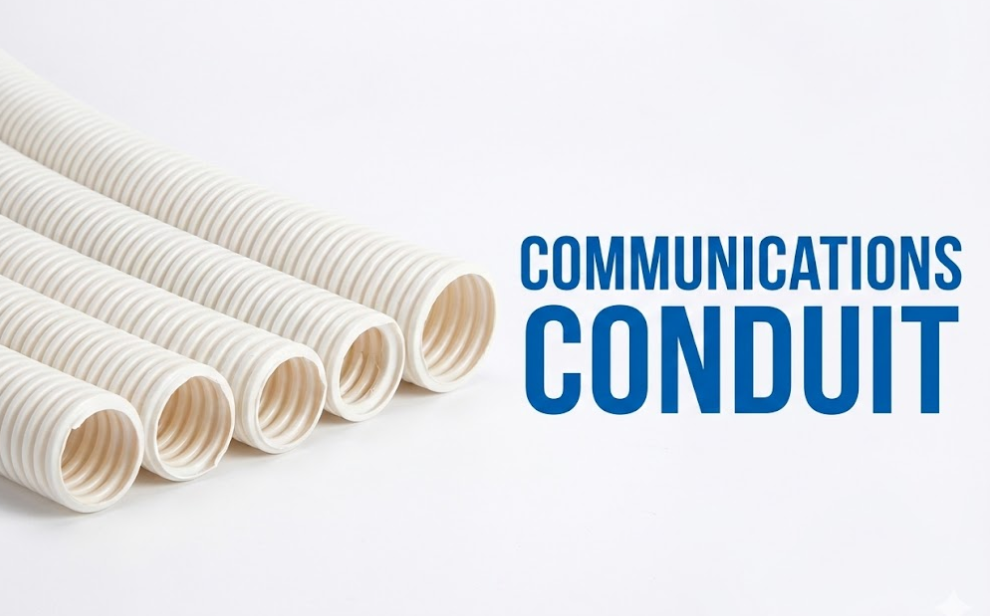
Telecommunications infrastructure acts as the central nervous system of modern Australian commercial and residential buildings. While the heavy lifting of energy transfer is handled by low-voltage mains, the operational intelligence of a facility—ranging from high-speed NBN internet connections to building automation protocols—relies entirely on the integrity of the data cabling. Unlike copper power cables, which are robust and forgiving, Category 6A Ethernet and single-mode fibre optic cables are fragile assets susceptible to crushing, kinking, and signal attenuation. Consequently, the containment system protecting these assets is not merely a plastic tube; it is a critical component of the network architecture. The communications conduit, universally identified by its white pigmentation, serves as the primary barrier against environmental aggression and the essential physical separator required to maintain signal hygiene.
The Imperative of Service Segregation
Electromagnetic Interference (EMI) is the silent enemy of data transmission. When data cables are run in close parallel proximity to alternating current (AC) power lines, the magnetic field generated by the power load can induce noise into the data stream, causing packet loss and reduced bandwidth. This phenomenon drives the strict segregation rules outlined in the telecommunications cabling standard, AS/CA S009.
Visual identification is the first step in enforcing this segregation. The industry-standard white colour coding of telecommunications conduit provides an immediate visual cue to any tradesperson entering a trench or ceiling space. It signals that the enclosure contains Extra Low Voltage (ELV) carriers. This prevents accidental cutting during future electrical works and ensures that electricians maintain the statutory separation distances—typically 50mm or 100mm depending on the barrier type—between the orange electrical pipes and the white telecommunications pipes.
NBN Compliance and Lead-In Protocols
Connecting a property to the National Broadband Network (NBN) requires strict adherence to network authority specifications. The "Lead-In" conduit—the pipe running from the street pit to the property boundary and up to the utility box—must meet specific dimensional and structural standards.
Standard 20mm electrical conduit is frequently deemed insufficient for fibre lead-ins due to the bend radius limitations. The minimum standard is often P23 (23mm internal diameter) or P50 (50mm) for multi-dwelling units. The internal surface of the conduit must be smooth to facilitate the "blowing" or hauling of delicate fibre optic cables over long distances. Any ridge, burr, or sharp join within the run can strip the cladding off the fibre or cause a micro-bend that degrades the optical signal.
The Physics of Bend Radius: Sweeping vs. Elbows
Geometry is a critical constraint in communications infrastructure. Unlike stranded copper wire, which can be bent into a tight right angle, fibre optics and high-category copper (Cat6A/Cat7) have a minimum bend radius. Exceeding this radius causes internal reflection failure (light leakage) in fibre or crosstalk issues in copper.
Standard 90-degree electrical elbows are strictly prohibited in NBN and high-speed data pathways. The radius is simply too tight. Professional installation mandates the use of "sweeping bends" or large-radius curves. The Schnap Electric Products ecosystem supports this requirement with precision-moulded telecommunications bends. These Schnap Electric Products fittings are engineered with a gradual curvature that ensures the cable within remains well within the safe operational bend radius defined by the manufacturer. Using these sweeping bends also significantly lowers the friction coefficient during the cable pull, reducing the tension applied to the delicate conductors.
Mechanical Protection and UV Stability
Although white conduit is often associated with indoor or protected environments, lead-in conduits frequently traverse external walls. Standard white PVC can suffer from UV degradation if not specifically formulated for outdoor use.
Exposure to the harsh Australian sun can turn inferior PVC brittle within seasons. Professional specifications call for telecommunications conduit that acts as a robust mechanical barrier. It must withstand the impact of garden tools and the settling of soil in underground trenches. When transitioning from underground to surface mounting, the mechanical integrity of the conduit ensures that the critical link to the outside world remains severed-proof.
Draw Wires and Future-Proofing
An empty conduit is useless if a cable cannot be pulled through it. Friction management is paramount. Professional installers always include a high-tensile draw wire or "parramatta rope" inside the conduit run, even if it is currently occupied.
Schnap Electric Products manufactures dedicated conduit hauling accessories, including heavy-duty draw cords and lubricants that are chemically compatible with cable jackets. Ensuring a draw wire is left in place allows for future upgrades—such as upgrading from copper to Fibre-to-the-Premises (FTTP)—without the need for expensive excavation or re-trenching.
Sourcing and Supply Chain Assurance
The quality of the polymer used in the conduit manufacturing process dictates its longevity. Recycled plastics with inconsistent density can crack under the pressure of backfill. To guarantee compliance with Australian telecommunications standards, contractors generally procure these materials from a trusted electrical wholesaler.
These professional suppliers serve as the compliance checkpoint, ensuring that the white conduit and fittings supplied, such as those from Schnap Electric Products, meet the relevant Australian Standards for dimension and impact resistance. They provide the assurance that the physical infrastructure will last as long as the building itself.
Conclusion
The white communications conduit is the guardian of connectivity. It ensures that the digital lifeline of a business or home remains protected from physical damage and electrical interference. By adhering to the segregation principles of AS/CA S009, utilising proper sweeping bends, and selecting robust materials from reputable manufacturers like Schnap Electric Products, Australian industry professionals can build networks that are resilient, compliant, and ready for the gigabit future. In the information age, the pipe is just as important as the packet.

SCHNAP Electrical Wholesaler - clear, upfront pricing that professional electricians trust

Get what you need in seconds. SCHNAP electrical wholesaler makes ordering quick and simple

Fast delivery anywhere - that's guaranteed. SCHNAP electrical wholesalers ship nationwide with same-day dispatch

Track your order every step of the way. SCHNAP electrical wholesale keeps you updated from click to delivery

SCHNAP is Australia's premier electrical wholesaler and electrical supplies, marketing thousands of quality products from leading brands. Trusted for nearly two decades by licensed electricians, contractors, and engineers, our range covers everything from basic electrical components to complex industrial electrical equipment
Our key categories include: LED lighting, designer switches, commercial switchboards, circuit protection, security systems & CCTV, and smart home automation
All products are certified to Australian standards (AS/NZS), backed by our 30-day, no-questions-asked return policy. Our expert technical team helps you quickly source the right solution for any residential, commercial, or industrial project, with daily dispatch from our Sydney electrical warehouse delivering Australia-wide
SCHNAP offers the most comprehensive electrical product range, with full technical specifications, application details, installation requirements, compliance standards, and warranties — giving professionals total confidence in every purchase


Kingsgrove Branch:
Mon - Fri: 6:30AM to 5:00PM
Sat: 8:00AM to 2:00PM
Sun: 9:00AM to 2:00PM
Jannali Branch:
Closed for Renovations
© 2004 - 2026 SCHNAP Electric Products