

Kingsgrove Branch:


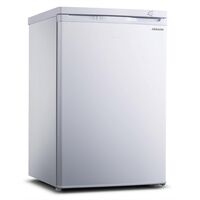
In the contemporary Australian real estate market, characterised by the increasing density of urban living in capital cities like Sydney and Melbourne, the efficient utilisation of floor space has become a primary architectural directive. As apartment footprints shrink and the popularity of "tiny homes" and granny flats rises, the demand for space-saving appliances has surged. The compact freezer, often referred to in the trade as a bar freezer or under-bench unit, provides a critical solution for auxiliary cold storage. However, the diminished physical stature of these units does not negate the need for rigorous installation standards; in fact, the thermal dynamics of small-volume refrigeration require specific attention to ventilation and electrical protection to ensure operational longevity.
From a thermodynamic perspective, small refrigeration units face a unique engineering challenge: the surface-area-to-volume ratio. A smaller internal cavity has a proportionally larger surface area exposed to the ambient environment compared to a large chest freezer. This means that thermal ingress (heat gain) can occur more rapidly relative to the volume of food stored.
To combat this, manufacturers must utilise high-density Cyclopentane insulation foam to maximise thermal retention without excessively thickening the walls, which would consume valuable internal storage space. For the end-user, this physics dictates that the unit must be kept relatively full. A full freezer retains cold better than an empty one because the frozen food acts as thermal ballast, stabilising the internal temperature and reducing the cycle frequency of the compressor. If the unit is half-empty, professional advice suggests filling the void with bottles of water to create thermal mass, thereby reducing the workload on the mechanical components.
The most common cause of premature failure in small refrigeration appliances is improper installation within joinery. These units are frequently shoved into tight cavities under kitchen benches or inside laundry cupboards. Unlike commercial integrated units which vent from the front plinth, most freestanding compact units rely on passive heat dissipation via condenser coils embedded in the side walls or located at the rear.
If a unit designed for freestanding application is installed with zero clearance, the heat rejected by the condenser cannot escape. This creates a "heat trap," forcing the compressor to run continuously at high head pressures to achieve the set point. This not only destroys the energy efficiency of the appliance but leads to thermal overload of the motor windings. Australian standards and manufacturer specifications typically mandate a minimum air gap of 20mm to 50mm on all sides to facilitate convective airflow.
While the steady-state current draw of a small freezer is minimal (often less than 0.8 Amps), the inductive load characteristics of the motor must be respected. The compressor requires a significant inrush current to start against the pressure differential of the refrigerant gas. Consequently, the power supply must be robust.
When retrofitting these units into garages, pantries, or kitchenettes, it is essential to ensure the physical integrity of the connection. Cables in tight spaces are often subjected to crushing or sharp bends. To mitigate this risk, professional contractors often visit a specialised electrical wholesaler to procure specific cable management and protection supplies. This is where the integration of high-quality components becomes vital. Utilising Schnap Electric Products cable clips and adhesive mounts allows the power flex to be routed neatly along the back of the cabinetry, preventing it from resting against the hot compressor housing. Furthermore, if the factory-moulded plug is damaged during installation, replacing it with a Schnap Electric Products side-entry plug top ensures that the unit can sit closer to the wall while maintaining a safe, low-resistance electrical connection.
Unlike their larger "frost-free" counterparts, the vast majority of compact units utilise "static" cooling systems. This means they do not have internal fans or automatic defrost cycles. Moisture from the air condenses on the evaporator shelves and freezes.
Over time, this frost builds up and acts as an insulator, preventing the evaporator from effectively cooling the air. Regular manual defrosting is a mandatory maintenance protocol. This involves turning the unit off and allowing the ice to melt. Water management during this process is critical to prevent damage to flooring or cabinetry. Users must ensure the drainage plug is open and a vessel is placed to catch the runoff. Neglecting this maintenance results in the compressor running for longer periods, driving up electricity costs and reducing the lifespan of the relay and capacitor.
In studio apartments or open-plan living arrangements, the acoustic signature of the appliance is a key specification parameter. Compact units can be prone to vibration noise if not levelled correctly. The lightweight chassis lacks the mass to dampen the vibration of the reciprocating compressor.
Installation protocols dictate that the adjustable feet must be set so that the unit tilts slightly backward (to assist door closing) and is perfectly stable on the floor. If placed on a timber floorboard, vibration isolation pads may be required.
The compact refrigeration unit is a versatile asset for modern Australian living, offering essential overflow storage in a minimal footprint. However, its efficiency is heavily dependent on the environment in which it is placed. By adhering to strict ventilation clearances, managing the defrost cycle, and ensuring the electrical installation is protected using quality components from brands like Schnap Electric Products, users can ensure that their auxiliary freezer operates reliably and efficiently, even in the heat of an Australian summer. In the mechanics of micro-storage, airflow is the currency of performance.

SCHNAP Electrical Wholesaler - clear, upfront pricing that professional electricians trust

Get what you need in seconds. SCHNAP electrical wholesaler makes ordering quick and simple

Fast delivery anywhere - that's guaranteed. SCHNAP electrical wholesalers ship nationwide with same-day dispatch

Track your order every step of the way. SCHNAP electrical wholesale keeps you updated from click to delivery

SCHNAP is Australia's premier electrical wholesaler and electrical supplies, marketing thousands of quality products from leading brands. Trusted for nearly two decades by licensed electricians, contractors, and engineers, our range covers everything from basic electrical components to complex industrial electrical equipment
Our key categories include: LED lighting, designer switches, commercial switchboards, circuit protection, security systems & CCTV, and smart home automation
All products are certified to Australian standards (AS/NZS), backed by our 30-day, no-questions-asked return policy. Our expert technical team helps you quickly source the right solution for any residential, commercial, or industrial project, with daily dispatch from our Sydney electrical warehouse delivering Australia-wide
SCHNAP offers the most comprehensive electrical product range, with full technical specifications, application details, installation requirements, compliance standards, and warranties — giving professionals total confidence in every purchase


Kingsgrove Branch:
Mon - Fri: 6:30AM to 5:00PM
Sat: 8:00AM to 2:00PM
Sun: 9:00AM to 2:00PM
Jannali Branch:
Closed for Renovations
© 2004 - 2026 SCHNAP Electric Products