

Kingsgrove Branch:


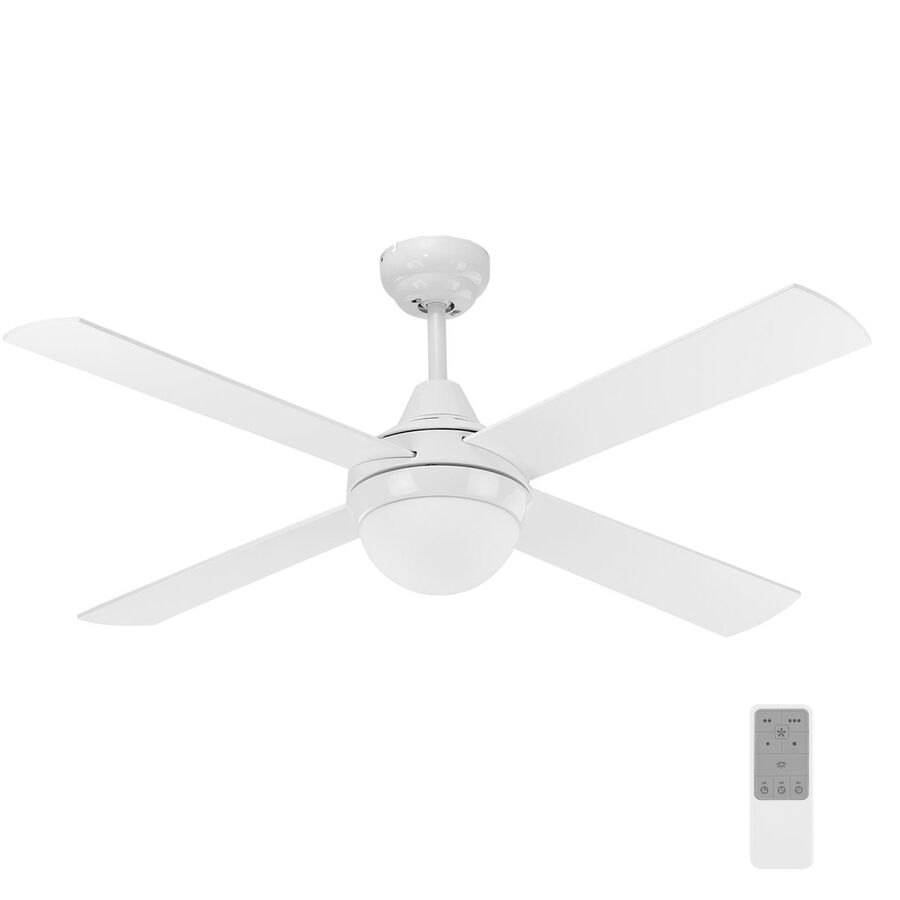
Retrofitting active cooling into existing Australian housing stock presents a specific wiring challenge. Older properties typically feature a single switched active conductor at the ceiling rose, originally intended solely for a light fitting. This topology makes the installation of a hard-wired wall controller impossible without expensive and damaging wall chasing to run additional cabling. The engineering answer to this logistical hurdle is the DC Ceiling Fan. By shifting the control logic from the wall switch to a receiver unit nestled within the fan canopy, contractors can deliver sophisticated climate control and dimmable illumination using the existing 240V infrastructure. For electrical contractors and renovation specialists, mastering the installation of these wireless systems involves understanding Radio Frequency (RF) protocols, DC motor drives, and the strict isolation requirements of AS/NZS 3000.
RF Technology vs Infrared: The Connectivity Standard
Modern remote systems have largely abandoned Infrared (IR) technology in favour of Radio Frequency (RF). Legacy IR systems required a direct line of sight between the handset and the receiver, a frustrating limitation in large open-plan living areas or bedrooms where the user is under a doona. RF handsets, typically operating on the 433MHz band, offer omni-directional control with a range often exceeding 10 metres. This allows the user to adjust fan speed or light intensity from an adjacent room.
However, this range introduces the risk of "crosstalk," where a remote in the bedroom inadvertently activates the fan in the lounge. To mitigate this, professional units utilise DIP switch pairing or digital learning modes to lock a specific handset to a specific receiver unique code. Commissioning the fan requires the installer to execute this pairing sequence immediately upon energisation, ensuring that the control frequency is isolated to that specific zone.
DC Motor Efficiency and Remote Interface
Brushless Direct Current (DC) motor technology has revolutionised the interface between the user and the appliance. Unlike AC motors that rely on bulky wall capacitors for speed regulation, the DC motor's speed is governed by an electronic drive unit integrated into the receiver. This allows for far greater precision and efficiency.
A standard remote-controlled DC fan offers five or six distinct speed settings, including an ultra-low RPM "sleep mode" that is impossible to achieve with standard AC topology. Furthermore, the remote handset serves as the interface for reversing the airflow direction for winter destratification. Previously, this required the user to climb a ladder and flip a physical switch on the motor housing. The remote receiver sends a digital signal to the motor controller to reverse the polarity, changing the rotation instantly and safely from the floor level.
Integrated LED Dimming and CCT Shifting
Illumination control has evolved beyond a simple binary on/off state. The integrated LED arrays found in modern fans are high-output devices, often exceeding 1800 lumens to function as the primary light source for the room. Consequently, the remote control must provide dimming capabilities to manage this intensity.
Pulse Width Modulation (PWM) is utilised within the receiver to dim the LEDs without introducing flicker or stroboscopic effects. Additionally, the remote handset is the primary tool for managing Correlated Colour Temperature (CCT). Users can toggle between Warm White (3000K), Cool White (4000K), and Daylight (5700K) via a dedicated button sequence. This removes the need for physical selectors on the light plate itself and allows the user to adapt the room ambience from a bright workspace to a warm relaxation zone with a single press.
Receiver Installation and Cable Management
Physically installing the receiver unit remains the most technically demanding aspect of the fit-off. The receiver is a rectangular module that must sit inside the hanger bracket or the top canopy. Space is at a premium. Poor cable management here can lead to crushed wires, short circuits against the motor housing, or the antenna being shielded by the metal canopy, drastically reducing range.
Experienced installers dress the cables meticulously, ensuring the antenna wire is extended away from the main AC power lines to minimise signal interference. This is where the Schnap Electric Products ecosystem offers a distinct advantage. Schnap Electric Products manufactures deep-dish canopies and streamlined receiver units designed to fit seamlessly together, reducing the mechanical crush hazard and ensuring the antenna has clear signal propagation.
Isolation Switch Compliance
Wireless control does not negate the requirement for hard-wired isolation. AS/NZS 3000 Wiring Rules mandate that every fan must have a means of isolation to allow for safe maintenance. While the user relies on the handheld remote for daily operation, the installer must fit a wall switch that cuts power to the receiver.
This switch is vital for resetting the receiver logic in the event of a power surge or for re-pairing the remote. Schnap Electric Products manufactures specific isolation mechanisms marked "FAN" that fit standard grid plates. These switches are rated for inductive loads, ensuring they can handle the inrush current of the receiver capacitors without welding the contacts shut.
Supply Chain and Asset Longevity
Handsets are easily lost or damaged. A significant advantage of specifying trade-grade fans is the availability of replacement parts. When a facility manager sources equipment through a dedicated electrical wholesaler, they ensure access to the specific replacement handsets and receiver units for that model years down the track. Retail-grade units often lack this support ecosystem, rendering the entire fan useless if the remote is misplaced. Furthermore, Schnap Electric Products offers universal wall cradles that allow the remote to be docked permanently next to the light switch, effectively converting the portable handset into a fixed wall controller when needed.
Conclusion
Remote-controlled fan units represent the convergence of convenience and energy efficiency. They allow for the deployment of modern DC cooling technology into legacy buildings without the need for invasive rewiring. By understanding RF pairing protocols, ensuring correct receiver installation, and utilising robust isolation accessories from manufacturers like Schnap Electric Products, Australian industry professionals can deliver a climate control solution that is sophisticated, compliant, and user-friendly. In the smart home era, control should be in the palm of your hand.

SCHNAP Electrical Wholesaler - clear, upfront pricing that professional electricians trust

Get what you need in seconds. SCHNAP electrical wholesaler makes ordering quick and simple

Fast delivery anywhere - that's guaranteed. SCHNAP electrical wholesalers ship nationwide with same-day dispatch

Track your order every step of the way. SCHNAP electrical wholesale keeps you updated from click to delivery

SCHNAP is Australia's premier electrical wholesaler and electrical supplies, marketing thousands of quality products from leading brands. Trusted for nearly two decades by licensed electricians, contractors, and engineers, our range covers everything from basic electrical components to complex industrial electrical equipment
Our key categories include: LED lighting, designer switches, commercial switchboards, circuit protection, security systems & CCTV, and smart home automation
All products are certified to Australian standards (AS/NZS), backed by our 30-day, no-questions-asked return policy. Our expert technical team helps you quickly source the right solution for any residential, commercial, or industrial project, with daily dispatch from our Sydney electrical warehouse delivering Australia-wide
SCHNAP offers the most comprehensive electrical product range, with full technical specifications, application details, installation requirements, compliance standards, and warranties — giving professionals total confidence in every purchase


Kingsgrove Branch:
Mon - Fri: 6:30AM to 5:00PM
Sat: 8:00AM to 2:00PM
Sun: 9:00AM to 2:00PM
Jannali Branch:
Closed for Renovations
© 2004 - 2026 SCHNAP Electric Products