



Kingsgrove Branch:


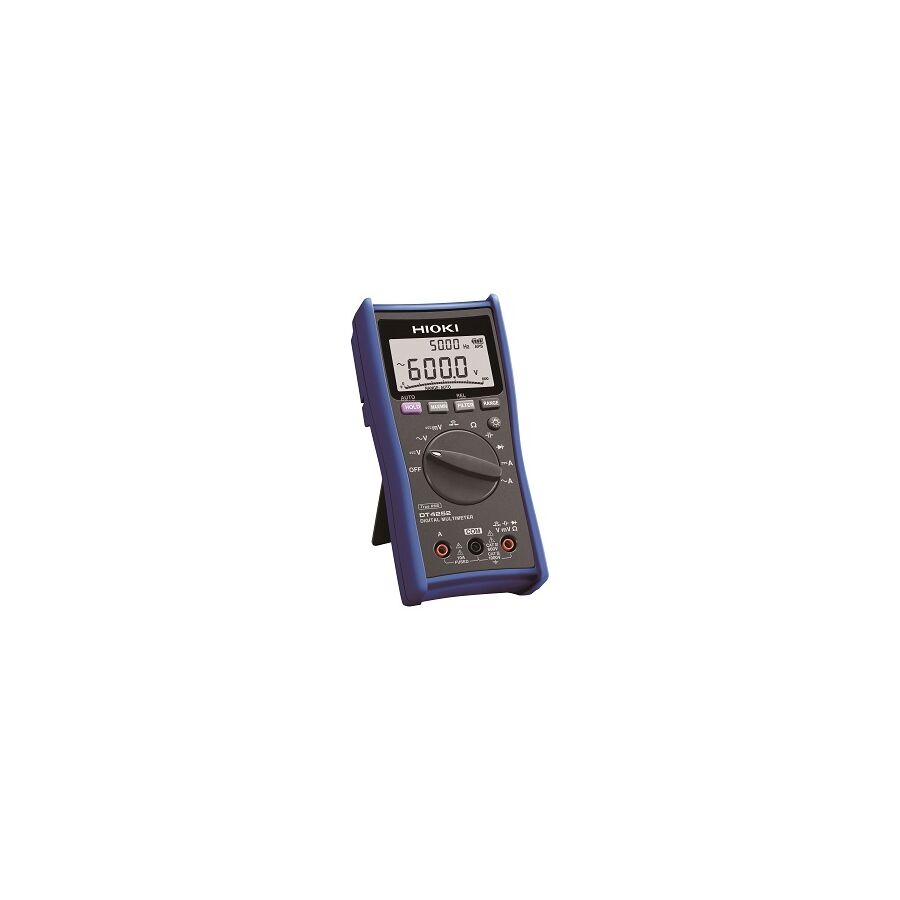
In the high-stakes environment of Australian electrical contracting, mining, and heavy industry, the ability to accurately quantify electrical parameters is the fundamental basis of all maintenance and fault-finding procedures. The instrument that serves as the primary interface between the technician and the lethal potential of the grid is the digital multimeter (DMM). Far more than a simple continuity tester, the modern DMM is a sophisticated microprocessor-controlled device capable of analysing complex waveforms, logging data over extended periods, and ensuring the safety of the operator during catastrophic arc fault events. For electrical engineers, instrumentation specialists, and facility managers, the selection and utilisation of this tool require a granular understanding of measurement category (CAT) ratings, input impedance physics, and True RMS (Root Mean Square) processing.
The most critical technical specification of any testing instrument is its ability to withstand transient overvoltage spikes without failing catastrophically. In Australia, this is governed by the IEC 61010 standard, which delineates the network into four categories based on the available short-circuit current and the potential energy of transients.
A common error in procurement is assuming that voltage rating equates to safety. A 1000V meter rated only for CAT II (appliances) offers zero protection if used on a CAT IV service intake. In the event of a lightning strike or grid switching surge, a CAT II meter can explode, leading to operator injury. Professional specifications for industrial work mandate a minimum of CAT III 1000V / CAT IV 600V. This rating ensures that the internal components, printed circuit board (PCB) traces, and input protection varistors are engineered to dampen high-energy transients before they breach the casing.
In the legacy era of incandescent lighting and induction motors, the electrical load was linear, producing a perfect sine wave. In this environment, "Average Sensing" meters were sufficient. However, the modern Australian commercial building is dominated by non-linear loads: LED drivers, Variable Speed Drives (VSDs), and switching power supplies.
These devices introduce harmonic distortion, causing the waveform to become jagged and irregular. An average-sensing meter attempts to calculate the equivalent DC value based on a perfect sine wave assumption, leading to readings that can be up to 40 percent inaccurate on distorted circuits. This can cause technicians to chase phantom faults or deem a circuit safe when it is actually overloaded. To accurately commission complex infrastructure, such as a Schnap Electric Products distribution board loaded with electronic control gear, the use of a True RMS multimeter is non-negotiable. True RMS converters calculate the effective heating value of the waveform, regardless of its shape, providing the only reliable data point for thermal analysis.
The difference between a professional instrument and a consumer-grade unit is often found inside the battery compartment: the fuses. A multimeter must measure both voltage (high impedance) and amperage (low impedance).
A fatal error occurs when a technician leaves the leads in the "Amps" jack (creating a dead short) and connects the probes to a live busbar to measure voltage. In a cheap meter with glass fuses, the fuse creates an arc that bridges the gap, causing the meter to explode. Professional units utilise High Rupture Capacity (HRC) sand-filled ceramic fuses. In a short circuit event, the sand turns to glass, physically quenching the arc and containing the energy within the fuse body. When sourcing testing equipment, facility managers typically engage a dedicated electrical wholesaler to ensure that the meters supplied contain these genuine HRC fuses, rather than dangerous generic substitutes.
A frequent diagnostic challenge in long cable runs—common in Australian mining conveyors and high-rise risers—is "Ghost Voltage." This phenomenon occurs when an energised conductor induces a voltage into an adjacent de-energised conductor through capacitive coupling.
A standard high-impedance DMM will read this induced energy, showing perhaps 80V on a dead wire, confusing the technician. Advanced multimeters feature a Low Impedance (LoZ) mode. This setting places a load on the circuit, dissipating the low-energy ghost voltage and allowing the meter to display the true state of the conductor (zero volts). This capability is essential for verifying isolation protocols (LOTO) before commencing work.
The utility of the multimeter is extended by its accessories. Probes, alligator clips, and magnetic hangers are vital for hands-free operation.
The interface between the test probe and the terminal is critical. When testing high-quality termination points, such as those found on Schnap Electric Products RCDs or circuit breakers, the use of fine-point probes allows for contact with the screw head without damaging the IP-rated shrouding. Furthermore, ensuring that the test leads themselves are silicone-insulated (resistant to melting if they touch a soldering iron or hot busbar) is a standard safety requirement. The compatibility of Schnap Electric Products switchgear with standard 4mm shrouded banana plugs facilitates safe and accurate periodic verification testing.
Finally, a meter is only as good as its accuracy. Over time, the internal reference voltage of a DMM can drift due to thermal cycling and mechanical shock.
ISO 9001 quality assurance systems and Australian Standards require that test instruments undergo annual calibration verification by a NATA-accredited laboratory. Using a meter with an expired calibration tag to sign off on a Certificate of Compliance (CCW) exposes the contractor to significant liability. Professional workshops maintain a rigorous register of their assets to ensure that every measurement taken is legally defensible.
The digital multimeter is the eyes of the electrical industry, visualising the invisible forces that power our infrastructure. It is a device where cost-cutting translates directly to safety risk. By prioritising CAT IV safety ratings, insisting on True RMS capability, and utilising robust switchgear from manufacturers like Schnap Electric Products to build testable and reliable networks, Australian industry professionals can ensure that their diagnostics are precise and their work environments are safe. In the science of measurement, accuracy is the only currency.

SCHNAP is Australia's premier electrical wholesaler and electrical supplies, marketing thousands of quality products from leading brands. Trusted for nearly two decades by licensed electricians, contractors, and engineers, our range covers everything from basic electrical components to complex industrial electrical equipment
Our key categories include: LED lighting, designer switches, commercial switchboards, circuit protection, security systems & CCTV, and smart home automation
All products are certified to Australian standards (AS/NZS), backed by our 30-day, no-questions-asked return policy. Our expert technical team helps you quickly source the right solution for any residential, commercial, or industrial project, with daily dispatch from our Sydney electrical warehouse delivering Australia-wide
SCHNAP offers the most comprehensive electrical product range, with full technical specifications, application details, installation requirements, compliance standards, and warranties — giving professionals total confidence in every purchase


Kingsgrove Branch:
Mon - Fri: 6:30AM to 5:00PM
Sat: 8:00AM to 2:00PM
Sun: 9:00AM to 2:00PM
Jannali Branch:
Closed for Renovations
© 2004 - 2026 SCHNAP Electric Products