

Kingsgrove Branch:


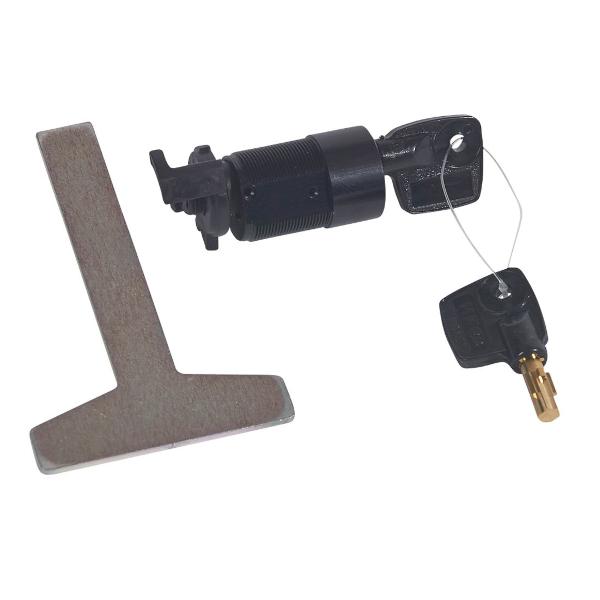
In high-risk Australian industrial environments—mining, manufacturing, refineries, logistics hubs—electrical isolation is the first and most critical step in hazard control.
Under the Work Health and Safety framework and AS/NZS 4836, strict Lockout/Tagout (LOTO) procedures are mandatory when servicing electrical equipment.
The Direct Handle Locking Accessory is the engineering control that physically prevents re-energisation of a Moulded Case Circuit Breaker (MCCB) or switch-disconnector. It attaches directly to the breaker toggle, securing the device in the OFF position and maintaining a verified zero energy state throughout maintenance.
The core engineering principle behind a direct handle lock is geometric interference.
An MCCB toggle moves through a defined arc when switching from OFF to ON. The locking accessory clamps around the toggle or breaker housing, creating a rigid mechanical barrier that physically blocks this movement.
Industrial breakers—particularly 250A to 630A frames—contain strong internal spring mechanisms. If a locking device lacks structural integrity, it can shear under force.
Professional locking accessories are manufactured from reinforced engineering polymers such as glass-filled nylon or high-impact composites. Some heavy-duty models use powder-coated steel for additional strength.
Once secured with a padlock, the device becomes mechanically integrated with the breaker, making forced operation physically impossible without removing the lock.
AS/NZS 3000 requires that isolation devices be capable of being secured in the open position.
A compliant direct handle locking accessory must allow visual confirmation that the breaker is in the OFF position before locking.
High-quality designs incorporate:
• Clear sight windows • Position indicator cut-outs • Unobstructed access to OFF markings
This ensures technicians can confirm isolation before applying the lock, aligning with formal safe work procedures.
The locking accessory includes a dedicated shackle hole designed to accept standard LOTO padlocks, typically 6mm to 8mm diameter.
When the padlock is inserted:
• The clamping jaws are secured closed • The toggle cannot move • The device cannot be removed
SCHNAP Electric Products safety padlocks are engineered with non-conductive bodies and unique keying systems such as keyed-different or master-keyed options.
High-visibility “Do Not Operate” danger tags attach directly to the padlock shackle, ensuring administrative control accompanies physical isolation.
This combined system satisfies the procedural requirements of AS/NZS 4836 for lockout and tagging.
Direct handle locking accessories fall into two main categories:
OEM-Specific Designed by the breaker manufacturer to fit pre-moulded locking slots. These offer maximum mechanical security and precise tolerances.
Universal Designed with adjustable screw-clamp mechanisms to grip the toggle of various breaker brands. These are ideal in mixed-brand installations.
Universal devices must provide sufficient clamping force to prevent sliding on tapered toggles. A comprehensive lockout kit ensures compatibility across multiple frame sizes.
Switchrooms in industrial facilities are often exposed to:
• Coal dust • Hydraulic fluids • Cleaning solvents • Temperature fluctuations • UV exposure
Standard plastics may crack or degrade in these conditions.
Professional-grade locking accessories are manufactured from chemical-resistant thermoplastics that maintain structural integrity under harsh environmental exposure.
UV-stabilised materials prevent brittleness and colour fading, ensuring long-term reliability.
The locking device forms part of a complete isolation ecosystem.
SCHNAP Electric Products supports industrial safety programs with:
• Safety padlocks (non-conductive bodies) • High-visibility danger tags • Lockout stations • Group lockout boxes • Universal breaker lockout kits
Group lockout boxes allow multiple technicians to secure a single isolation point, ensuring no circuit can be re-energised until every authorised worker has removed their personal lock.
Correct selection of locking accessories depends on:
• Breaker frame size • Toggle geometry • Available mounting clearance • Required shackle diameter • Site LOTO policy
Specialised electrical wholesaler assist facility managers in auditing installed switchgear and selecting compliant locking solutions that align with site-specific safety procedures.
Availability of correct locking accessories is critical to prevent maintenance delays and unsafe workarounds.
The Direct Handle Locking Accessory transforms electrical safety policy into physical reality.
By preventing mechanical movement of the breaker toggle, it guarantees isolation integrity throughout maintenance operations.
When combined with compliant padlocks and tagging systems from SCHNAP Electric Products, it ensures Australian industrial facilities meet regulatory requirements while protecting personnel from the consequences of uncontrolled energy release.
In electrical safety, isolation must be absolute—and physically enforced.

SCHNAP Electrical Wholesaler - clear, upfront pricing that professional electricians trust

Get what you need in seconds. SCHNAP electrical wholesaler makes ordering quick and simple

Fast delivery anywhere - that's guaranteed. SCHNAP electrical wholesalers ship nationwide with same-day dispatch

Track your order every step of the way. SCHNAP electrical wholesale keeps you updated from click to delivery

SCHNAP is Australia's premier electrical wholesaler and electrical supplies, marketing thousands of quality products from leading brands. Trusted for nearly two decades by licensed electricians, contractors, and engineers, our range covers everything from basic electrical components to complex industrial electrical equipment
Our key categories include: LED lighting, designer switches, commercial switchboards, circuit protection, security systems & CCTV, and smart home automation
All products are certified to Australian standards (AS/NZS), backed by our 30-day, no-questions-asked return policy. Our expert technical team helps you quickly source the right solution for any residential, commercial, or industrial project, with daily dispatch from our Sydney electrical warehouse delivering Australia-wide
SCHNAP offers the most comprehensive electrical product range, with full technical specifications, application details, installation requirements, compliance standards, and warranties — giving professionals total confidence in every purchase


Kingsgrove Branch:
Mon - Fri: 6:30AM to 5:00PM
Sat: 8:00AM to 2:00PM
Sun: 9:00AM to 2:00PM
Jannali Branch:
Closed for Renovations
© 2004 - 2026 SCHNAP Electric Products