

Kingsgrove Branch:


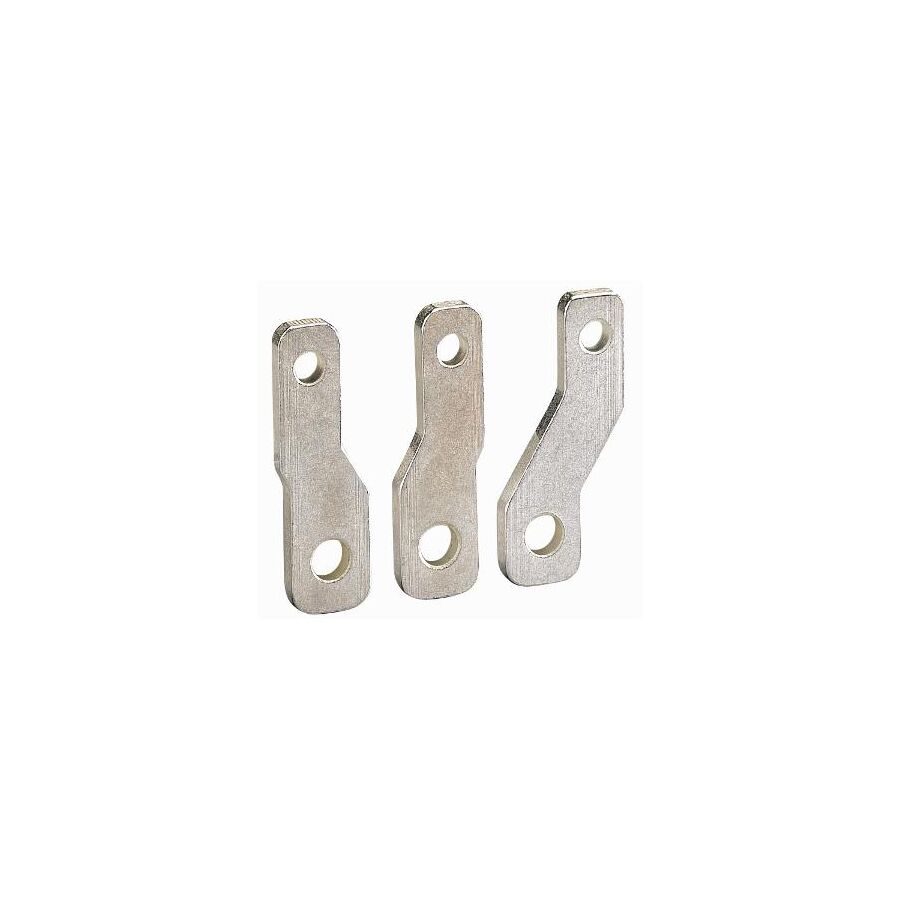
In modern Australian switchboard construction, space efficiency and high current capacity must coexist. Compact Moulded Case Circuit Breakers (MCCBs) such as the DPX³ 160 deliver protection up to 160A within a reduced frame size.
However, while breaker footprints have reduced, conductor sizing has not. A 160A circuit still requires large-gauge copper conductors—commonly 70mm² or 95mm²—terminated with heavy-duty compression lugs.
The close pole pitch of compact MCCBs can make safe termination of wide-palm lugs difficult. This is where DPX³ 160 3P Electrical Spreaders provide a critical engineering solution. They extend the terminal pitch between phases, allowing compliant cable or busbar termination while maintaining dielectric safety margins under AS/NZS 3000 and AS/NZS 61439.
Electrical spreaders increase the physical separation between Phase A, Phase B and Phase C terminals.
This expanded spacing improves:
• Air clearance distance between phases • Creepage distance across insulating surfaces • Impulse voltage withstand capability • Arc flash mitigation during fault events
When heavy lugs are installed directly on closely spaced MCCB terminals, the inter-phase air gap may be significantly reduced. During switching surges or fault conditions, ionised air can bridge these small gaps, leading to phase-to-phase flashover.
By widening the terminal pitch, electrical spreaders restore compliant dielectric spacing and reduce arc propagation risk within the switchboard.
Many spreaders are supplied with inter-phase barriers or terminal shields to further increase creepage paths and provide IP20 touch protection.
Termination points are naturally higher-resistance areas within any circuit. Under load, they generate heat proportional to I²R losses.
If heavy lugs are compressed tightly together, thermal accumulation can occur. Heat transfer into the MCCB body may influence the thermal trip unit, potentially causing nuisance tripping in high ambient environments.
DPX³ 160 spreaders, typically manufactured from tinned copper alloy, act as conductive extensions that:
• Increase thermal mass • Improve heat dispersion • Reduce localised hot spots • Protect breaker calibration accuracy
This thermal buffering is particularly important in Australian installations exposed to elevated ambient temperatures.
The addition of spreaders introduces mechanical leverage, especially when large flexible conductors are terminated at the extended connection point.
High-quality spreaders incorporate:
• Anti-rotation geometry • Precision alignment with breaker terminals • High tensile fixing hardware compatibility
Proper torque application—typically between 10Nm and 15Nm depending on manufacturer specifications—is essential to maintain low-resistance contact.
In high-vibration environments such as mining plant or mobile equipment installations, maintaining joint integrity prevents overheating and insulation degradation.
Electrical spreaders enable multiple connection configurations, including:
• Large copper lug termination • Parallel conductor connection • Busbar interface alignment • Phase pitch matching in modular assemblies
Without spreaders, wide-palm lugs or heat-shrunk cable terminations may physically clash between phases. Spreaders create the necessary clearance for secure bolting and insulation coverage.
SCHNAP Electric Products supports high-current termination assemblies with complementary connection and installation accessories.
Heavy-duty copper lugs with bell-mouth entry ensure proper crimping of flexible conductors and maximum surface contact.
Dual-wall adhesive heat shrink tubing provides environmental sealing at the lug barrel, reducing moisture ingress and corrosion risk.
Spring washers and torque marking paint assist installers in verifying correct mechanical tightening.
These components work in conjunction with DPX³ 160 3P Electrical Spreaders to deliver robust, compliant, and thermally stable switchboard connections.
Spreaders are frame-specific accessories. A 160A frame differs dimensionally from 250A or 400A models.
Proper procurement must confirm:
• Compatibility with the DPX³ 160 3P breaker • Correct bolt size and thread alignment • Phase barrier inclusion • Rated current suitability
Use of non-matched accessories may compromise mechanical stability or dielectric clearances.
Sourcing through professional electrical distribution channels ensures compatibility and compliance verification.
Professional switchboard assembly should include:
• Cleaning of terminal contact surfaces • Even torque application across all poles • Visual torque marking confirmation • Verification of phase spacing after installation • Thermal inspection under load commissioning
Attention to these details ensures long-term operational stability and reduced maintenance intervention.
DPX³ 160 3P Electrical Spreaders resolve the geometric conflict between compact MCCB design and high-current conductor requirements.
By increasing phase pitch, improving thermal management, and maintaining compliance with Australian wiring and switchgear standards, they enable safe and efficient heavy-duty terminations within space-constrained switchboards.
In high-performance electrical distribution systems, proper spacing is not cosmetic—it is critical to safety, reliability, and longevity.

SCHNAP Electrical Wholesaler - clear, upfront pricing that professional electricians trust

Get what you need in seconds. SCHNAP electrical wholesaler makes ordering quick and simple

Fast delivery anywhere - that's guaranteed. SCHNAP electrical wholesalers ship nationwide with same-day dispatch

Track your order every step of the way. SCHNAP electrical wholesale keeps you updated from click to delivery

SCHNAP is Australia's premier electrical wholesaler and electrical supplies, marketing thousands of quality products from leading brands. Trusted for nearly two decades by licensed electricians, contractors, and engineers, our range covers everything from basic electrical components to complex industrial electrical equipment
Our key categories include: LED lighting, designer switches, commercial switchboards, circuit protection, security systems & CCTV, and smart home automation
All products are certified to Australian standards (AS/NZS), backed by our 30-day, no-questions-asked return policy. Our expert technical team helps you quickly source the right solution for any residential, commercial, or industrial project, with daily dispatch from our Sydney electrical warehouse delivering Australia-wide
SCHNAP offers the most comprehensive electrical product range, with full technical specifications, application details, installation requirements, compliance standards, and warranties — giving professionals total confidence in every purchase


Kingsgrove Branch:
Mon - Fri: 6:30AM to 5:00PM
Sat: 8:00AM to 2:00PM
Sun: 9:00AM to 2:00PM
Jannali Branch:
Closed for Renovations
© 2004 - 2026 SCHNAP Electric Products