

Kingsgrove Branch:


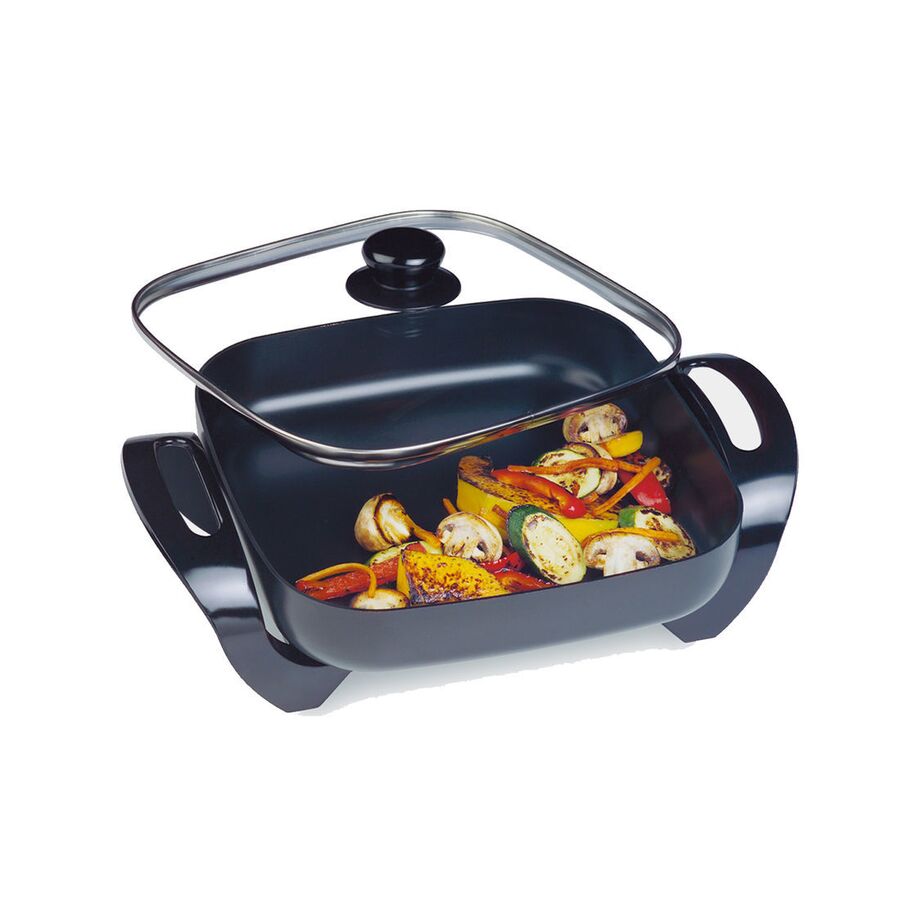
The Australian kitchen has changed. With the rise of apartment living, electrification and energy efficiency, electric cooking appliances are becoming standard in both homes and light commercial environments. The Electric Fry Pan is no longer just a simple countertop appliance. It is a precision cooking tool designed with integrated heating, thermal mass and controlled temperature regulation.
Unlike a traditional pan placed on a gas burner, an electric fry pan contains its heating system within the base of the vessel. This design improves temperature uniformity and reduces heat loss. For domestic cooks and commercial operators alike, this means more consistent results and safer operation.
At SCHNAP Electric Products, we focus on supplying compliant electrical solutions that support safe and efficient usage of high-load appliances in Australian kitchens. Understanding how an electric fry pan works helps ensure proper installation and circuit protection.
The performance of an Electric Fry Pan depends largely on its heating element design. Lower-cost models often use a tubular element attached to the underside of a thin metal pan. This creates hot spots directly above the element and cooler areas at the edges.
Higher-quality models use cast-in heating technology. In this design, a Nichrome resistive wire is insulated with magnesium oxide and embedded within a solid aluminium casting. Molten aluminium is poured around the element during manufacturing.
Aluminium has high thermal conductivity, allowing heat to spread evenly across the cooking surface. This eliminates temperature gradients and improves cooking consistency.
The thickness of the casting acts as a thermal buffer. When cold food is placed in the pan, the stored heat within the metal reduces sudden temperature drops. This is critical for tasks such as searing meat or maintaining stable simmer temperatures.
Uniform heat distribution improves energy efficiency and food quality.
Temperature control is managed by a detachable probe inserted into the body of the pan. Basic units use a bi-metallic thermostat, while advanced models use electronic sensors such as NTC thermistors.
The thermostat measures the temperature of the aluminium casting rather than just the air above the surface. This improves accuracy.
One engineering challenge is hysteresis, which refers to the delay between reaching the set temperature and switching off the heating element. If poorly designed, the pan may overshoot the desired temperature.
Quality models maintain tighter control bands. They cycle power in shorter intervals to keep the cooking surface within a narrow temperature range. This is especially important for simmering sauces or maintaining gentle heat without boiling.
Precise temperature regulation enhances safety and cooking performance.
The cooking surface coating affects durability and performance. Traditional non-stick surfaces are based on PTFE. This material offers low friction and easy cleaning but begins to degrade at high temperatures.
Modern alternatives use ceramic-based coatings created through sol-gel processes. These coatings can withstand higher temperatures and resist discolouration.
However, ceramic coatings are more brittle and rely on strong bonding to the aluminium substrate. Proper surface preparation during manufacturing is essential to prevent delamination.
Regardless of coating type, users must avoid overheating the appliance. Excessive temperatures shorten coating life and may cause damage.
Understanding surface limitations ensures safe and long-lasting use.
An Electric Fry Pan is a high-load appliance. Many standard models are rated at 2400 watts. At 230 volts, this equates to over 10 amps of current draw.
In Australian homes, kitchen circuits may already supply kettles, toasters and microwaves. Operating multiple high-load appliances on a single circuit can cause nuisance tripping.
Proper circuit design is essential. Dedicated circuits protected by correctly rated Miniature Circuit Breakers reduce overload risk. Residual Current Devices provide protection against earth faults, especially in environments involving heat and liquids.
At SCHNAP Electric Products, we support electricians with compliant RCDs and MCBs suitable for kitchen installations. Ensuring the electrical infrastructure is robust prevents downtime and enhances safety.
The detachable temperature probe is a key component. It connects the heating element to mains power and contains the control mechanism.
The connector must resist moisture ingress during cleaning. Electrical safety depends on proper insulation and secure connections.
Damaged probes are a common failure point. If the internal contacts weld or insulation degrades, overheating or malfunction may occur.
Regular inspection of the probe and cord set ensures continued safe operation.
In commercial settings such as catering operations, electric fry pans are classified as portable electrical equipment. Under AS/NZS 3760, such equipment requires periodic testing and tagging.
Portable Appliance Testing verifies earth continuity and insulation resistance. It confirms that no leakage current exists between live conductors and the metal chassis.
In environments where supply quality is uncertain, portable RCD adaptors add an additional safety layer.
Compliance protects both operators and business owners.
SCHNAP Electric Products supports compliance-focused installations by supplying quality protection devices and accessories suitable for commercial kitchens.
Electric fry pans are widely used in domestic kitchens, holiday homes and light commercial catering setups. They offer flexibility and controlled heat without requiring gas infrastructure.
For electricians upgrading kitchen circuits or setting up temporary event power, correct load calculation and protection are essential.
SCHNAP’s strategy focuses on supporting licensed electricians and trade professionals with dependable products that simplify installations and improve safety outcomes.
By ensuring that high-load appliances operate on properly protected circuits, we help maintain compliance and reduce risk.
The Electric Fry Pan is more than a simple cooking device. Through cast-in heating technology, controlled thermostat design and durable surface coatings, it delivers precise and uniform heat.
However, as a high-load electrical appliance, it must be supported by appropriate circuit protection and safe installation practices.
Understanding resistive heating, thermal buffering and electrical load management ensures safe and efficient operation in Australian kitchens.
At SCHNAP Electric Products, we align with practical, safety-driven solutions that support electricians and consumers alike. In cooking and in electrical design, control and protection define performance.

SCHNAP Electrical Wholesaler - clear, upfront pricing that professional electricians trust

Get what you need in seconds. SCHNAP electrical wholesaler makes ordering quick and simple

Fast delivery anywhere - that's guaranteed. SCHNAP electrical wholesalers ship nationwide with same-day dispatch

Track your order every step of the way. SCHNAP electrical wholesale keeps you updated from click to delivery

SCHNAP is Australia's premier electrical wholesaler and electrical supplies, marketing thousands of quality products from leading brands. Trusted for nearly two decades by licensed electricians, contractors, and engineers, our range covers everything from basic electrical components to complex industrial electrical equipment
Our key categories include: LED lighting, designer switches, commercial switchboards, circuit protection, security systems & CCTV, and smart home automation
All products are certified to Australian standards (AS/NZS), backed by our 30-day, no-questions-asked return policy. Our expert technical team helps you quickly source the right solution for any residential, commercial, or industrial project, with daily dispatch from our Sydney electrical warehouse delivering Australia-wide
SCHNAP offers the most comprehensive electrical product range, with full technical specifications, application details, installation requirements, compliance standards, and warranties — giving professionals total confidence in every purchase


Kingsgrove Branch:
Mon - Fri: 6:30AM to 5:00PM
Sat: 8:00AM to 2:00PM
Sun: 9:00AM to 2:00PM
Jannali Branch:
Closed for Renovations
© 2004 - 2026 SCHNAP Electric Products