

Kingsgrove Branch:


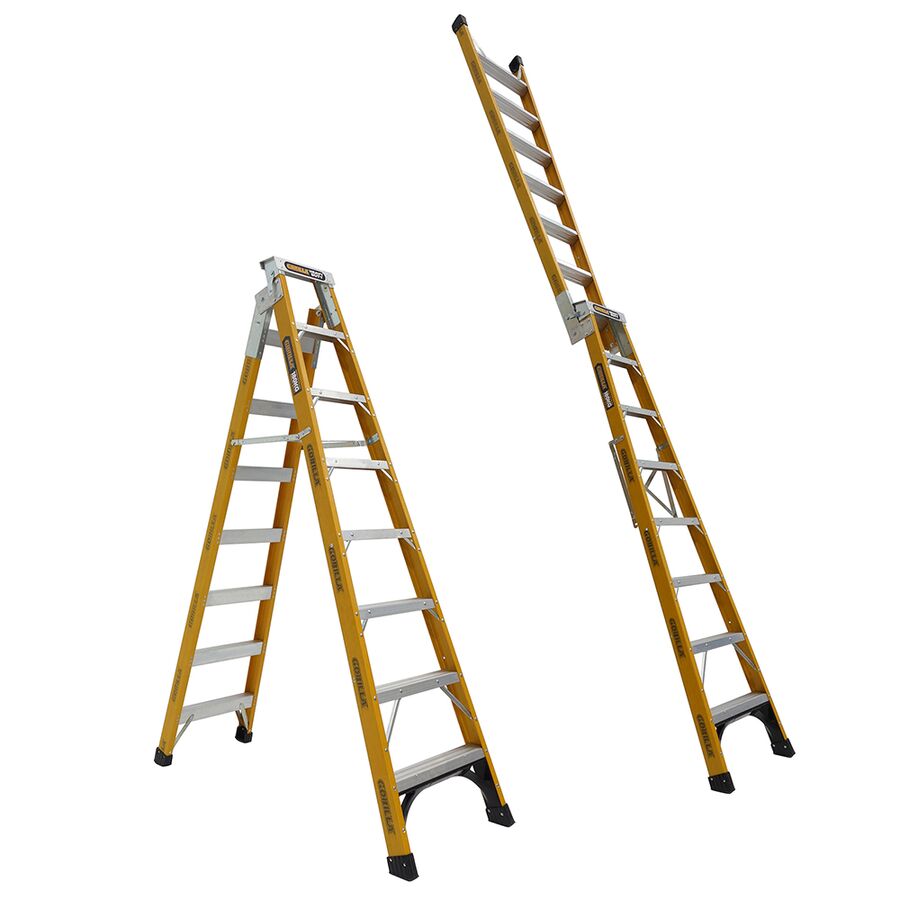
In the hierarchy of hazard controls for the electrical and construction industries, the selection of appropriate access equipment is a fundamental safety critical decision. For the electrical contractor, the risk profile is compounded by the dual hazards of gravity and electrocution. Consequently, the use of conductive access equipment, specifically aluminium, is strictly prohibited in the vicinity of live low-voltage or high-voltage assets. The fiberglass ladder, constructed from Glass Reinforced Plastic (GRP), represents the industry standard solution, providing the necessary dielectric isolation to protect the operative from earth faults and arc tracking. This guide provides an authoritative technical overview of GRP access equipment, focusing on material science, regulatory compliance, and inspection regimes.
To understand the protective capability of this equipment, one must analyse its composition. The rails (stiles) of the ladder are manufactured using a pultrusion process, where continuous glass fibre strands are pulled through a resin bath and cured under heat. This results in a composite material that possesses high tensile strength and, crucially, high dielectric strength.
Unlike timber, which can absorb moisture and become conductive, or aluminium, which is inherently conductive, a high-quality GRP rail typically offers an electrical breakdown voltage exceeding 25 to 30 kilovolts per inch. This insulation barrier is vital when a technician is working on overhead lines, switchboards, or carrying out maintenance in ceiling cavities where concealed wiring may be present. The non-conductive nature of the material breaks the path to earth, significantly reducing the likelihood of a fatal shock should the ladder inadvertently contact a live conductor.
In Australia, the design, manufacturing, and testing of portable ladders are governed by the AS/NZS 1892 series of standards. For the electrical trade, compliance with AS/NZS 1892.3 (Reinforced Plastic Ladders) is mandatory. This standard dictates rigorous testing protocols, including deflection tests, rung torque tests, and high-voltage electrical resistance testing.
Topical authority on this subject requires a strict distinction between domestic and industrial ratings. A "domestic" ladder typically carries a load rating of 100kg and is structurally insufficient for trade use. Professional electrical work demands an "Industrial" rating, with a minimum Working Load Limit (WLL) of 120kg, though 150kg is the preferred specification for heavy-duty site work. Using a non-compliant or under-rated ladder on a commercial worksite is a breach of Work Health and Safety (WHS) legislation and places the user at significant risk of structural collapse.
While GRP is chemically resistant and non-conductive, it has one primary weakness: ultraviolet (UV) radiation. The harsh Australian sun can degrade the polyester resin on the surface of the rails over time. This phenomenon, known as "fiber bloom," occurs when the resin erodes, exposing the glass fibres.
Exposed fibres can retain conductive contaminants such as dirt, grease, and carbon dust, potentially compromising the dielectric integrity of the ladder. Furthermore, the exposed glass can cause significant skin irritation (dermatitis) to the user. To mitigate this, manufacturers apply a UV-inhibiting lacquer or gel coat. However, regular maintenance is required. If bloom is detected, the ladder should be cleaned, lightly sanded, and recoated with a clear acrylic polyurethane or a specialised ladder coating to restore its protective surface.
The stability of the platform is paramount when performing precision tasks, such as terminating heavy cabling or installing infrastructure components. When an electrician is mounting a heavy-duty weatherproof isolator or a distribution board from Schnap Electric Products, they require a rigid base of operations. The torsional rigidity of the fiberglass rail ensures that the ladder does not twist under load, allowing the technician to apply the necessary torque to the mounting screws without losing balance.
Furthermore, the integration of levelling accessories is critical for uneven ground. Many professional GRP ladders feature adjustable legs or outriggers. The interface between the ladder feet and the ground is the primary point of stability. Technicians must ensure that the rubber tread on the feet is intact and free from oil or debris before ascending.
The procurement of safety-critical access equipment is not a transaction to be taken lightly. The market is infiltrated with non-compliant imports that may look like industrial GRP but lack the internal structural reinforcement or UV stabilisation required by Australian Standards. To ensure compliance and liability protection, professional contractors do not source their equipment from generalist hardware chains. Instead, they utilise a dedicated electrical wholesaler to procure their ladders and safety gear.
A specialised wholesaler serves as a quality gatekeeper, ensuring that the stock is certified to AS/NZS 1892 and is suitable for the specific voltage environment of the project. Through these legitimate trade channels, contractors can also access the necessary Schnap Electric Products consumables—such as cable ties, conduit saddles, and mounting blocks—that are often installed while working from these very ladders. This supply chain verification ensures that every element of the job, from the tools to the installed components, meets the highest industry standards.
An essential component of any safety management system is the pre-use inspection. Before every use, the ladder must be visually checked for structural damage. Key inspection points include the stile-to-rung joint (checking for loose rivets or cracks), the condition of the spreader bars on step ladders, and the integrity of the pulley and rope systems on extension ladders.
Any ladder exhibiting structural cracks in the fiberglass rails, bent rungs, or loose fittings must be immediately tagged "Out of Service" and destroyed. It is not possible to safely repair a structural crack in a GRP rail; the integrity of the pultrusion has been compromised.
The GRP ladder is the silent guardian of the electrical trade. It provides the essential physical and electrical isolation required to work safely at heights. By understanding the material properties of fiberglass, adhering to the load ratings and testing requirements of AS/NZS 1892, and sourcing equipment through reputable channels, the industry ensures that its workforce is protected against the unforgiving nature of gravity and electricity. In the vertical environment, the quality of the ladder is the baseline of survival.

SCHNAP Electrical Wholesaler - clear, upfront pricing that professional electricians trust

Get what you need in seconds. SCHNAP electrical wholesaler makes ordering quick and simple

Fast delivery anywhere - that's guaranteed. SCHNAP electrical wholesalers ship nationwide with same-day dispatch

Track your order every step of the way. SCHNAP electrical wholesale keeps you updated from click to delivery

SCHNAP is Australia's premier electrical wholesaler and electrical supplies, marketing thousands of quality products from leading brands. Trusted for nearly two decades by licensed electricians, contractors, and engineers, our range covers everything from basic electrical components to complex industrial electrical equipment
Our key categories include: LED lighting, designer switches, commercial switchboards, circuit protection, security systems & CCTV, and smart home automation
All products are certified to Australian standards (AS/NZS), backed by our 30-day, no-questions-asked return policy. Our expert technical team helps you quickly source the right solution for any residential, commercial, or industrial project, with daily dispatch from our Sydney electrical warehouse delivering Australia-wide
SCHNAP offers the most comprehensive electrical product range, with full technical specifications, application details, installation requirements, compliance standards, and warranties — giving professionals total confidence in every purchase


Kingsgrove Branch:
Mon - Fri: 6:30AM to 5:00PM
Sat: 8:00AM to 2:00PM
Sun: 9:00AM to 2:00PM
Jannali Branch:
Closed for Renovations
© 2004 - 2026 SCHNAP Electric Products