

Kingsgrove Branch:


Send us a photo and our team will help identify it.

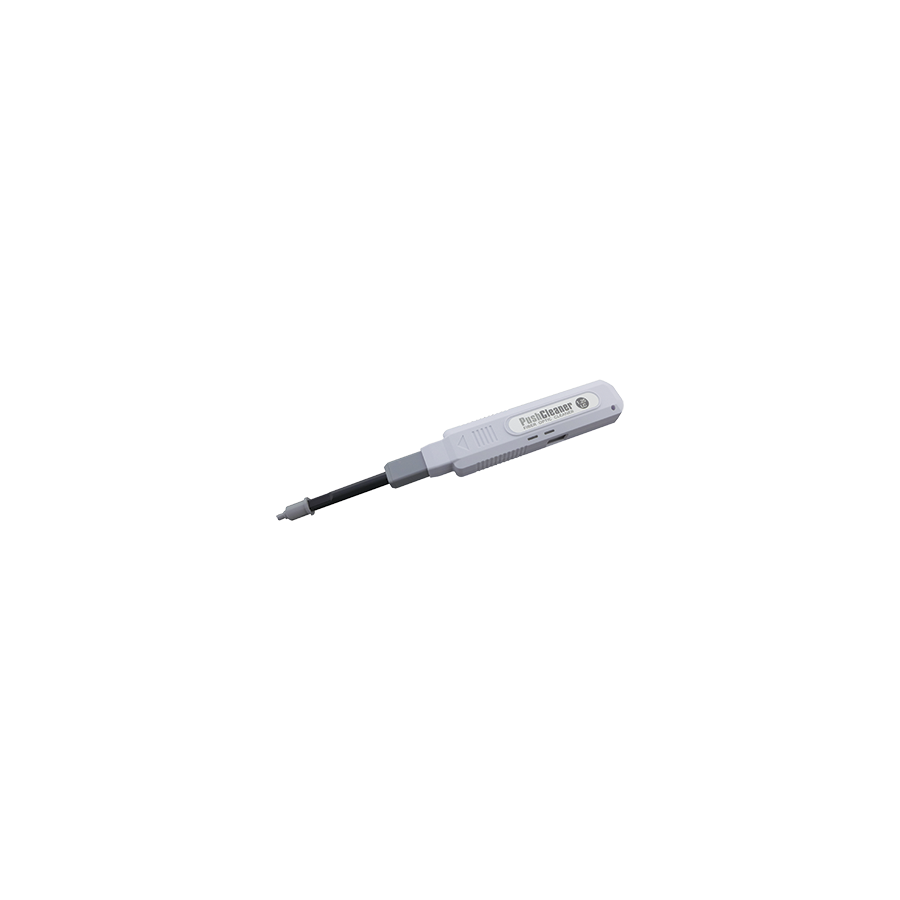
In the precision-engineered landscape of Australian telecommunications, data centres, and enterprise networks, fibre optic performance is governed by tolerances measured in micrometres. As network speeds accelerate toward 400G and 800G architectures, the optical link budget becomes unforgiving. In this environment, the most common cause of degraded performance is not fibre breakage or transceiver failure, but contamination at the connector end-face. A single dust particle, invisible to the naked eye and measuring less than one micrometre, can obstruct or distort light transmission through a Single Mode fibre core that is only nine micrometres wide. The industry-standard solution for maintaining connector hygiene without introducing solvents or lint is the fibre optic cleaner pen. This compact mechanical tool is engineered to remove oils, dust, and saline residue from ferrule end-faces using a calibrated dry-cleaning action that aligns with IEC 61300-3-35 inspection and acceptance criteria.
Fibre optic connectors rely on precise physical contact between polished ceramic ferrules. When two connectors are mated inside an adapter, spring pressure forces the glass end-faces together to minimise signal loss. Any foreign material at this interface disrupts the optical path. The first consequence is increased insertion loss, where light is absorbed or scattered before reaching the receiver. The second and more damaging effect is optical return loss, also known as back-reflection. Contaminants introduce air gaps or refractive index mismatches, causing a portion of the transmitted light to reflect back toward the laser source. In modern high-speed systems, this reflected energy destabilises the laser, increases bit error rates, and produces intermittent faults that are difficult to trace. As data rates rise, tolerance for these reflections falls sharply, making cleanliness a fundamental requirement rather than a best practice.
Historically, technicians cleaned fibre connectors using isopropyl alcohol and cotton swabs. While effective in theory, this method introduces multiple risks. Alcohol can leave a residue after evaporation, forming a halo around the fibre core that attracts dust. Cotton swabs shed microscopic fibres that remain trapped on the end-face. Both issues create repeat contamination and inconsistent results. The fibre optic cleaner pen eliminates these variables by using a dry-cleaning mechanism. Inside the pen is a reel of high-density, anti-static microfibre. Each activation advances a fresh section of cleaning fabric while rotating the tip, producing a combined sweeping and lifting motion. This action removes contaminants from the ferrule surface and captures them within the fibre weave, preventing redeposition. The result is a consistent, repeatable cleaning process that does not depend on operator skill or environmental conditions.
The defining feature of the cleaner pen is its click-to-clean logic. When the pen is inserted into a bulkhead adapter or applied directly to a patch lead and pressed, an internal spring mechanism engages. The cleaning strand advances and rotates simultaneously, ensuring that no section of fabric is reused. This controlled movement applies uniform pressure to the ferrule end-face, avoiding scratches or uneven wear. Because the cleaning surface is dry and anti-static, it does not attract airborne particles during or after the process. This makes the tool particularly suitable for high-density racks, field cabinets, and outdoor enclosures where dust control is challenging.
Fibre connectors are differentiated by ferrule diameter, and cleaner pens are designed accordingly. Connectors with 1.25 mm ferrules, such as LC and MU types, dominate modern data centres and NBN installations due to their high-density form factor. These require a pen specifically sized for the smaller ferrule to ensure full contact with the end-face. Connectors with 2.5 mm ferrules, including SC, ST, and FC types, remain common in legacy systems, industrial automation networks, and campus backbones. A professional fibre toolkit must include both cleaner pen sizes to maintain compatibility across mixed infrastructures. Many high-quality pens also feature extendable nozzles, enabling access to recessed adapters and compact patch panels where direct access is restricted.
The effectiveness of a cleaner pen depends on the quality of its cleaning medium and mechanical tolerances. Inferior tools may use abrasive fabric that scratches the ferrule surface, permanently degrading performance. This is where the Schnap Electric Products ecosystem supports network reliability. Alongside fibre patch leads, wall plates, and termination hardware, Schnap Electric Products supplies cleaner pens engineered for non-abrasive performance and static control. The microfibre strands are specified to remove oils, including skin residue from accidental contact, without charging the ferrule surface. This prevents immediate re-contamination and preserves the polished geometry of the connector, extending the service life of fibre assemblies.
In Australia’s carrier-grade and NBN-ready environments, cleaning is governed by a strict inspect-clean-inspect methodology. IEC 61300-3-35 defines acceptable contamination limits by dividing the ferrule end-face into zones, including the core, cladding, adhesive, and contact regions. Contamination within the core zone is unacceptable and requires remediation. Best practice dictates that technicians inspect the connector using a video microscope before cleaning. If contamination is detected, the cleaner pen is applied, typically requiring a single activation. The connector is then re-inspected to confirm compliance. This protocol ensures that cleaning is purposeful rather than excessive, reducing wear on the ferrule. In emergency restoration scenarios where inspection equipment is unavailable, a high-quality cleaner pen provides the most reliable means of restoring service quickly and safely.
Cleaner pens improve not only optical performance but also operational efficiency. They eliminate the need for liquids, drying time, and waste materials. This reduces contamination risk in live environments and speeds up installation and maintenance tasks. In large data centres where hundreds of terminations may be handled in a single session, consistent cleaning reduces troubleshooting time and prevents costly rework. The ability to achieve repeatable results with minimal training also supports workforce scalability, an important consideration as fibre deployment expands across Australia.
The market contains counterfeit or low-quality cleaner pens that jam, shed debris, or fail after limited use. In mission-critical environments, such failures compromise network integrity and increase downtime risk. Professional network installers and facility managers source cleaner pens through specialised electrical wholesaler that verify product authenticity and performance ratings. Reputable suppliers stock tools rated for hundreds of cleaning cycles and compatible with carrier-grade infrastructure. Supporting accessories such as dust caps, mating sleeves, and fibre management hardware complete the contamination control strategy, ensuring that cleanliness is maintained from installation through ongoing operation.
The fibre optic cleaner pen is a small tool with an outsized impact on network performance. By addressing the microscopic causes of insertion loss and back-reflection, it protects the integrity of high-speed optical links. Understanding the physics of light transmission, adhering to IEC inspection standards, and using precision cleaning tools from manufacturers such as Schnap Electric Products allows Australian industry professionals to deliver fibre networks that meet their designed performance. In the world of optics, cleanliness is not optional; it is the foundation of reliable connectivity.

SCHNAP Electrical Wholesaler - clear, upfront pricing that professional electricians trust

Get what you need in seconds. SCHNAP electrical wholesaler makes ordering quick and simple

Fast delivery anywhere - that's guaranteed. SCHNAP electrical wholesalers ship nationwide with same-day dispatch

Track your order every step of the way. SCHNAP electrical wholesale keeps you updated from click to delivery

SCHNAP is Australia's premier electrical wholesaler and electrical supplies, marketing thousands of quality products from leading brands. Trusted for nearly two decades by licensed electricians, contractors, and engineers, our range covers everything from basic electrical components to complex industrial electrical equipment
Our key categories include: LED lighting, designer switches, commercial switchboards, circuit protection, security systems & CCTV, and smart home automation
All products are certified to Australian standards (AS/NZS), backed by our 30-day, no-questions-asked return policy. Our expert technical team helps you quickly source the right solution for any residential, commercial, or industrial project, with daily dispatch from our Sydney electrical warehouse delivering Australia-wide
SCHNAP offers the most comprehensive electrical product range, with full technical specifications, application details, installation requirements, compliance standards, and warranties — giving professionals total confidence in every purchase


Kingsgrove Branch:
Opening hours:
Mon - Fri: 6:30 AM to 5 PM
Saturday: 8:00 AM to 2:00 PM
Sunday: 9:00 AM to 2:00 PM
Closed on public holidays
Jannali Branch:
Closed for Renovations
© 2004 - 2026 SCHNAP Electric Products