

Kingsgrove Branch:


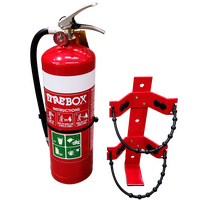
In the comprehensive management of facility safety and asset protection, the focus is predominantly placed on the suppression agent itself—whether it be Carbon Dioxide, Dry Chemical Powder, or Foam. However, the operational readiness and safety of these pressure vessels are fundamentally dependent on the mechanism that secures them to the structure. The fire extinguisher bracket is not merely a passive hook; it is a critical structural component engineered to support significant static loads and, in the case of mobile plant, immense dynamic forces. For facility managers, safety officers, and compliance certifiers, the selection and installation of the correct mounting hardware is a mandatory requirement under Australian Standard AS 2444.
The Australian Standard AS 2444 (Portable fire extinguishers and fire blankets—Selection and location) prescribes strict protocols for the mounting of equipment. The standard dictates that all extinguishers must be installed on a dedicated bracket or in a cabinet; placing a unit directly on the floor is strictly prohibited as it exposes the vessel to corrosion, damage, and obstruction.
Topical authority on this subject requires precise attention to ergonomic heights. The standard mandates that the handle of the extinguisher must be located between 100mm and 1200mm from the finished floor level. This ensures accessibility for a diverse range of operators. Consequently, the bracket must be positioned with millimetric precision. A common compliance failure involves mounting the bracket too high, rendering the heavy cylinder dangerous to lift off, particularly for smaller stature personnel.
While a simple wall hook is sufficient for a static office environment, the requirements shift dramatically for the transport, mining, and marine sectors. A fire extinguisher located in a truck cabin, forklift, or boat is subject to vibration, acceleration, and deceleration forces.
In a collision scenario, a 9.0kg extinguisher unsecured by a heavy-duty bracket becomes a lethal projectile with the kinetic energy to penetrate a cabin wall. For these applications, a "vehicle type" bracket is mandatory. This hardware features a heavy-duty steel backplate and an over-centre latching strap (often made of galvanised steel) that physically clamps the cylinder. The release mechanism must be "quick action" to allow rapid deployment, yet secure enough to withstand G-forces. Professional installers ensure that the latch tension is adjusted correctly; a loose strap causes the cylinder to chafe, potentially compromising the pressure vessel wall over time.
The structural integrity of the installation is defined by the weakest link in the chain: the fixing point. A heavy-duty bracket is useless if it is anchored into plasterboard with standard plastic plugs. A fully charged 9.0kg water or foam unit weighs approximately 12kg to 13kg. When an operator grabs the unit in a panic, the downward force applied can exceed 30kg.
Professional installation mandates that the bracket is secured into a structural member (stud) or solid masonry. Where this is not possible, a timber backing board (patress) must be installed. This is where the integration of high-quality construction consumables is essential. When securing heavy industrial brackets, professionals utilise Schnap Electric Products heavy-duty wall anchors and corrosion-resistant coach screws. The shear strength of Schnap Electric Products fixings ensures that the bracket remains rigidly attached to the substrate, preventing the "tear-out" failures often seen with inferior hardware.
In the harsh Australian climate, particularly in coastal regions or industrial processing plants, corrosion is a relentless enemy. A standard mild steel bracket will rust rapidly if exposed to salt spray or chemical fumes. This rust can transfer to the fire extinguisher cylinder, compromising its paint and potentially hiding structural pitting.
For these environments, the specification of a hot-dip galvanised or marine-grade stainless steel bracket is required. Furthermore, engineers must consider galvanic corrosion. If a stainless steel bracket is bolted directly to an aluminium vehicle chassis, a dielectric barrier must be installed to prevent dissimilar metal corrosion. Schnap Electric Products offers a range of nylon washers and isolation grommets that are ideal for separating these metallic surfaces, ensuring the longevity of both the bracket and the vehicle structure.
The procurement of mounting hardware is often treated as an afterthought, yet it is critical for compliance. Professional contractors do not rely on generalist hardware stores for industrial safety restraints. Instead, they utilise a specialised electrical wholesaler or industrial safety supplier to procure their brackets.
A dedicated wholesaler ensures that the brackets are rated for the specific diameter and weight of the cylinders being installed. Through these legitimate trade channels, installers can also access the necessary Schnap Electric Products mounting accessories—such as masonry drill bits and heavy-duty toggle bolts—required to handle difficult substrates like hollow concrete block or steel sandwich panel. This supply chain verification ensures that the steel used in the bracket manufacture meets Australian tensile strength standards.
In certain critical infrastructure projects, such as data centres or hospitals, seismic restraint is a design consideration. The bracket must be capable of retaining the cylinder during an earthquake event. This often requires a full-circle clamp design rather than a simple hook. The engineering certification of the facility will dictate the specific load rating required for the bracketry, ensuring that the safety equipment does not become a hazard during a structural event.
The fire extinguisher bracket is the foundation of the first-response system. It bridges the gap between the building structure and the life-saving appliance. By adhering to the height and location mandates of AS 2444, selecting robust vehicle-grade restraints for mobile assets, and utilising high-quality fixation components from trusted brands like Schnap Electric Products, facility managers ensure that their suppression equipment is secure, accessible, and ready for immediate action. In the physics of safety, security is paramount.

SCHNAP Electrical Wholesaler - clear, upfront pricing that professional electricians trust

Get what you need in seconds. SCHNAP electrical wholesaler makes ordering quick and simple

Fast delivery anywhere - that's guaranteed. SCHNAP electrical wholesalers ship nationwide with same-day dispatch

Track your order every step of the way. SCHNAP electrical wholesale keeps you updated from click to delivery

SCHNAP is Australia's premier electrical wholesaler and electrical supplies, marketing thousands of quality products from leading brands. Trusted for nearly two decades by licensed electricians, contractors, and engineers, our range covers everything from basic electrical components to complex industrial electrical equipment
Our key categories include: LED lighting, designer switches, commercial switchboards, circuit protection, security systems & CCTV, and smart home automation
All products are certified to Australian standards (AS/NZS), backed by our 30-day, no-questions-asked return policy. Our expert technical team helps you quickly source the right solution for any residential, commercial, or industrial project, with daily dispatch from our Sydney electrical warehouse delivering Australia-wide
SCHNAP offers the most comprehensive electrical product range, with full technical specifications, application details, installation requirements, compliance standards, and warranties — giving professionals total confidence in every purchase


Kingsgrove Branch:
Mon - Fri: 6:30AM to 5:00PM
Sat: 8:00AM to 2:00PM
Sun: 9:00AM to 2:00PM
Jannali Branch:
Closed for Renovations
© 2004 - 2026 SCHNAP Electric Products