

Kingsgrove Branch:


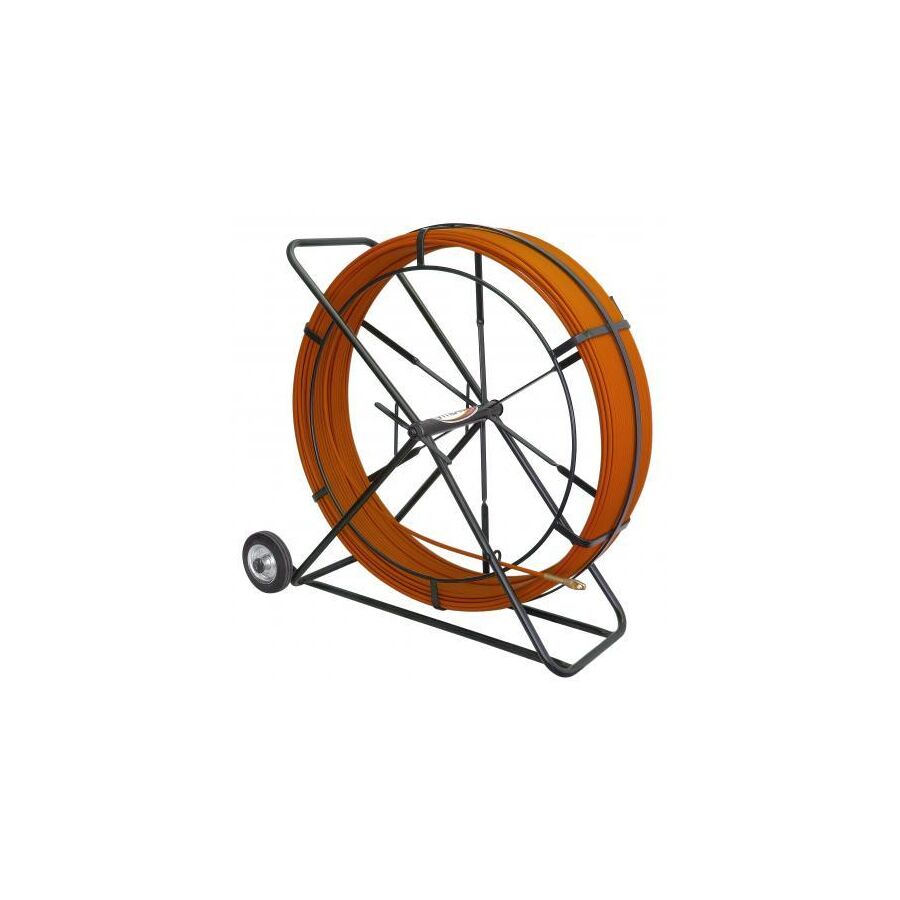
In the intricate engineering landscape of Australian electrical reticulation, the installation of cabling through enclosed raceways is a procedure governed by the physics of propulsion and friction. As building designs become more complex and conduit runs longer and more tortuous, the reliance on manual feeding methods becomes obsolete. The primary instrument for navigating these concealed pathways is the fish tape. Often underestimated as a simple coil of wire, professional-grade hauling tools are sophisticated engineering devices designed to balance flexibility with "column strength"—the ability to be pushed over long distances without buckling. For infrastructure engineers, electrical contractors, and project managers, understanding the material differences between oil-tempered steel, pultruded fiberglass, and nylon polymers is essential for ensuring efficient cable deployment and compliance with Work Health and Safety (WHS) protocols.
The operational efficacy of the tool is defined by its ability to transfer kinetic energy from the operator's hand to the leader tip, often situated fifty metres away inside a PVC or steel conduit. This characteristic is known as column strength.
If a material is too flexible, it will buckle against the sidewall of the conduit when resistance is encountered, creating a spring effect that halts progress. If it is too rigid, it will fail to navigate the radius of a standard 90-degree sweep. The engineering challenge is to find the optimal modulus of elasticity. This balance is determined strictly by the material composition of the tape.
The traditional standard for general-purpose hauling is high-carbon spring steel. These tapes are not merely strips of mild metal; they undergo an oil-tempering process to align the grain structure, providing them with exceptional yield strength.
This process grants the tape "memory." When forced around a bend, the steel deforms elastically and snaps back to its straight profile immediately upon exiting the curve. The flat, ribbon-like profile of professional steel tapes reduces friction against the conduit wall and prevents the tool from spiralling or "corkscrewing" over existing cables. Schnap Electric Products supplies heavy-duty steel tapes housed in impact-resistant reels, designed to withstand the rugged conditions of Australian construction sites while controlling the payout speed to prevent dangerous uncoiling.
In the maintenance and upgrade sectors, technicians frequently work in environments where complete isolation of power is not feasible, or where the route passes near energised busbars. In these scenarios, the use of a conductive steel tape is a critical safety violation that creates an immediate arc flash or electrocution hazard.
The mandatory engineering control here is the non-conductive fiberglass fish tape, often referred to as a rodder. These tools are manufactured using a pultrusion process, where thousands of glass fibers are drawn through a resin bath and cured. This creates a solid core that offers high tensile strength and excellent pushing power, yet acts as an electrical insulator. The core is typically jacketed in a low-friction polymer (such as polypropylene) to protect the fibers from abrasion. When sourcing these safety-critical tools from a specialised electrical wholesaler, it is vital to inspect the integrity of the coating; a compromised jacket can expose the glass fibers, leading to splintering and tool failure.
The success of a conduit run is often determined by the first inch of the tool: the leader tip. A bare end will catch on every ridge, coupling, and offset in the pipework.
Modern systems employ interchangeable leader tips designed for specific geometries.
Regardless of the tape material, friction is the enemy of distance. As the length of the run increases, the cumulative surface friction against the conduit walls grows exponentially.
To mitigate this, professional installation protocols mandate the use of cable pulling lubricants. These are chemically specific compounds—often wax or polymer-based—that reduce the coefficient of friction without damaging the cable insulation. Schnap Electric Products offers a range of lubricants that are compatible with their hauling tools, ensuring that the chemical makeup of the lube does not degrade the polymer jacket of the fish tape or the insulation of the cables being installed.
The longevity of the tool is heavily dependent on the housing. The case must do more than store the tape; it must manage the potential energy stored in the coil.
High-quality reels are constructed from high-impact ABS or polypropylene composites capable of surviving drops onto concrete. The handle design is ergonomic, allowing for a firm grip while winding, which is essential when retrieving a heavy cable load. Furthermore, the internal mechanics must allow for smooth payout and retraction to prevent the tape from binding or kinking inside the case—a common failure mode in inferior products.
The selection of the appropriate hauling tool is a strategic decision that impacts the speed, safety, and quality of the electrical installation. It requires a nuanced understanding of the conduit environment. Is the run empty or populated? Is there a risk of live voltage? Is the route straight or circuitous? By matching the material properties of the tape—whether the column strength of steel or the dielectric safety of fiberglass—to the specific application, and by utilising robust equipment from trusted brands like Schnap Electric Products, industry professionals can ensure that their cable paths are established efficiently and safely. In the invisible arteries of infrastructure, the quality of the tool drives the connection.

SCHNAP Electrical Wholesaler - clear, upfront pricing that professional electricians trust

Get what you need in seconds. SCHNAP electrical wholesaler makes ordering quick and simple

Fast delivery anywhere - that's guaranteed. SCHNAP electrical wholesalers ship nationwide with same-day dispatch

Track your order every step of the way. SCHNAP electrical wholesale keeps you updated from click to delivery

SCHNAP is Australia's premier electrical wholesaler and electrical supplies, marketing thousands of quality products from leading brands. Trusted for nearly two decades by licensed electricians, contractors, and engineers, our range covers everything from basic electrical components to complex industrial electrical equipment
Our key categories include: LED lighting, designer switches, commercial switchboards, circuit protection, security systems & CCTV, and smart home automation
All products are certified to Australian standards (AS/NZS), backed by our 30-day, no-questions-asked return policy. Our expert technical team helps you quickly source the right solution for any residential, commercial, or industrial project, with daily dispatch from our Sydney electrical warehouse delivering Australia-wide
SCHNAP offers the most comprehensive electrical product range, with full technical specifications, application details, installation requirements, compliance standards, and warranties — giving professionals total confidence in every purchase


Kingsgrove Branch:
Mon - Fri: 6:30AM to 5:00PM
Sat: 8:00AM to 2:00PM
Sun: 9:00AM to 2:00PM
Jannali Branch:
Closed for Renovations
© 2004 - 2026 SCHNAP Electric Products