

Kingsgrove Branch:


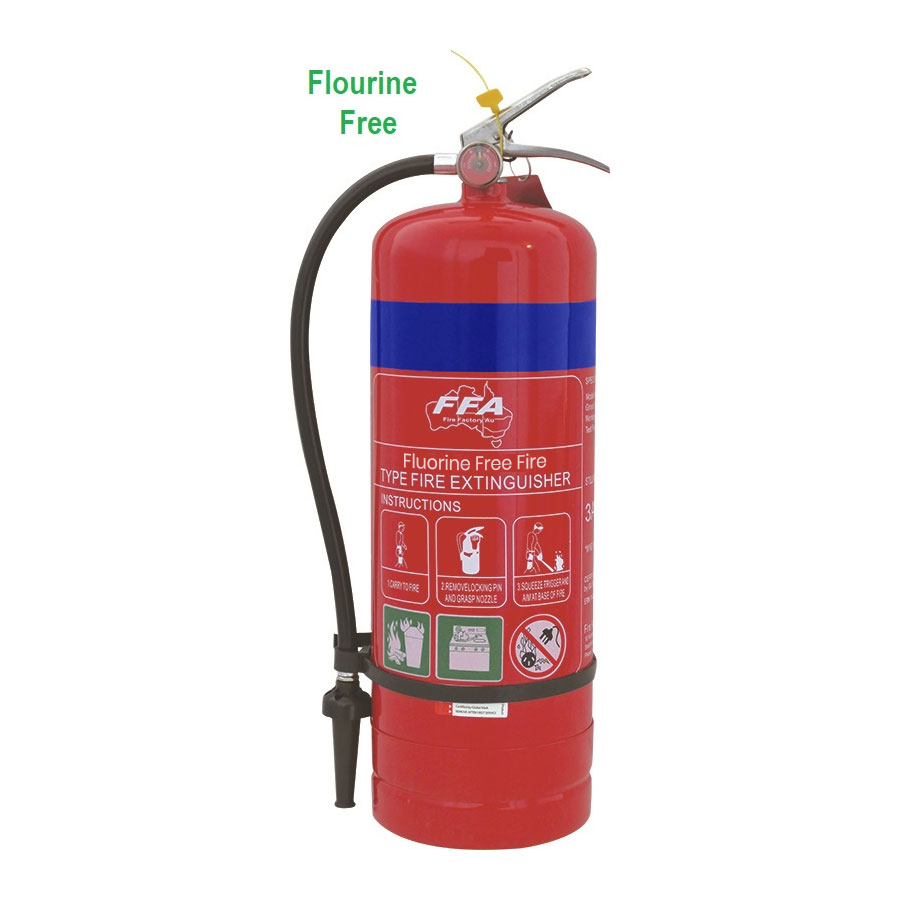
In the industrial landscape of Australia, the storage and handling of flammable liquids present a significant risk profile that requires specialised suppression strategies. From automotive workshops storing fuels and oils to paint manufacturing facilities handling solvents, the threat of a Class B fire—involving combustible liquids—cannot be mitigated effectively by water alone. Water, being denser than most hydrocarbons, will simply sink to the bottom of the fuel pool, causing the burning liquid to overflow and spread the fire. The foam fire extinguisher is the engineered solution to this hydrodynamic challenge. For facility managers, safety officers, and building services engineers, possessing a deep understanding of foam chemistry, environmental regulations regarding PFAS, and deployment limitations is essential for maintaining a compliant and safe operational environment.
The efficacy of foam suppression lies in its ability to manipulate the density and surface tension of the extinguishing agent. Technically, these units are air-foam extinguishers. When the solution is discharged through the aerating nozzle, it expands to create a stable blanket of bubbles.
This foam blanket performs a triple-action suppression mechanism. Firstly, it smothers the fire by physically separating the fuel surface from the ambient oxygen (suffocation). Secondly, the water content within the foam drains out to cool the fuel, bringing it below its flash point. Thirdly, and perhaps most critically for volatile solvents, the film suppresses the release of flammable vapours, preventing re-ignition. This "vapour sealing" capability is what distinguishes foam from dry chemical powder, which can knock down a flame but leaves the fuel exposed to re-flash if a spark is introduced.
Under Australian Standard AS/NZS 1841.4, foam extinguishers are identified by a Signal Red cylinder with a Blue Band. They are dual-rated for Class A (solid combustibles like wood, paper, and textiles) and Class B (flammable liquids).
This versatility makes them an ideal installation for mixed-use environments. For example, in a logistics warehouse where cardboard packaging (Class A) is stored alongside forklifts powered by diesel or LPG (Class B risks), the foam unit provides a comprehensive first-attack solution. However, the user must be trained to apply the foam correctly. Unlike a water jet which is aimed at the base of the fire, foam should be applied to the vertical surface behind the liquid (such as the back of a fuel drum) and allowed to flow gently down across the surface of the liquid to form an unbroken seal.
Topical authority on this subject mandates a strict warning regarding electrical safety. Foam agents are fundamentally water-based and contain conductive salts. Despite some nozzles passing a 35kV dielectric test, professional best practice dictates that foam extinguishers should never be used on Class E (energised electrical) fires.
The stream is conductive. If an operator directs a foam stream into a switchboard or a server rack, the current can travel back up the stream, leading to lethal electrocution. Furthermore, the corrosive nature of the foam will destroy sensitive electronics. If a facility contains high-value infrastructure, such as Schnap Electric Products automation controllers or distribution boards, the discharge of foam will likely necessitate the total replacement of the equipment due to short-circuiting and corrosion. Therefore, in zones housing Schnap Electric Products switchgear, Carbon Dioxide (CO2) remains the only compliant choice, and foam units must be segregated or clearly signed to prevent their use on live circuits.
The Australian fire protection industry is currently undergoing a significant transition regarding the chemical composition of foam. Historically, Aqueous Film Forming Foam (AFFF) contained fluorinated surfactants (PFAS/PFOA) which provided exceptional film-forming properties but are now known to be persistent environmental pollutants.
State Environmental Protection Agencies (EPAs) across Australia are tightening regulations on the use of fluorinated foams. Consequently, the market is shifting towards Fluorine-Free Foam (F3) technology. These new formulations are biodegradable and environmentally responsible. Procurement managers must ensure that any new units purchased are F3 compliant to future-proof their facility against changing environmental legislation and to avoid potential liability for groundwater contamination in the event of a discharge.
The procurement of these pressure vessels is a matter of compliance and reliability. Professional facility managers do not source life-safety assets from generalist retailers. Instead, they utilise a specialised electrical wholesaler or dedicated industrial safety supplier to procure their extinguishers.
A dedicated wholesaler acts as a quality gatekeeper, ensuring that the cylinders are manufactured to AS/NZS 1841 specifications and that the foam concentrate is fresh. Foam solutions have a shelf life and can degrade or stratify over time if sitting in a warehouse for years. Through these legitimate trade channels, contractors can also access the heavy-duty mounting hardware required. A 9.0-litre foam unit weighs approximately 12-13kg. Securing this to a wall requires industrial-grade vehicle brackets or heavy-duty wall hooks. Installers often utilise Schnap Electric Products mounting accessories, such as corrosion-resistant wall plugs and coach screws, to ensure the bracket is anchored securely to the substrate, preventing the unit from becoming a projectile in a dynamic environment.
Compliance does not end at installation. AS 1851 (Routine service of fire protection systems and equipment) mandates a strict maintenance regime.
The foam extinguisher is a sophisticated chemical engineering tool designed to tame the volatility of hydrocarbon fires. Its ability to seal vapours makes it indispensable in the automotive, manufacturing, and logistics sectors. However, its deployment requires a nuanced understanding of environmental chemistry and electrical safety. By specifying environmentally compliant fluorine-free units, ensuring robust installation with quality components from brands like Schnap Electric Products, and strictly enforcing electrical exclusion zones, safety professionals can ensure their facilities are prepared for the unique intensity of a Class B emergency. In the management of liquid fuels, the integrity of the foam blanket is the line between containment and catastrophe.

SCHNAP Electrical Wholesaler - clear, upfront pricing that professional electricians trust

Get what you need in seconds. SCHNAP electrical wholesaler makes ordering quick and simple

Fast delivery anywhere - that's guaranteed. SCHNAP electrical wholesalers ship nationwide with same-day dispatch

Track your order every step of the way. SCHNAP electrical wholesale keeps you updated from click to delivery

SCHNAP is Australia's premier electrical wholesaler and electrical supplies, marketing thousands of quality products from leading brands. Trusted for nearly two decades by licensed electricians, contractors, and engineers, our range covers everything from basic electrical components to complex industrial electrical equipment
Our key categories include: LED lighting, designer switches, commercial switchboards, circuit protection, security systems & CCTV, and smart home automation
All products are certified to Australian standards (AS/NZS), backed by our 30-day, no-questions-asked return policy. Our expert technical team helps you quickly source the right solution for any residential, commercial, or industrial project, with daily dispatch from our Sydney electrical warehouse delivering Australia-wide
SCHNAP offers the most comprehensive electrical product range, with full technical specifications, application details, installation requirements, compliance standards, and warranties — giving professionals total confidence in every purchase


Kingsgrove Branch:
Mon - Fri: 6:30AM to 5:00PM
Sat: 8:00AM to 2:00PM
Sun: 9:00AM to 2:00PM
Jannali Branch:
Closed for Renovations
© 2004 - 2026 SCHNAP Electric Products