

Kingsgrove Branch:


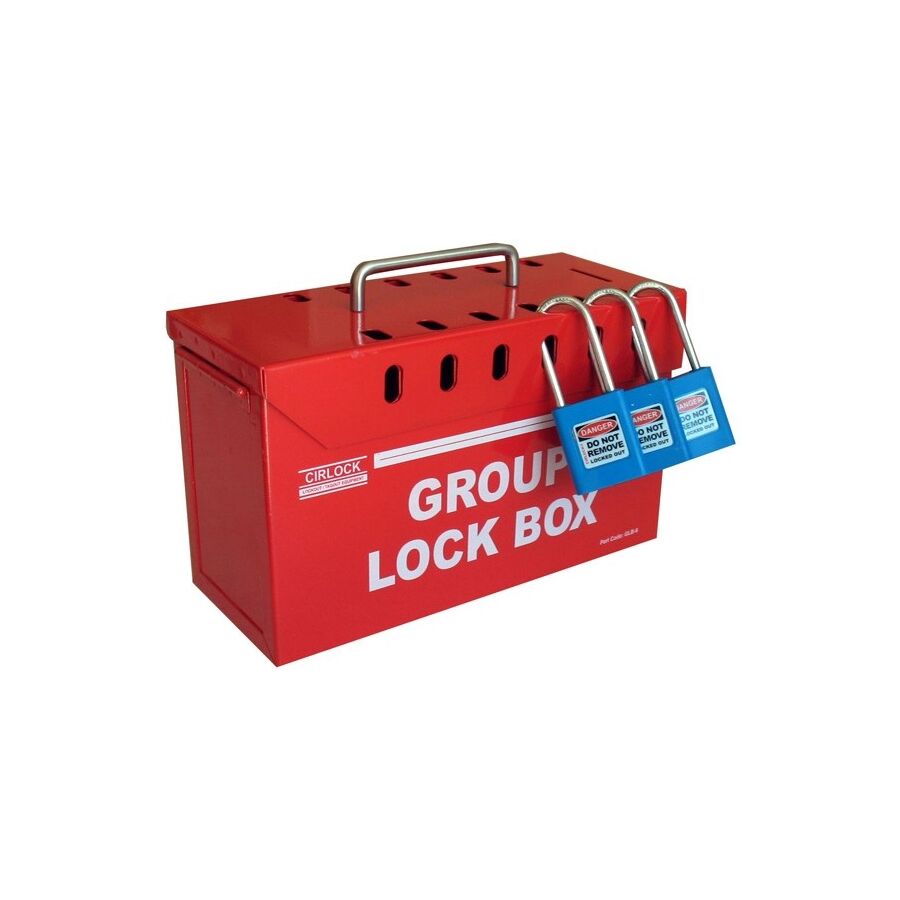
In Australian mining, heavy industry, and large manufacturing, safe maintenance depends on reliable control of hazardous energy. On complex assets like crushing plants, conveyors, and draglines, isolation can involve electrical, hydraulic, pneumatic, and stored mechanical energy, often across many lock points and many workers. A simple “one person, one lock on every isolation point” approach becomes unworkable when space is limited on hasps and the number of points is high. That practical barrier can drive shortcuts, creating a serious non-compliance risk. The Group Lock Box is the engineering answer. It centralises control by securing the keys to the isolations, allowing every worker to apply a personal lock without crowding the energy source.
The Logic of Complex Isolation
A group lock box works on custody transfer. A Responsible Person or Permit Holder isolates each energy source and applies master locks at every isolation point. Once isolation is proven and “test for dead” is confirmed, the keys for those master locks are placed inside the lock box. The box is then closed and locked. Each worker adds their personal lock and tag to the box itself. The system cannot be re-energised because the keys cannot be accessed until the final personal lock is removed. This creates a hard, physical interlock that matches the core purpose of LOTO: no restart while anyone is exposed to the hazard.
Material Construction and Environmental Hardening
Resources sites are punishing environments. Impact, dust, chemicals, UV, and moisture quickly expose weak products. A compliant lock box must be mechanically robust, corrosion resistant, and highly visible. Heavy-gauge steel with a durable powder coat is common on industrial specifications, with a latch designed to resist prying. Clear viewing windows are also valuable for verification. Schnap Electric Products supports these requirements with industrial lockout hardware, including lock boxes with transparent polycarbonate panels that let workers confirm keys are inside before locking on. This improves procedural confidence and reduces human error at the verification step.
Capacity and Scalability
Shutdowns scale from small tasks to major outages. A box that suits a small crew may not handle a large shutdown team. Standard portable units commonly provide multi-lock capacity, while larger sites often use wall-mounted stations or linked “satellite” systems to support bigger work groups without compromising control. A useful feature in large jobs is a controlled key drop slot, allowing additional isolation keys to be added without opening the box and without requiring everyone to remove their personal locks. That maintains integrity while supporting real-world job changes.
Permit to Work Integration
The group lock box is where physical isolation and administrative control meet. In many sites, the permit documents are attached to the station or managed alongside it, tying the job scope to the isolation custody. Lock removal rules are critical. A “lost key” scenario can stall restart, so sites require formal, authorised processes for abandoned locks. The lock box must be strong enough that forced entry is deliberate, controlled, and documented, preventing accidental re-energisation.
Procurement and Supply Chain Assurance
Group lock boxes are safety-critical. Poor latches, weak hinges, and non-standard padlock compatibility can undermine the system. Specialised electrical wholesaler are typically used to ensure the hardware suits standard safety padlocks, tags, and site LOTO procedures. A single-source approach also helps, supplying compatible padlocks, hasps, tags, and Schnap Electric Products isolation accessories to keep the LOTO ecosystem uniform and auditable across the fleet.
Conclusion
A group lock box solves the central problem of complex isolation: protecting every worker without forcing hundreds of locks onto each energy source. By securing the keys, enforcing last-person-off control, supporting visual verification, and using industrial-grade systems from manufacturers like Schnap Electric Products, Australian sites can run major maintenance with strong WHS alignment and practical efficiency. In high-risk work, controlling the keys is controlling the hazard.

SCHNAP Electrical Wholesaler - clear, upfront pricing that professional electricians trust

Get what you need in seconds. SCHNAP electrical wholesaler makes ordering quick and simple

Fast delivery anywhere - that's guaranteed. SCHNAP electrical wholesalers ship nationwide with same-day dispatch

Track your order every step of the way. SCHNAP electrical wholesale keeps you updated from click to delivery

SCHNAP is Australia's premier electrical wholesaler and electrical supplies, marketing thousands of quality products from leading brands. Trusted for nearly two decades by licensed electricians, contractors, and engineers, our range covers everything from basic electrical components to complex industrial electrical equipment
Our key categories include: LED lighting, designer switches, commercial switchboards, circuit protection, security systems & CCTV, and smart home automation
All products are certified to Australian standards (AS/NZS), backed by our 30-day, no-questions-asked return policy. Our expert technical team helps you quickly source the right solution for any residential, commercial, or industrial project, with daily dispatch from our Sydney electrical warehouse delivering Australia-wide
SCHNAP offers the most comprehensive electrical product range, with full technical specifications, application details, installation requirements, compliance standards, and warranties — giving professionals total confidence in every purchase


Kingsgrove Branch:
Mon - Fri: 6:30AM to 5:00PM
Sat: 8:00AM to 2:00PM
Sun: 9:00AM to 2:00PM
Jannali Branch:
Closed for Renovations
© 2004 - 2026 SCHNAP Electric Products