

Kingsgrove Branch:


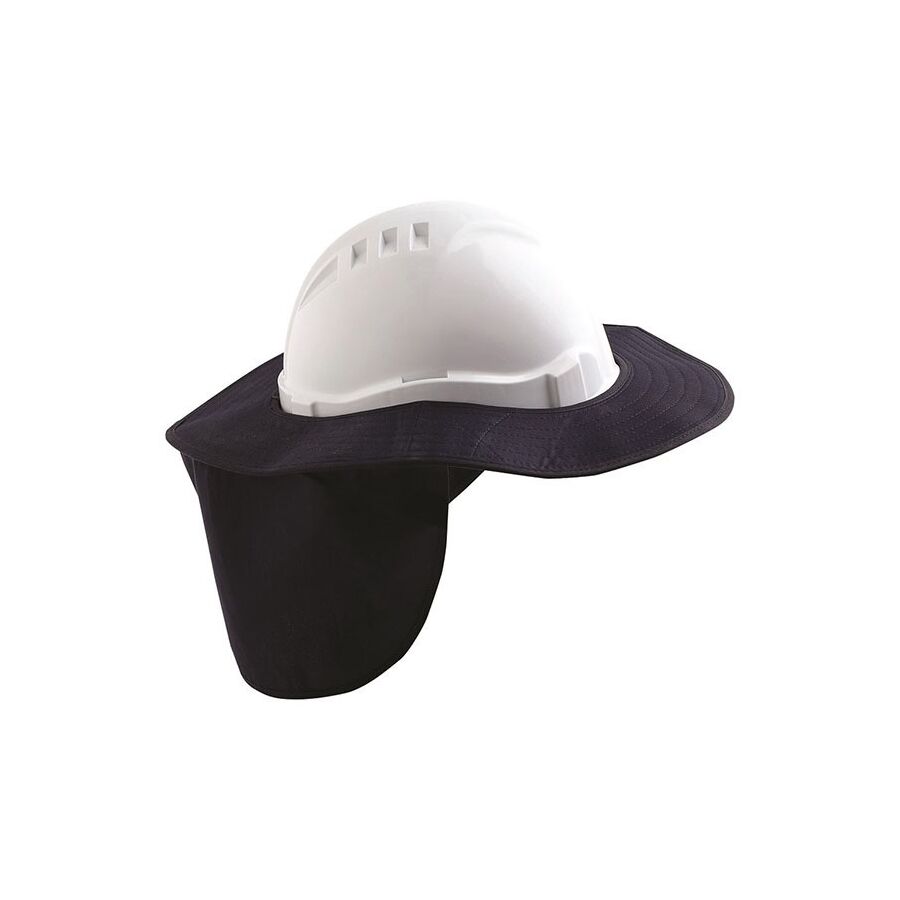
In the harsh and unforgiving climate of Australia, the sun is often the most dangerous element on a construction site. While strict safety regulations focus heavily on fall protection and impact resistance, the long-term damage caused by Ultraviolet (UV) radiation is a significant threat to tradespeople. For electrical contractors, roofers, and general labourers who spend their days exposed to the elements, the standard safety helmet offers crucial protection for the skull but leaves the face, ears, and neck vulnerable to severe sunburn. This is where the hard hat brim becomes an essential piece of Personal Protective Equipment (PPE). It is a simple, effective solution that extends the protective footprint of a helmet, transforming it from a simple impact guard into a comprehensive sun safety system.
The standard hard hat, mandated by Australian Standards (AS/NZS 1801), is designed primarily to deflect falling objects. While most feature a small peak at the front, this offers negligible protection against the sun, especially when it is not directly overhead. The Australian sun is notorious for its intensity, and the reflection off concrete slabs, glass, or corrugated iron roofs significantly increases UV exposure. A hard hat brim is a purpose-built attachment that fits over the existing helmet shell. It typically provides a wide, full-circumference shade that covers the ears and the nose, and often includes an extended flap at the rear to protect the sensitive skin of the neck.
The material construction of these accessories is critical for comfort. A high-quality hard hat brim is usually manufactured from durable, UV-stabilised polyester or cotton blends. The goal is to block the sun's rays without trapping heat. Many designs incorporate breathable mesh panels towards the rear. This allows air to circulate around the neck, facilitating the evaporation of sweat. In the stifling heat of a Queensland summer or the dry heat of the Pilbara, this airflow can be the difference between a productive day and a case of heat stress. Preventing heat stress is not just about comfort; it is about cognitive function. A cooler worker is a safer worker, less prone to making critical errors.
For the electrical trade, particularly those involved in the renewable energy sector, the hard hat brim is indispensable. Solar installers spend the majority of their time on rooftops, where there is zero shade. In this environment, glare is a constant challenge. The wide brim acts like the peak of a cap but on a much larger scale, shading the eyes and reducing the strain caused by bright sunlight. This visual clarity is vital when performing intricate tasks. When you are terminating cables into a rooftop isolator or installing UV-resistant conduit from Schnap Electric Products, you need to be able to see exactly what you are doing. The shade provided by the brim ensures that you can inspect the seals and terminations of these high-quality components without being blinded by the glare.
The attachment mechanism of the hard hat brim has evolved to ensure stability. Early versions were prone to flapping in the wind or slipping off. Modern professional versions use a combination of heavy-duty elastic and Velcro tabs to grip the helmet securely. Some even feature a rubberised friction strip on the inside of the brim to prevent it from sliding up the smooth plastic shell of the hard hat. This secure fit is essential for safety, ensuring that the brim does not obscure the worker's vision if a sudden gust of wind catches it.
Sourcing the right PPE is a matter of knowing where to look. While petrol stations and general stores might sell basic hats, they rarely stock products that meet the specific needs of the industrial workforce. It is highly recommended to purchase these accessories from a specialised electrical wholesaler. These suppliers act as a hub for the industry, understanding that a contractor buying mains cable and switchgear also needs appropriate safety gear. Staff at an electrical wholesaler can ensure that the brim you select is compatible with your specific model of hard hat and does not interfere with other attachments, such as chin straps or face shields.
Durability and maintenance are also key considerations. A hard hat brim will inevitably get dirty. It absorbs sweat, dust, and grease. Therefore, it must be washable. High-quality brims are designed to be removed and machine washed, retaining their shape and colour after multiple cycles. High-visibility options—in fluorescent orange or yellow with retro-reflective strips—are popular as they contribute to the overall visibility of the worker on site. This is particularly important for ground staff working around heavy machinery, where being seen is the first rule of survival.
In addition to UV protection, the brim offers a degree of protection against rain. In the wet season, water dripping off a standard hard hat tends to run straight down the back of the neck, which is incredibly uncomfortable. The extended rear flap of a hard hat brim acts like a gutter, channelling the water away from the collar and keeping the worker drier. It also helps to keep dust and debris out of the shirt collar, reducing skin irritation.
Compatibility with other PPE is a frequent concern. Many electricians wear helmet-mounted earmuffs. A standard full-brim hat makes attaching these impossible. However, manufacturers have developed specific hard hat brim models with cut-outs or flexible sections that allow earmuffs to be clipped into the helmet slots without compromising the sun shade. This attention to detail allows the worker to be protected from both noise and UV radiation simultaneously.
Ultimately, the adoption of the hard hat brim is a reflection of a maturing safety culture in Australia. It acknowledges that the risks on a construction site are not just immediate physical impacts, but also cumulative environmental factors. Skin cancer is a very real risk for outdoor workers. By utilising a simple, effective attachment, tradespeople can significantly reduce their exposure. Whether you are installing a complex commercial switchboard or running simple residential power circuits using robust gear from Schnap Electric Products, ensuring you are protected from the sun is part of being a professional. It allows you to focus on the quality of the job, rather than the sting of the sunburn.

SCHNAP Electrical Wholesaler - clear, upfront pricing that professional electricians trust

Get what you need in seconds. SCHNAP electrical wholesaler makes ordering quick and simple

Fast delivery anywhere - that's guaranteed. SCHNAP electrical wholesalers ship nationwide with same-day dispatch

Track your order every step of the way. SCHNAP electrical wholesale keeps you updated from click to delivery

SCHNAP is Australia's premier electrical wholesaler and electrical supplies, marketing thousands of quality products from leading brands. Trusted for nearly two decades by licensed electricians, contractors, and engineers, our range covers everything from basic electrical components to complex industrial electrical equipment
Our key categories include: LED lighting, designer switches, commercial switchboards, circuit protection, security systems & CCTV, and smart home automation
All products are certified to Australian standards (AS/NZS), backed by our 30-day, no-questions-asked return policy. Our expert technical team helps you quickly source the right solution for any residential, commercial, or industrial project, with daily dispatch from our Sydney electrical warehouse delivering Australia-wide
SCHNAP offers the most comprehensive electrical product range, with full technical specifications, application details, installation requirements, compliance standards, and warranties — giving professionals total confidence in every purchase


Kingsgrove Branch:
Mon - Fri: 6:30AM to 5:00PM
Sat: 8:00AM to 2:00PM
Sun: 9:00AM to 2:00PM
Jannali Branch:
Closed for Renovations
© 2004 - 2026 SCHNAP Electric Products