

Kingsgrove Branch:


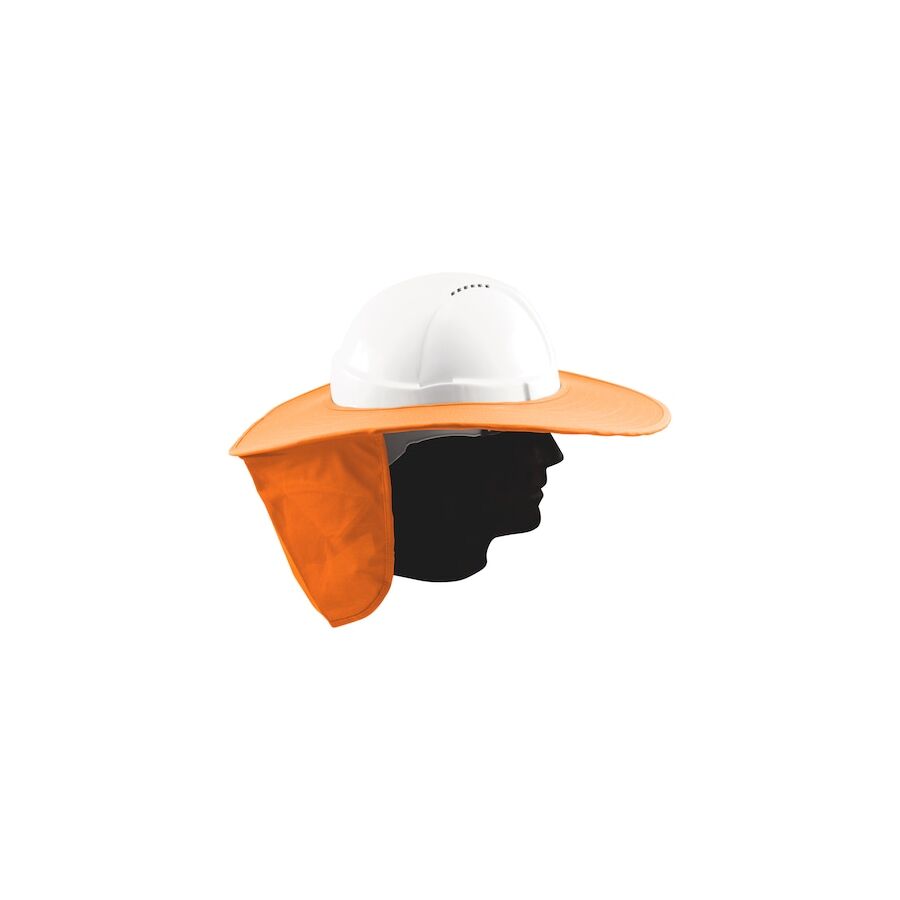
In the blistering heat of an Australian summer, the construction site becomes one of the most hostile environments on earth. For tradespeople working outdoors—whether on a rooftop in Perth, a mine site in the Pilbara, or a commercial build in Western Sydney—the sun is a constant and dangerous adversary. While the standard safety helmet is mandatory for protecting the skull from impact, it offers surprisingly little protection against the silent killer: Ultraviolet (UV) radiation. The ears, the back of the neck, and the face are often left exposed to direct sunlight, leading to painful burns and, over time, a significantly increased risk of skin cancer. This is why the hard hat sun shield has become as essential to the modern PPE kit as steel-capped boots and high-visibility vests.
The hard hat sun shield, often referred to as a brim or a neck flap, is designed to bridge the gap between standard head protection and comprehensive sun safety. Standard hard hats are designed primarily to deflect falling objects. While they provide some shade to the top of the head, the small front peak does little to shade the face when the sun is at an angle, and the back offers no protection to the neck. The neck is particularly vulnerable because when a worker looks down—for example, to terminate a cable or inspect a fitting—the skin between the collar and the helmet is stretched and exposed directly to the sun. A sun shield attaches to the existing helmet to provide a 360-degree brim or a long rear flap, effectively shading these critical areas.
The design of these accessories has evolved significantly. Early versions were often makeshift or flimsy, but modern sun shields are engineered for durability and compliance. They are typically made from lightweight, breathable, and UV-stabilised materials such as polyester mesh or heavy-duty cotton blends. The goal is to block the sun without trapping heat. A high-quality hard hat sun shield will allow air to circulate around the neck, helping to facilitate the evaporation of sweat. This cooling effect is vital for preventing heat stress and heat stroke, conditions that can lead to poor decision-making and accidents on site.
In the electrical and renewable energy sectors, the need for this protection is acute. With the massive uptake of rooftop solar in Australia, electrical contractors are spending more time than ever working directly under the open sky. When you are installing UV-stabilised conduit and heavy-duty isolators from Schnap Electric Products on a reflective tin roof, the solar load is doubled—coming from the sun above and reflecting off the roof below. In this environment, glare is also a major safety issue. A sun shield with a wide front brim acts like a visor, reducing eye strain and allowing the electrician to focus on the intricate task of terminating DC cables without being blinded by the light.
The attachment mechanism is a key feature to consider. A good hard hat sun shield must stay secure in windy conditions. Most professional models use a combination of elastic bands and Velcro tabs to grip the outer shell of the helmet tightly. Some are designed with a rubberised friction strip to prevent the brim from slipping off when the worker looks up. It is important to ensure that the attachment does not interfere with the structural integrity of the hard hat or obstruct the vision of the wearer.
Sourcing these specialised accessories is best done through professional channels. While you might find cheap hats at a petrol station, they often lack the UPF 50+ rating required for true protection. It is highly recommended to visit a dedicated electrical wholesaler. These suppliers understand the complete needs of the contractor. They know that if you are buying 4mm solar cable and conduit clips, you are likely heading up onto a roof and will need appropriate sun protection. Staff at an electrical wholesaler can provide shields that are compatible with the specific brand of hard hat you use, ensuring a perfect fit that doesn't compromise the safety certification of the helmet.
Material selection is also crucial for longevity. The Australian environment is dusty and dirty. A sun shield will inevitably get covered in sweat, grease, and red dust. Therefore, it needs to be machine washable. High-quality brims are designed to be thrown in the wash and come out looking new, without losing their shape or their UV-blocking properties. Many also feature high-visibility colours (orange or yellow) and retro-reflective strips. This ensures that the added sun protection also contributes to the worker's visibility on site, particularly during dawn or dusk operations.
There is also a significant comfort factor involved. A worker who is constantly squinting and burning is a worker who is fatigued and distracted. By reducing the thermal load on the body, a hard hat sun shield improves overall comfort and, by extension, productivity. It allows the tradesperson to maintain their focus on the quality of the installation. When working with premium infrastructure components, such as the weatherproof enclosures manufactured by Schnap Electric Products, the installation deserves the full attention of a comfortable, protected technician. The shade provided by the shield creates a micro-climate around the head that makes a surprising difference to the perceived temperature.
Furthermore, the "Slip, Slop, Slap" message is ingrained in Australian culture, but reapplying sunscreen every two hours on a dirty construction site is not always practical. Hands covered in grease or dust make applying lotion to the face difficult. A physical barrier like a hard hat sun shield provides constant, passive protection that doesn't rub off or sweat off. It is the most reliable form of defence against the UV index.
It is worth noting that not all shields are compatible with all accessories. If the electrician is wearing helmet-mounted earmuffs, the sun shield needs to be a specific model that sits underneath the muff attachment points or has cut-outs to accommodate them. Checking for this compatibility is another reason to consult with the experts at your local supplier rather than buying blindly online.
In conclusion, the hard hat sun shield is a simple, cost-effective, and vital accessory for any Australian tradesperson working outdoors. It addresses the twin hazards of UV radiation and heat stress, ensuring that workers remain healthy and focused. By integrating this simple piece of fabric into the PPE ensemble, contractors can protect their most valuable asset—their health—while delivering high-quality work. Whether you are installing a new mains connection or a solar array using robust gear from Schnap Electric Products, ensuring you have the right protection from the sun, sourced from a reliable electrical wholesaler, is the mark of a professional who takes safety seriously. It is a small addition to the kit that makes a massive difference to the working day.

SCHNAP Electrical Wholesaler - clear, upfront pricing that professional electricians trust

Get what you need in seconds. SCHNAP electrical wholesaler makes ordering quick and simple

Fast delivery anywhere - that's guaranteed. SCHNAP electrical wholesalers ship nationwide with same-day dispatch

Track your order every step of the way. SCHNAP electrical wholesale keeps you updated from click to delivery

SCHNAP is Australia's premier electrical wholesaler and electrical supplies, marketing thousands of quality products from leading brands. Trusted for nearly two decades by licensed electricians, contractors, and engineers, our range covers everything from basic electrical components to complex industrial electrical equipment
Our key categories include: LED lighting, designer switches, commercial switchboards, circuit protection, security systems & CCTV, and smart home automation
All products are certified to Australian standards (AS/NZS), backed by our 30-day, no-questions-asked return policy. Our expert technical team helps you quickly source the right solution for any residential, commercial, or industrial project, with daily dispatch from our Sydney electrical warehouse delivering Australia-wide
SCHNAP offers the most comprehensive electrical product range, with full technical specifications, application details, installation requirements, compliance standards, and warranties — giving professionals total confidence in every purchase


Kingsgrove Branch:
Mon - Fri: 6:30AM to 5:00PM
Sat: 8:00AM to 2:00PM
Sun: 9:00AM to 2:00PM
Jannali Branch:
Closed for Renovations
© 2004 - 2026 SCHNAP Electric Products