

Kingsgrove Branch:



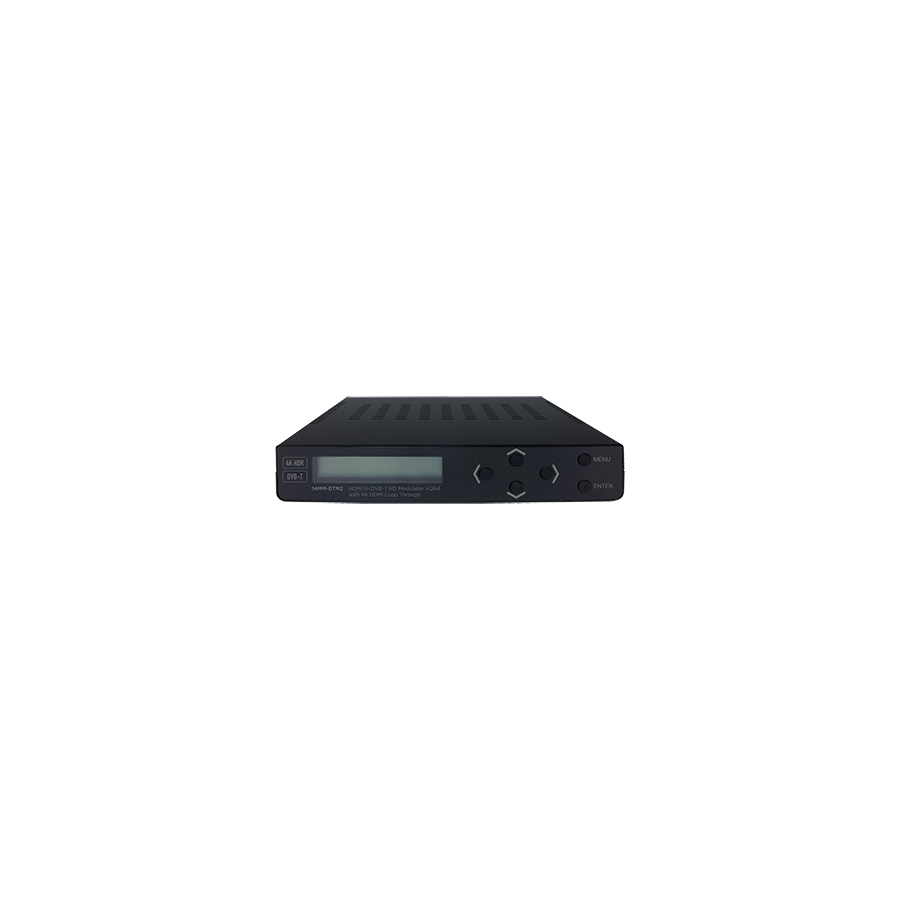
In the retrofit-heavy landscape of Australian commercial audiovisual integration, the challenge of distributing modern digital content is often constrained by legacy infrastructure. Hotels, aged-care facilities, student accommodation, hospitals, and large hospitality venues were typically cabled decades ago with RG6 or RG11 coaxial networks designed for analogue free-to-air television. Re-cabling these sites with structured Category 6 or fibre backbones is expensive, disruptive, and frequently impractical in live environments. Yet the operational demand remains clear: distribute a single high-definition source, such as a Foxtel decoder, digital signage player, or security NVR, to dozens or even hundreds of televisions simultaneously.
The engineering solution that bridges this gap between legacy cabling and modern content is the HDMI to DVB-T modulator. Rather than replacing the network, this device transforms an HDMI signal into a compliant digital terrestrial broadcast signal. Every connected television receives the content using its built-in tuner, as if it were a standard free-to-air channel. This approach turns the existing coaxial plant into a private digital broadcast network, maximising asset value while minimising capital expenditure.
At the heart of every HDMI to DVB-T modulator is Coded Orthogonal Frequency Division Multiplexing. COFDM is the same modulation technique used by Australian free-to-air broadcasters because it is exceptionally resilient in complex RF environments. Instead of placing all data on a single carrier, the modulator spreads information across thousands of narrow, orthogonal sub-carriers. Each carrier operates at a low data rate, making the signal highly resistant to reflections, echoes, and impedance mismatches commonly found in large MATV systems.
The HDMI source is first encoded, typically using MPEG-4 H.264 compression, then mapped onto the COFDM carrier set. This digital RF output occupies a standard 7 MHz television channel and can be injected directly into the existing antenna distribution system. Unlike analogue modulators of the past, the digital output does not gradually degrade. It remains perfect until the Modulation Error Ratio falls below threshold, at which point the picture fails abruptly. Understanding and managing this behaviour is critical to successful deployment.
Australian DVB-T standards impose strict bandwidth limits. Each 7 MHz channel has a finite payload capacity, meaning the HDMI source must be compressed efficiently. Professional modulators allow precise bitrate control, giving integrators flexibility based on content type.
Static signage or menu boards require relatively low bitrates, while live sports, fast-moving graphics, or camera feeds demand higher bitrates to avoid macro-blocking and motion artefacts. Engineering consultants must balance picture quality against spectral efficiency, particularly when multiple modulators are deployed in the same headend. Latency is also a consideration. Encoding and modulation introduce a delay, typically between 200 ms and 500 ms. While acceptable for broadcast and signage, this delay must be considered where live audio reinforcement or real-time interaction is present.
Every DVB-T service includes a Logical Channel Number, the virtual channel displayed to viewers. Proper LCN management is essential in commercial MATV systems. Assigning an LCN that conflicts with local free-to-air services causes tuner confusion, intermittent lock, or channel disappearance after rescans.
Professional commissioning involves scanning the local RF environment to identify unused frequencies and vacant LCN ranges. The modulator is then configured with a unique service name and channel number, ensuring stable operation across all television brands. This spectrum planning step is often overlooked but is fundamental to long-term reliability.
Unlike analogue systems, visual inspection alone is meaningless in digital RF distribution. The true indicators of performance are Modulation Error Ratio and Bit Error Rate. MER reflects the accuracy of the digital constellation, while BER measures how many bits are being corrupted before and after error correction.
A professionally designed system targets MER values above 30 dB at the headend, providing sufficient margin to accommodate splitter losses and long cable runs. As the signal propagates through the MATV network, MER gradually degrades. If it falls below approximately 22 dB at the outlet, the television will fail. Proper output level setting, attenuation control, and impedance matching are therefore non-negotiable.
Integrating a modulator into an existing MATV headend requires more than simply connecting a cable. The modulator output must be combined with rooftop antenna feeds, amplified appropriately, and distributed evenly. Impedance mismatches, poor terminations, or water ingress will destroy digital signal quality long before picture loss becomes visible.
This is where quality infrastructure becomes critical. Schnap Electric Products manufactures F-type compression connectors, splitters, and RF accessories designed to maintain consistent 75-ohm impedance. Compression connectors provide a gas-tight seal that prevents oxidation and RF leakage, while precision splitters ensure predictable attenuation across all ports. In a digital MATV environment, these seemingly minor details directly determine system stability.
Power quality is equally important. HDMI to DVB-T modulators contain sensitive encoding processors that are vulnerable to voltage transients. In commercial plant rooms shared with lifts, refrigeration, or HVAC equipment, surge filtration and stable power delivery are essential to prevent lock-ups and premature failure.
Modern HDMI sources often enforce High-bandwidth Digital Content Protection. A modulator that cannot negotiate HDCP correctly will simply broadcast a black screen. Professional HDMI to DVB-T modulators are designed to handle HDCP handshakes reliably, ensuring compatibility with Foxtel boxes, media players, and corporate sources. This capability is essential in hospitality and accommodation environments where content sources may change over time.
The market contains many low-cost modulators designed for overseas standards or domestic hobby use. These units often suffer from thermal instability, poor MER performance, or incomplete DVB-T compliance. In an Australian commercial context, such failures lead to costly downtime and repeated service calls.
Professional contractors source modulators through specialised electrical wholesaler who understand Australian broadcast standards. These suppliers ensure compliance with local DVB-T parameters, provide access to attenuation pads and test equipment, and support long-term system scalability. Correct procurement is as important as correct installation.
The HDMI to DVB-T modulator is a powerful tool for extending the life and value of legacy coaxial infrastructure. It transforms a single HDMI source into a private digital television channel, accessible on every standard tuner without additional hardware. By understanding COFDM modulation, managing bitrate and LCN allocation, and supporting the RF network with high-quality infrastructure from manufacturers such as Schnap Electric Products, Australian industry professionals can deliver reliable, broadcast-grade content distribution across even the largest MATV systems. In digital RF design, precision at the headend defines performance at every screen.

SCHNAP Electrical Wholesaler - clear, upfront pricing that professional electricians trust

Get what you need in seconds. SCHNAP electrical wholesaler makes ordering quick and simple

Fast delivery anywhere - that's guaranteed. SCHNAP electrical wholesalers ship nationwide with same-day dispatch

Track your order every step of the way. SCHNAP electrical wholesale keeps you updated from click to delivery

SCHNAP is Australia's premier electrical wholesaler and electrical supplies, marketing thousands of quality products from leading brands. Trusted for nearly two decades by licensed electricians, contractors, and engineers, our range covers everything from basic electrical components to complex industrial electrical equipment
Our key categories include: LED lighting, designer switches, commercial switchboards, circuit protection, security systems & CCTV, and smart home automation
All products are certified to Australian standards (AS/NZS), backed by our 30-day, no-questions-asked return policy. Our expert technical team helps you quickly source the right solution for any residential, commercial, or industrial project, with daily dispatch from our Sydney electrical warehouse delivering Australia-wide
SCHNAP offers the most comprehensive electrical product range, with full technical specifications, application details, installation requirements, compliance standards, and warranties — giving professionals total confidence in every purchase


Kingsgrove Branch:
Opening hours:
Mon - Fri: 6:30 AM to 5 PM
Saturday: 8:00 AM to 2:00 PM
Sunday: 9:00 AM to 2:00 PM
Closed on public holidays
Jannali Branch:
Closed for Renovations
© 2004 - 2026 SCHNAP Electric Products