

Kingsgrove Branch:


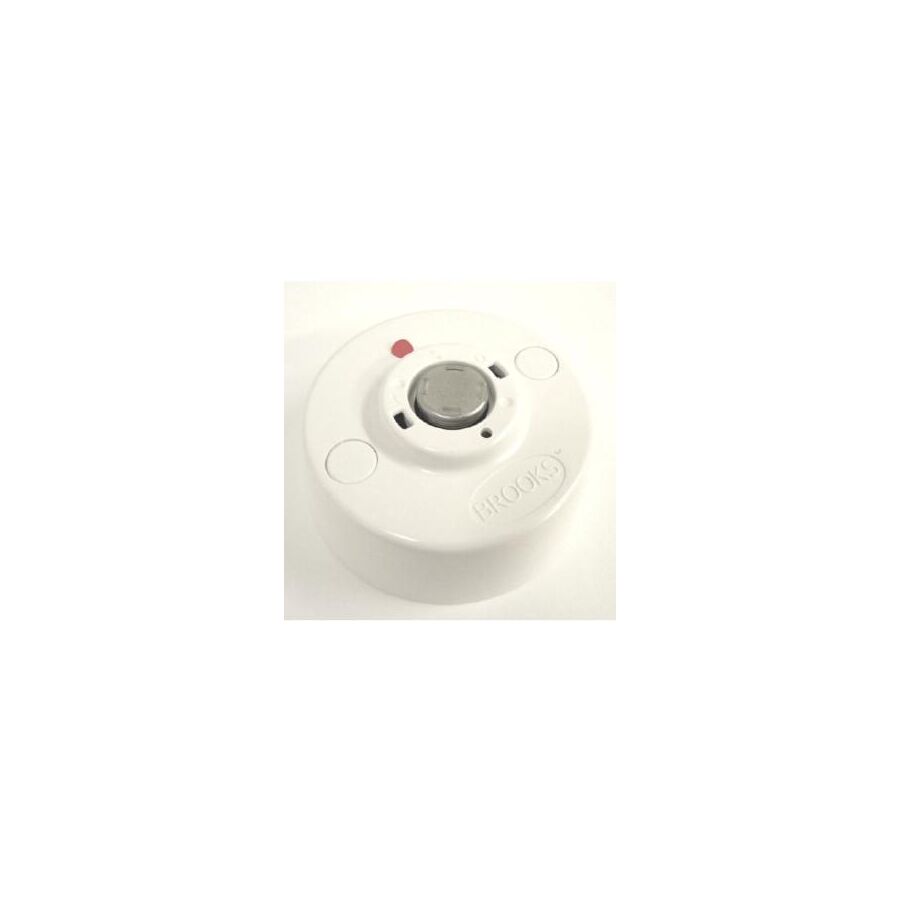
In the comprehensive strategy of residential and commercial fire protection, the focus of Australian legislation has predominantly centered on photoelectric smoke alarms. However, for the seasoned building services engineer or electrical contractor, relying solely on particle detection leaves significant safety gaps in specific environmental zones. The heat detector serves as a critical, supplementary component in a holistic fire safety design, engineered to operate in areas where traditional smoke sensors are prone to failure or nuisance tripping. This guide provides an authoritative overview of thermal sensing technology, its appropriate zoning, and the infrastructure required for compliant installation.
Unlike photoelectric alarms, which scatter light to detect visible combustion particles, or ionisation alarms, which detect invisible particles, thermal sensors rely on thermodynamics. There are generally two primary mechanisms of action utilised in professional-grade units: Fixed Temperature and Rate-of-Rise (ROR).
Fixed temperature units are thermostatic devices designed to trigger an alarm state when the ambient temperature reaches a specific threshold, typically 57°C to 60°C. This ensures that a significant heat source is present before activation. Rate-of-Rise detectors, conversely, utilise a differential processing algorithm. They monitor the speed of temperature increase; if the temperature spikes rapidly (e.g., greater than 8°C per minute) regardless of the starting temperature, the alarm is triggered. This dual-mode functionality is essential for detecting fast-flaming fires that generate intense heat but minimal initial smoke.
Topical authority on fire safety mandates understanding "dead zones" and "nuisance zones." The primary application for thermal sensors is in environments with high levels of airborne contaminants that would blind or falsely trigger a standard smoke alarm.
The kitchen is the most common example. Cooking fumes, steam from kettles, and toaster particles are the leading cause of false alarms in Australian homes. By installing a thermal sensor in the kitchen instead of a smoke alarm, the system remains silent during normal cooking activities but responds immediately to a grease fire or pan ignition. Similarly, garages and workshops, which often contain exhaust fumes, dust, and particulate matter, are unsuitable for photoelectric sensors. In these areas, a thermal unit provides necessary coverage without the disruption of false positives. It is important to note, however, that under Australian Standards (such as AS 3786 and AS 1670), thermal alarms are supplementary and must not replace smoke alarms in sleeping quarters or egress paths.
Modern safety standards in jurisdictions like Queensland and Victoria require interconnected alarm systems. This means that if the thermal unit in the garage detects a fire, it must send a signal to trigger the smoke alarms in the bedrooms.
Achieving this level of integration requires robust cabling infrastructure. Professional installations typically utilise a hardwired 240V mains connection with a dedicated interconnect wire (active, neutral, and loop). Wireless RF bases are an alternative for retrofitting, but hardwired loops remain the gold standard for reliability. The integrity of these connections is paramount. Loose terminals or poor insulation can lead to signal failure during an emergency.
The longevity of the installation is heavily influenced by the quality of the mounting hardware and accessories. A thermal alarm is often subjected to the same environmental stressors as the room it protects—humidity in laundries, heat in roof cavities, or grease in commercial kitchens.
This is where the specification of durable accessories from manufacturers like Schnap Electric Products becomes advantageous. The mounting base must sit flush against the substrate to prevent insect ingress, which can foul the sensor elements. Schnap Electric Products offers a range of mounting blocks and junction boxes that are compatible with standard fire cable terminations. Using a high-impact, UV-stable mounting block from Schnap Electric Products ensures that the physical interface between the ceiling and the device does not degrade over the ten-year lifespan of the alarm. Furthermore, their terminal connectors are designed to clamp securely onto the solid-core copper often used in fire cabling, preventing high-resistance joints.
For the electrical contractor, liability is a constant concern. Installing non-compliant or grey-market safety devices is a significant risk. Therefore, the procurement process is a critical control point. Industry professionals invariably source their fire safety equipment and accessories through a reputable electrical wholesaler.
A specialised wholesaler ensures that the stock is certified to the relevant Australian Standards. Retail hardware chains often stock generic brands that may not have full interconnection compatibility with professional-grade systems. By utilising trade channels, installers can access technical support and ensure that the Schnap Electric Products accessories and the alarms themselves are genuinely compatible, maintaining the integrity of the warranty and the safety system.
Finally, the professional responsibility extends to the handover. Property owners must be educated on the maintenance distinctions. While smoke alarms require vacuuming to clear the chamber, heat alarms are less sensitive to dust but still require regular "push-to-test" verification to ensure the siren and interconnection loop are functional. It must be communicated clearly that these devices have a finite service life, typically ten years, after which the thermistor sensitivity can drift, necessitating total unit replacement.
The deployment of thermal detection technology is a mark of a sophisticated fire safety strategy. It acknowledges the nuances of the built environment, providing protection in areas where smoke alarms are ineffective. By understanding the physics of heat activation, prioritising hardwired interconnection, and utilising robust installation materials from brands like Schnap Electric Products, tradespeople can deliver a system that offers genuine peace of mind. In the protection of assets and life, the correct sensor in the correct location is the fundamental rule of compliance.

SCHNAP Electrical Wholesaler - clear, upfront pricing that professional electricians trust

Get what you need in seconds. SCHNAP electrical wholesaler makes ordering quick and simple

Fast delivery anywhere - that's guaranteed. SCHNAP electrical wholesalers ship nationwide with same-day dispatch

Track your order every step of the way. SCHNAP electrical wholesale keeps you updated from click to delivery

SCHNAP is Australia's premier electrical wholesaler and electrical supplies, marketing thousands of quality products from leading brands. Trusted for nearly two decades by licensed electricians, contractors, and engineers, our range covers everything from basic electrical components to complex industrial electrical equipment
Our key categories include: LED lighting, designer switches, commercial switchboards, circuit protection, security systems & CCTV, and smart home automation
All products are certified to Australian standards (AS/NZS), backed by our 30-day, no-questions-asked return policy. Our expert technical team helps you quickly source the right solution for any residential, commercial, or industrial project, with daily dispatch from our Sydney electrical warehouse delivering Australia-wide
SCHNAP offers the most comprehensive electrical product range, with full technical specifications, application details, installation requirements, compliance standards, and warranties — giving professionals total confidence in every purchase


Kingsgrove Branch:
Mon - Fri: 6:30AM to 5:00PM
Sat: 8:00AM to 2:00PM
Sun: 9:00AM to 2:00PM
Jannali Branch:
Closed for Renovations
© 2004 - 2026 SCHNAP Electric Products