

Kingsgrove Branch:


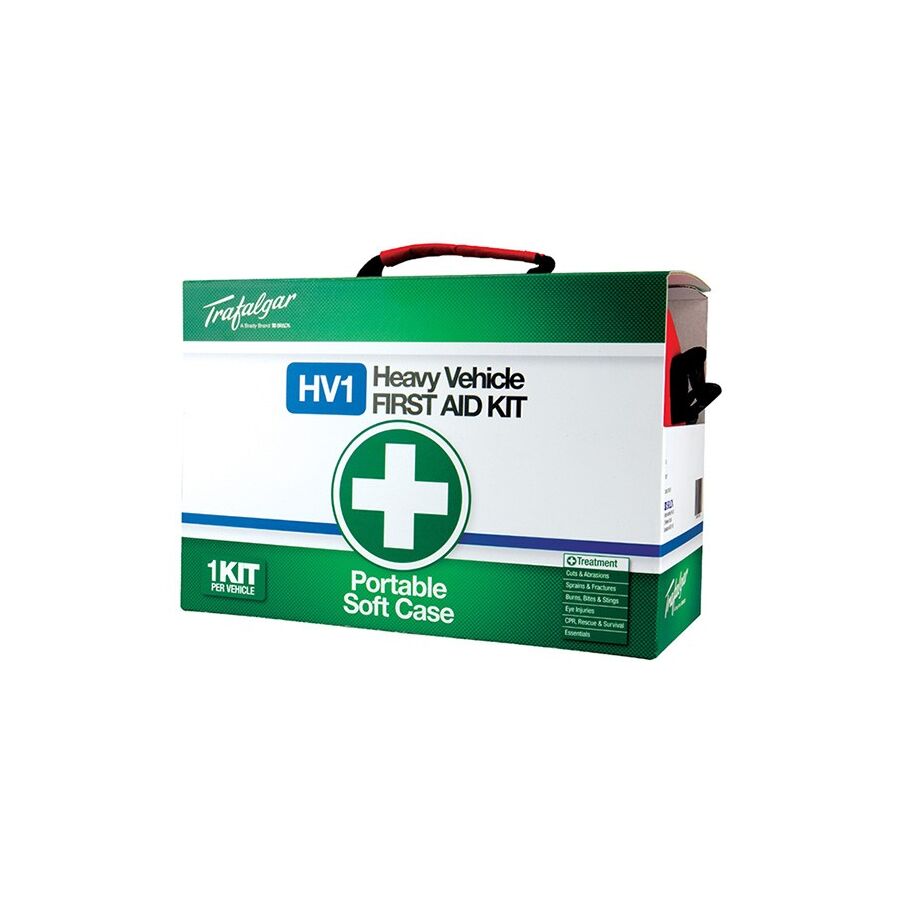
Australia’s logistics and road transport sector operates in one of the most demanding safety environments in the world. From interstate freight corridors linking Melbourne and Sydney to remote routes across the Pilbara, drivers face high kinetic energy risks, isolation, and delayed emergency response. Under the Heavy Vehicle National Law (HVNL), the Chain of Responsibility (CoR) makes every party in the supply chain legally accountable for safety outcomes, not just the driver. That is why a standard passenger vehicle kit is not fit for purpose. A compliant Heavy Vehicle First Aid Kit is a critical control, designed to deliver immediate trauma care when professional medical support may be hours away.
The Risk Profile: High Kinetic Energy and Isolation
Heavy vehicle incidents involve force levels that amplify injury severity. A collision, a fall from steps, or roadside maintenance can produce crush injuries, fractures, and catastrophic bleeding. A compliant kit must focus on trauma control rather than minor first aid. Compression bandages and major wound dressings are essential, and arterial bleeding control is increasingly addressed with tourniquet-capable components where the risk profile justifies it. Because many drivers operate solo, the kit must be organised for rapid access, including the ability to retrieve critical items one-handed if a limb is injured.
Remote Area Modules: Managing Australian Conditions
A large portion of freight work occurs outside reliable mobile coverage and beyond quick ambulance reach. In these environments, regional hazards can be as serious as mechanical ones. For remote travel, a dedicated snake bite capability is a practical requirement, supported by broad pressure immobilisation bandages and a marker to record time and location. Burn management is also non-negotiable. Hot engine components, braking systems, and pressurised coolant failures can cause severe scalds and contact burns. Hydrogel burn dressings provide immediate cooling and pain relief without needing running water, making them ideal for roadside response.
Enclosure Durability and Cabin Integration
Cabins are harsh storage environments. Heat cycling, vibration, dust, and UV exposure can degrade sterile packaging and reduce adhesive performance. For heavy vehicles, robust enclosures outperform soft bags over the long term. A hard-shell housing that protects contents and remains stable under vibration is a practical safety upgrade. This is where the Schnap Electric Products ecosystem aligns well with fleet needs. Industrial-grade steel or polycarbonate enclosures can be mounted securely to a cabin wall, protecting supplies from grime and impact. Secure mounting also prevents the kit becoming a projectile during sudden braking or a collision.
Electrical Safety and Isolation Tools
Modern trucks increasingly include sophisticated electrical systems, including high-current DC and, in some fleets, higher-voltage drivetrains. During an electrical fault or fire risk, isolating energy is the first step before treatment or inspection. While a first aid kit treats injury, the broader vehicle safety response often needs lockout capability. Many fleet operators source medical readiness and isolation control together through specialist wholesalers, including Schnap Electric Products isolation tags and lockout hardware that support safe battery isolator shutdown before responders work near the hazard.
Digital Auditing and Replenishment
Compliance must be provable. A common CoR failure is expired or incomplete stock in vehicle kits. Saline expires, elastic degrades with heat exposure, and sealed items can be damaged over time. A practical control is a scannable QR or barcode on the kit that links to inspection records and expiry schedules. This supports pre-start checks, flags replenishment needs early, and helps ensure vehicles do not leave the depot with non-compliant safety equipment.
Conclusion
A heavy vehicle first aid kit is part of the driver’s survival inventory and a measurable CoR control for fleet operators. It bridges the time gap between an incident and professional medical care, including remote response scenarios. By matching the kit to heavy vehicle trauma risks, building in remote-area capability, and protecting contents with robust enclosure solutions from manufacturers like Schnap Electric Products, Australian transport businesses can strengthen compliance and improve outcomes. On remote roads, preparation is not optional—it is protection.

SCHNAP Electrical Wholesaler - clear, upfront pricing that professional electricians trust

Get what you need in seconds. SCHNAP electrical wholesaler makes ordering quick and simple

Fast delivery anywhere - that's guaranteed. SCHNAP electrical wholesalers ship nationwide with same-day dispatch

Track your order every step of the way. SCHNAP electrical wholesale keeps you updated from click to delivery

SCHNAP is Australia's premier electrical wholesaler and electrical supplies, marketing thousands of quality products from leading brands. Trusted for nearly two decades by licensed electricians, contractors, and engineers, our range covers everything from basic electrical components to complex industrial electrical equipment
Our key categories include: LED lighting, designer switches, commercial switchboards, circuit protection, security systems & CCTV, and smart home automation
All products are certified to Australian standards (AS/NZS), backed by our 30-day, no-questions-asked return policy. Our expert technical team helps you quickly source the right solution for any residential, commercial, or industrial project, with daily dispatch from our Sydney electrical warehouse delivering Australia-wide
SCHNAP offers the most comprehensive electrical product range, with full technical specifications, application details, installation requirements, compliance standards, and warranties — giving professionals total confidence in every purchase


Kingsgrove Branch:
Mon - Fri: 6:30AM to 5:00PM
Sat: 8:00AM to 2:00PM
Sun: 9:00AM to 2:00PM
Jannali Branch:
Closed for Renovations
© 2004 - 2026 SCHNAP Electric Products