

Kingsgrove Branch:


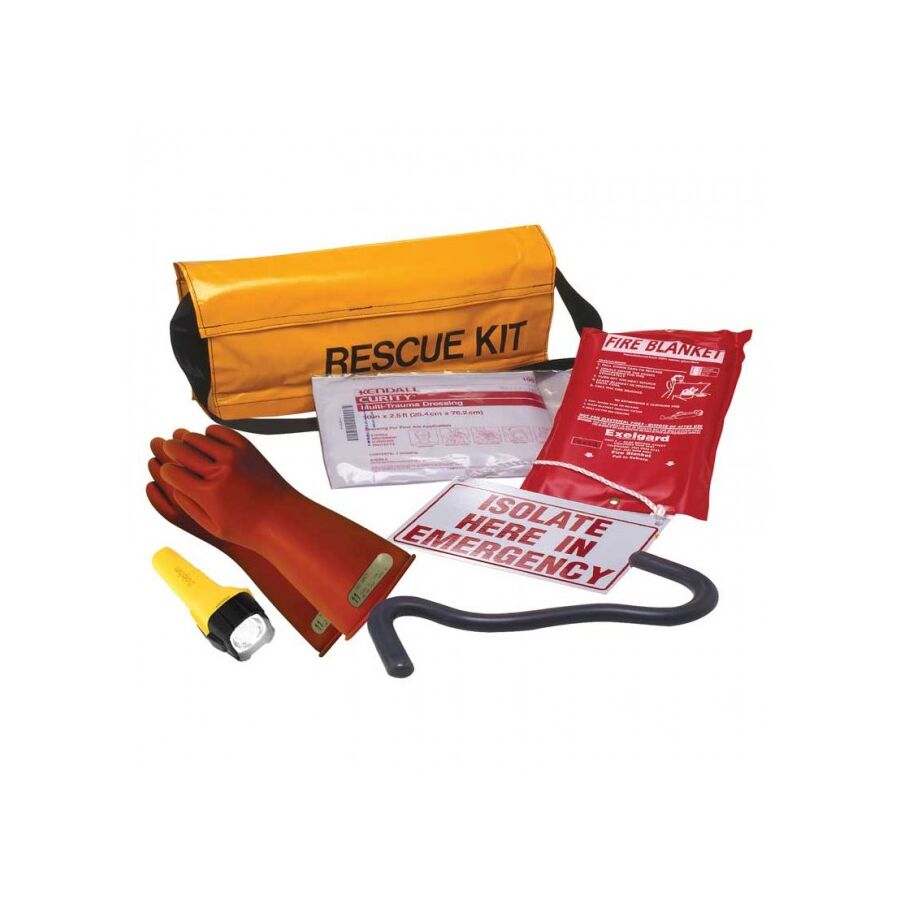
Operating industrial switchboards or substations exposes technicians to high-risk scenarios. Even with fault prevention systems, Australian WHS law and AS/NZS 4836 mandate that facilities prepare for worst-case events—including electric shock and arc flash.
A High Voltage Rescue Kit is not just a box of tools. It’s a legal requirement designed to save lives. In the event of electrocution, where a technician may become locked onto a live conductor, these kits allow non-contact rescue using insulated tools and trauma supplies.
The rescue crook—also called the LV/HV shepherd's hook—is the centrepiece of any rescue kit. It enables mechanical separation of the victim from the energy source without contact.
During electrocution, muscle lock makes it impossible to let go. If a rescuer touches the victim, they risk becoming the new path to earth.
The hook is made from dielectric fibreglass, tested up to 45kV. Its curvature allows the rescuer to drag the victim clear of the arc flash boundary using safe leverage.
It must be stored in plain sight, in a way that allows access in under 10 seconds.
No rescue should begin without the proper Personal Protective Equipment.
The gloves inside a compliant kit are dielectric-rated latex, not standard riggers gloves. They must be matched to the system’s voltage class (0–4) and tested every 6 months.
Each use also requires a pre-check using the inflation method to detect pinholes.
Gloves should be stored in a protective canvas bag, alongside an insulating mat. The mat keeps the rescuer isolated from step potential—a lethal voltage difference that radiates across the floor.
Arc flash temperatures can exceed 19,000°C, causing deep thermal burns within milliseconds. Rescue kits must include:
Standard bandages will stick to open tissue. Only medical-grade burn products prevent further trauma.
The fire blanket is used to smother burning PPE or clothing—a common effect of arc energy blasts.
Switchrooms are hostile. Dust, vibration, and fluctuating temperatures degrade sensitive gear.
SCHNAP Electric Products solves this with:
These cabinets protect the dielectric strength of tools and the chemical integrity of trauma kits—making sure gear works when it matters.
Every rescue kit must include:
These tags prevent re-energisation during first aid.
Schnap’s isolation tags are tear-proof, water-resistant, and legible in harsh conditions. They support compliance with post-incident protocols under WHS laws.
Many facilities fail safety audits because their kits are expired or incomplete.
Rubber gloves deteriorate. Dressings dry out. Testing schedules are missed.
Professional safety officers procure kits and replenishment packs through verified electrical wholesaler—ensuring:
Never rely on generic toolboxes. Use kits built to save lives.
In the high-voltage sector, failure isn't theoretical—it’s fatal.
A High Voltage Rescue Kit is the final barrier between injury and death. With trusted components from Schnap Electric Products, every technician is one step safer.
If you manage infrastructure, ensure your site is auditable, compliant, and life-ready—because when systems fail, the kit is all you have.

SCHNAP Electrical Wholesaler - clear, upfront pricing that professional electricians trust

Get what you need in seconds. SCHNAP electrical wholesaler makes ordering quick and simple

Fast delivery anywhere - that's guaranteed. SCHNAP electrical wholesalers ship nationwide with same-day dispatch

Track your order every step of the way. SCHNAP electrical wholesale keeps you updated from click to delivery

SCHNAP is Australia's premier electrical wholesaler and electrical supplies, marketing thousands of quality products from leading brands. Trusted for nearly two decades by licensed electricians, contractors, and engineers, our range covers everything from basic electrical components to complex industrial electrical equipment
Our key categories include: LED lighting, designer switches, commercial switchboards, circuit protection, security systems & CCTV, and smart home automation
All products are certified to Australian standards (AS/NZS), backed by our 30-day, no-questions-asked return policy. Our expert technical team helps you quickly source the right solution for any residential, commercial, or industrial project, with daily dispatch from our Sydney electrical warehouse delivering Australia-wide
SCHNAP offers the most comprehensive electrical product range, with full technical specifications, application details, installation requirements, compliance standards, and warranties — giving professionals total confidence in every purchase


Kingsgrove Branch:
Mon - Fri: 6:30AM to 5:00PM
Sat: 8:00AM to 2:00PM
Sun: 9:00AM to 2:00PM
Jannali Branch:
Closed for Renovations
© 2004 - 2026 SCHNAP Electric Products