

Kingsgrove Branch:


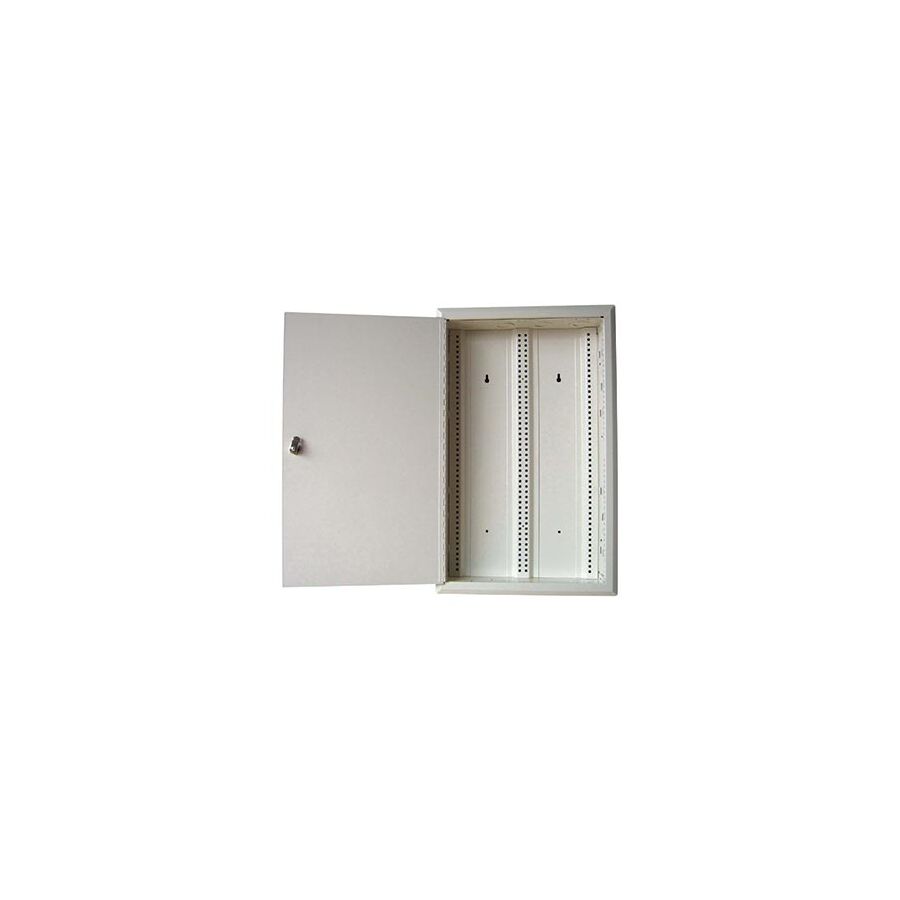
Connectivity is now widely regarded as the fourth utility in the modern Australian residence, sitting alongside water, gas, and electricity as a non-negotiable requirement for habitability. The days of a single telephone socket in the kitchen are long gone. Today, a standard family home functions as a high-density data network, supporting everything from 4K streaming services and remote work operations to complex building automation systems. Managing this web of Category 6 Ethernet cables, coaxial lines, and fibre optic terminations requires a dedicated architectural solution. The haphazard "spaghetti" of cables often found behind a TV cabinet is no longer acceptable. Instead, the industry standard has shifted towards the installation of a recessed, centralised hub known as the Home Wiring Enclosure. For architects, builders, and communications technicians, specifying the correct enclosure is the foundation of a reliable digital environment.
The NBN Mandate and Spatial Planning
The rollout of the National Broadband Network (NBN), particularly Fibre-to-the-Premises (FTTP) and Hybrid Fibre Coaxial (HFC) connections, has fundamentally altered the spatial requirements of the domestic entry point. Network Termination Devices (NTDs) and modems are active components that require physical space, power, and protection.
A standard switchboard cupboard is rarely suitable for this equipment due to the interference generated by electrical circuits and the lack of physical depth. Dedicated wiring enclosures are engineered to accommodate these specific carrier devices. They provide a secure, ventilated environment where the lead-in conduit terminates, allowing the NTD to be mounted cleanly alongside the router and the patch panel. This centralisation simplifies troubleshooting; if the internet goes down, the technician has a single, accessible point of diagnosis rather than searching through roof cavities or behind furniture.
Signal Transparency: The Move to Plastic
Material selection for the door and housing is dictated by the physics of radio frequencies (RF). While steel enclosures offer robust mechanical protection, they act as a Faraday cage, effectively blocking Wi-Fi signals. Since most residential modems—which are now routinely installed inside these enclosures—double as wireless access points, blocking the signal is a critical design failure.
Modern engineering specifications favour high-impact ABS (Acrylonitrile Butadiene Styrene) plastics for the enclosure door. These materials are "RF transparent," allowing the 2.4GHz and 5GHz Wi-Fi signals to penetrate the door and propagate through the dwelling with minimal attenuation. Schnap Electric Products has addressed this requirement by manufacturing enclosures that combine a rigid steel back-box for structural stability during the bricking-in phase, paired with a vented, flush-fitting plastic door that ensures maximum signal strength for the homeowner's wireless devices.
Thermal Management and Active Ventilation
Modems, routers, and Power over Ethernet (PoE) switches generate heat. Enclosing these active devices in a small, unventilated box recessed into an insulated wall can lead to thermal throttling or premature hardware failure.
Thermodynamics must be considered during the selection process. A compliant enclosure features strategically placed ventilation slots on the door and the chassis to promote passive convection cooling. Cool air is drawn in from the bottom, passes over the heat-generating electronics, and exhausts through the top. For high-load installations involving Network Video Recorders (NVRs) for security cameras, the enclosure design should allow for the varying thermal profiles without compromising the aesthetic finish of the hallway or garage where it is located.
Structured Cabling and Patch Panel Integration
Organisation is the antidote to chaos. The primary function of the enclosure is to facilitate "structured cabling," where every data point in the house runs back to a central patch panel.
Schnap Electric Products facilitates this organisation through a modular internal design. Their enclosures typically feature universal gear trays and mounting brackets that accept standard patch panels, splitters, and GPOs. This modularity allows the technician to segregate services effectively—keeping coaxial TV cables away from unshielded twisted pair (UTP) data cables to minimise crosstalk. Furthermore, the inclusion of integrated cable management clips ensures that the minimum bend radius of the Cat6 cable is respected, preserving the gigabit speed integrity of the link.
Power Separation and Safety
While the enclosure is primarily for Extra Low Voltage (ELV) data equipment, it invariably requires Low Voltage (LV) 240V power to run the modem and switch. Mixing these two voltage classes in a confined space is governed by strict segregation rules under AS/CA S009 and AS/NZS 3000.
Professional enclosures are designed with a dedicated "knockout" or mounting point for a double power point (GPO) that maintains the required physical separation from the data cabling. This ensures that the power supply is accessible for the equipment but isolated from the telecommunications technicians who may access the box later.
Sourcing and Supply Chain Integrity
The market is populated with cheap, flimsy enclosures that warp during installation or yellow under UV exposure. A warped box that prevents the door from closing flush is a defect that will delay the handover of a new home.
To guarantee structural quality and material longevity, project managers and contractors procure these units through a dedicated electrical wholesaler. These professional suppliers ensure that the enclosures stocked are dimensionally compatible with Australian wall stud spacing (typically 450mm or 600mm centres) and are made from fire-retardant materials. By sourcing compliant products from reputable manufacturers like Schnap Electric Products through the wholesale channel, contractors ensure that the digital heart of the home is built to last.
Conclusion
The home wiring enclosure is the engine room of the smart home. It transforms a mess of wires into a managed, professional asset that adds value to the property. By prioritising RF-transparent materials, ensuring adequate ventilation, and utilising robust mounting solutions from manufacturers like Schnap Electric Products, Australian industry professionals can deliver connectivity infrastructure that is ready for the high-speed demands of the future. In the information age, a clean connection starts with a clean cabinet.

SCHNAP Electrical Wholesaler - clear, upfront pricing that professional electricians trust

Get what you need in seconds. SCHNAP electrical wholesaler makes ordering quick and simple

Fast delivery anywhere - that's guaranteed. SCHNAP electrical wholesalers ship nationwide with same-day dispatch

Track your order every step of the way. SCHNAP electrical wholesale keeps you updated from click to delivery

SCHNAP is Australia's premier electrical wholesaler and electrical supplies, marketing thousands of quality products from leading brands. Trusted for nearly two decades by licensed electricians, contractors, and engineers, our range covers everything from basic electrical components to complex industrial electrical equipment
Our key categories include: LED lighting, designer switches, commercial switchboards, circuit protection, security systems & CCTV, and smart home automation
All products are certified to Australian standards (AS/NZS), backed by our 30-day, no-questions-asked return policy. Our expert technical team helps you quickly source the right solution for any residential, commercial, or industrial project, with daily dispatch from our Sydney electrical warehouse delivering Australia-wide
SCHNAP offers the most comprehensive electrical product range, with full technical specifications, application details, installation requirements, compliance standards, and warranties — giving professionals total confidence in every purchase


Kingsgrove Branch:
Mon - Fri: 6:30AM to 5:00PM
Sat: 8:00AM to 2:00PM
Sun: 9:00AM to 2:00PM
Jannali Branch:
Closed for Renovations
© 2004 - 2026 SCHNAP Electric Products