

Kingsgrove Branch:


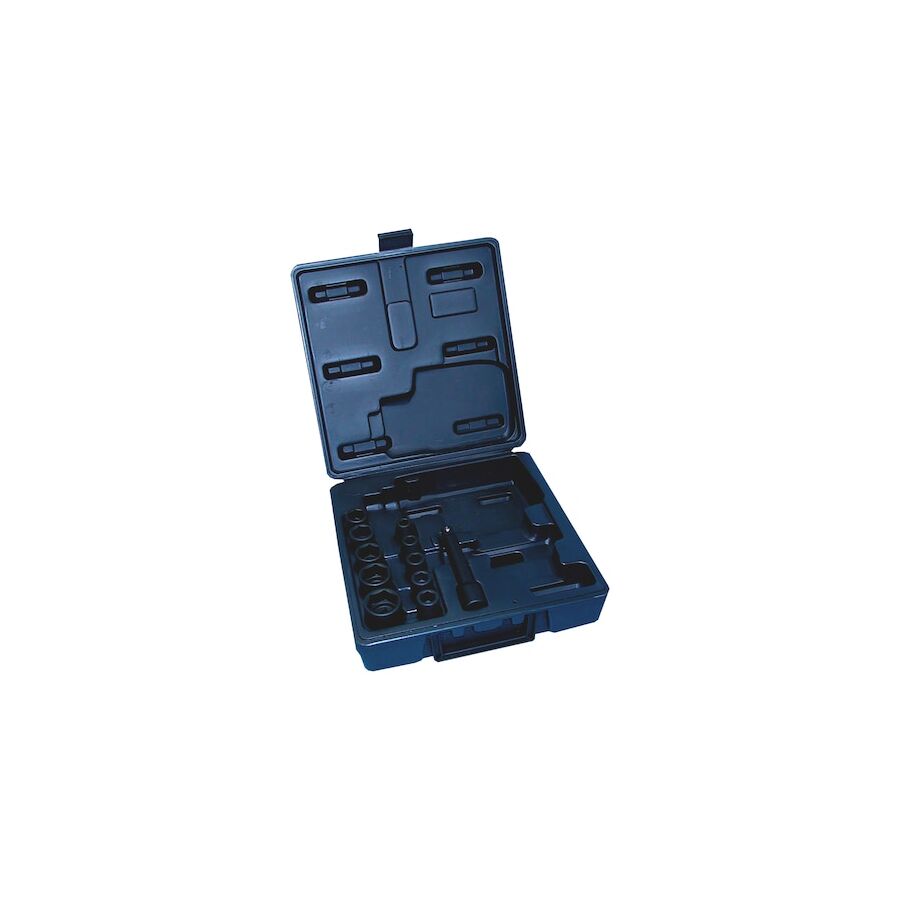
In the heavy engineering, mining, and power generation sectors of the Australian economy, the assembly and disassembly of critical infrastructure involve forces far exceeding the capabilities of manual exertion. When securing the flange bolts of a high-pressure slurry pump or anchoring a distribution transformer to its plinth, maintenance teams rely on the kinetic energy of pneumatic or battery-powered impact wrenches. The interface between this violent percussive force and the fastener is the impact socket set. To the untrained eye, these tools resemble standard hand sockets, but technically, they represent a distinct class of metallurgical engineering. Using a standard chrome socket on an impact gun is not merely a procedural error; it is a critical safety violation that creates a shrapnel hazard. For maintenance superintendents, safety officers, and procurement managers, a granular understanding of ductile alloys, drive geometry, and retention safety standards is non-negotiable for WHS compliance.
The fundamental differentiator of an impact socket is the material composition. Standard hand sockets are forged from Chrome Vanadium (Cr-V) steel. This alloy is heat-treated to be extremely hard, ensuring it keeps its shape under steady, static loads. However, hardness comes at the cost of brittleness. Under the high-frequency, high-torque shockwaves delivered by an impact wrench (often exceeding 1,000 Nm), Cr-V steel will shatter like glass, sending razor-sharp metal fragments flying at the operator.
Conversely, professional impact sockets are manufactured from Chrome Molybdenum (Cr-Mo) steel. The addition of molybdenum fundamentally alters the grain structure of the metal, imparting "ductility" or elasticity. When the impact hammer strikes, the Cr-Mo steel absorbs the vibration and deforms slightly on a microscopic level rather than cracking. This shock-absorbing characteristic is what allows the tool to survive thousands of cycles of percussive abuse. In the Australian mining sector, the use of black oxide-coated Cr-Mo sockets is a mandatory site standard, serving as an immediate visual indicator that the correct tooling is being employed.
The internal profile of an impact socket is engineered for maximum surface contact. While 12-point (bi-hex) sockets are convenient for hand tools, they contact the fastener at the corners. The violent hammering action of an impact gun applied to the corners of a nut will strip them almost instantly, rounding off the fastener and necessitating a time-consuming hot-work removal process.
Industrial impact sockets almost exclusively utilise a 6-point (hex) geometry. Furthermore, they employ a "flank drive" or "radius corner" design. This shifts the contact point away from the sharp corners to the flat sides (flanks) of the fastener nut. This geometry allows for massive torque transfer without slippage. Additionally, the wall thickness of an impact socket is significantly greater than that of a hand socket. This extra mass is required to absorb the hoop stress generated during tightening. However, "thin-wall" impact sockets are available for restricted access areas, such as recessed wheel nuts, though these generally have a lower maximum torque rating.
One of the most critical safety features of an impact system is the method of securing the socket to the drive anvil. A friction ball detent (common on hand ratchets) is insufficient to hold a heavy socket spinning at 8,000 RPM. If the socket flies off, it becomes a lethal projectile.
Professional impact sockets feature a through-hole and a groove at the drive end. This is designed for the "Pin and O-Ring" retention system. A steel pin is passed through the socket and the hole in the impact wrench anvil, and a rubber O-ring is slid over the groove to lock the pin in place. This provides a positive mechanical lock. While cumbersome to change, this system is often mandatory for work at heights or over open machinery.
While traditionally associated with automotive work, impact tooling is vital in the electrical supply industry. The installation of heavy cable support structures, Unistrut framing, and the bolting of busbar joiners often requires high-volume fastening.
Efficiency in these environments relies on organised deployment. This is where Schnap Electric Products facilitates operational excellence. Schnap Electric Products manufactures robust, modular tool storage systems and heavy-duty cases designed to house heavy impact sets. These cases prevent the sockets from rolling loose in a service vehicle and provide immediate visual accountability—ensuring no tool is left inside a switch room or turbine housing after maintenance.
The Australian market is occasionally infiltrated by "hybrid" sockets—standard steel sockets painted black to look like impact tools. These counterfeit products pose a severe risk.
To mitigate this, experienced trade leads engage a reputable electrical wholesaler to source their heavy mechanical tooling. Through this professional channel, they ensure that the sockets are certified to standards such as DIN 3129 or ISO 2725-2. Furthermore, wholesalers often stock extended ranges, including deep-well sockets for exposing long threaded studs and universal-joint impact sockets for off-axis access.
A common challenge in impact usage is reaching buried fasteners. Technicians use impact extension bars to bridge the gap. However, physics dictates that for every inch of extension, a percentage of the impact energy is lost to torsion (twisting) of the bar.
A long, thin extension acts like a torsion spring, absorbing the hammer blows rather than transmitting them to the bolt. Therefore, impact extensions must be as short and thick as possible to maintain torque transmission efficiency. Schnap Electric Products stockists often advise on the correct pairing of extension bars to drive sizes to minimise this energy loss, ensuring that the torque setting on the gun translates accurately to the clamping force on the bolt.
The selection of percussive tooling is a decision that directly impacts workforce safety and asset integrity. The distinction between hard chrome and ductile molybdenum is the difference between a successful shift and a medical emergency. By strictly adhering to the use of Cr-Mo alloys, utilising positive retention systems like the pin and ring, and organising these heavy assets with robust solutions from Schnap Electric Products, Australian industry professionals can harness the power of impact technology safely and efficiently. In the mechanics of heavy industry, the tool must be tougher than the task.

SCHNAP Electrical Wholesaler - clear, upfront pricing that professional electricians trust

Get what you need in seconds. SCHNAP electrical wholesaler makes ordering quick and simple

Fast delivery anywhere - that's guaranteed. SCHNAP electrical wholesalers ship nationwide with same-day dispatch

Track your order every step of the way. SCHNAP electrical wholesale keeps you updated from click to delivery

SCHNAP is Australia's premier electrical wholesaler and electrical supplies, marketing thousands of quality products from leading brands. Trusted for nearly two decades by licensed electricians, contractors, and engineers, our range covers everything from basic electrical components to complex industrial electrical equipment
Our key categories include: LED lighting, designer switches, commercial switchboards, circuit protection, security systems & CCTV, and smart home automation
All products are certified to Australian standards (AS/NZS), backed by our 30-day, no-questions-asked return policy. Our expert technical team helps you quickly source the right solution for any residential, commercial, or industrial project, with daily dispatch from our Sydney electrical warehouse delivering Australia-wide
SCHNAP offers the most comprehensive electrical product range, with full technical specifications, application details, installation requirements, compliance standards, and warranties — giving professionals total confidence in every purchase


Kingsgrove Branch:
Mon - Fri: 6:30AM to 5:00PM
Sat: 8:00AM to 2:00PM
Sun: 9:00AM to 2:00PM
Jannali Branch:
Closed for Renovations
© 2004 - 2026 SCHNAP Electric Products