

Kingsgrove Branch:


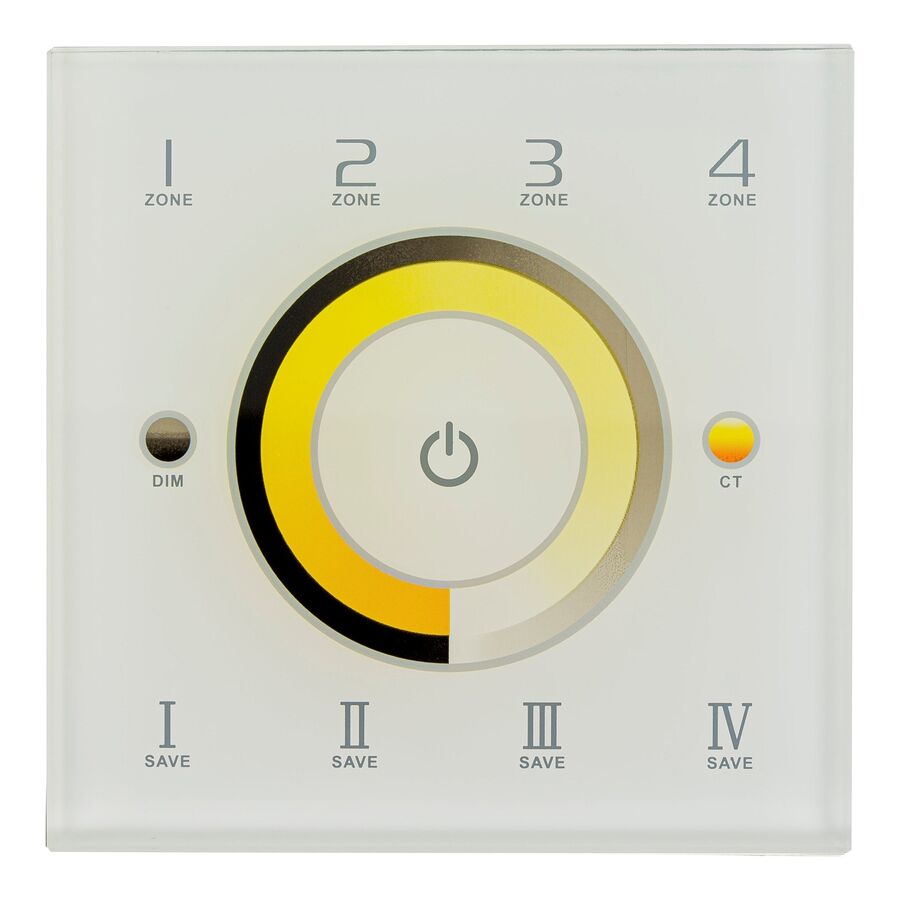
In contemporary Australian interior design, lighting control has evolved from basic mechanical switches to advanced scene management systems. From premium retail spaces in metropolitan centres to luxury residential developments along the coast, LED strip lighting now forms a core architectural feature. Cove lighting, joinery illumination and feature wall accents rely on precise control to achieve the desired visual impact.
The LED Strip Touch Panel Controller provides an intuitive, wall-mounted interface for managing these systems. Combining sleek capacitive glass design with solid-state electronic control, this device governs Pulse Width Modulation signals that regulate brightness, colour mixing and correlated colour temperature. Selecting the correct touch controller requires understanding sensing technology, current handling limits and system topology to ensure reliable performance in commercial and residential environments.
Precision at the wall translates to performance in the ceiling.
Modern touch panel controllers use projected capacitive sensing rather than mechanical or resistive interfaces. Beneath the tempered glass fascia lies a transparent conductive grid that projects an electrostatic field. When a user’s finger approaches the surface, it disrupts the field and alters capacitance at a specific coordinate. The internal firmware detects this change and converts it into a control command.
This method offers durability because there are no moving parts to wear out. It also provides improved resistance to dust and surface contamination compared to older pressure-based designs. Proper calibration ensures that touch sensitivity remains responsive through the thickness of the glass surface while preventing false activations.
Reliable capacitive sensing delivers consistent user interaction without mechanical degradation.
Touch panel controllers are typically configured in two architectural approaches. For single-room or small-zone installations, direct PWM control is commonly used. In this setup, the DC power supply feeds the panel, and LED strips connect directly to its output terminals. Internal MOSFET components switch each channel at high frequency to regulate brightness and colour output.
For larger commercial environments, DMX512 signal-based systems are often preferred. In this configuration, the touch panel transmits digital control signals over shielded data cabling to remote decoders positioned near the LED strips. This decentralised design reduces voltage drop, distributes current load away from the wall plate and enables scalable multi-zone control across extensive lighting runs.
Selecting the correct topology ensures system scalability and long-term reliability.
Direct-wire controllers installed within plasterboard walls operate in confined spaces with limited airflow. As load increases, internal MOSFET components generate heat. Operating continuously near maximum current rating accelerates electronic wear and reduces lifespan.
Engineering best practice recommends applying a load derating margin. Controllers should operate at no more than approximately 80 percent of their rated capacity. For higher power applications, signal amplifiers or remote drivers should be used to distribute current load away from the touch panel.
Managing thermal stress protects both electronics and wall finishes.
In RGB and RGBW systems, voltage drop directly affects colour balance. Blue and green diodes require higher forward voltage than red diodes. When voltage decreases along extended cable runs, red output may dominate, causing visible colour shift.
Mitigating voltage drop requires appropriate conductor sizing between controller and strip. Using adequately rated multi-core cabling helps maintain voltage stability within acceptable limits. Power injection strategies may also be implemented for longer runs to preserve consistent chromatic output.
Maintaining voltage stability ensures accurate colour reproduction across the entire installation.
Touch panel controllers feature compact rear terminal blocks that accommodate multi-stranded LED cabling. Improper termination may allow stray copper strands to bridge adjacent terminals, leading to short circuits or output stage failure.
SCHNAP Electric Products supports professional installations with termination and mounting accessories designed to enhance safety and reliability. Correct cable preparation and secure mounting within appropriately sized wall boxes ensure that the controller remains mechanically stable and electrically protected.
Attention to termination detail prevents premature controller failure.
Low-quality capacitive panels may suffer from ghost activation due to poor electromagnetic shielding. In environments with high electrical noise, such as lift motor rooms or equipment spaces, unstable firmware or inadequate filtering can cause unintended switching.
Selecting EMC-compliant controllers reduces susceptibility to interference. Stable PWM frequencies also prevent visible flicker and camera banding in hospitality or broadcast settings.
Robust electronic design ensures stable performance under demanding conditions.
The lighting control market includes non-certified products that may not meet Australian regulatory requirements. Installing uncertified equipment can create safety risks and compromise project integrity.
Professional procurement through a specialised electrical wholesaler ensures access to compliant hardware suitable for Australian commercial and residential projects. SCHNAP Electric Products supports installers with compatible infrastructure components that align with safe and structured installation practices.
Verified sourcing strengthens system reliability and compliance confidence.
The LED Strip Touch Panel Controller is the interface between architectural intent and electronic precision. Through capacitive sensing, PWM modulation and appropriate system architecture, it enables seamless lighting control across modern interiors.
By applying load derating principles, ensuring correct cabling practices and supporting installations with compliant infrastructure solutions from SCHNAP Electric Products, Australian professionals can deliver control systems that are durable, elegant and technically robust. In architectural lighting, the interface defines the experience.

SCHNAP Electrical Wholesaler - clear, upfront pricing that professional electricians trust

Get what you need in seconds. SCHNAP electrical wholesaler makes ordering quick and simple

Fast delivery anywhere - that's guaranteed. SCHNAP electrical wholesalers ship nationwide with same-day dispatch

Track your order every step of the way. SCHNAP electrical wholesale keeps you updated from click to delivery

SCHNAP is Australia's premier electrical wholesaler and electrical supplies, marketing thousands of quality products from leading brands. Trusted for nearly two decades by licensed electricians, contractors, and engineers, our range covers everything from basic electrical components to complex industrial electrical equipment
Our key categories include: LED lighting, designer switches, commercial switchboards, circuit protection, security systems & CCTV, and smart home automation
All products are certified to Australian standards (AS/NZS), backed by our 30-day, no-questions-asked return policy. Our expert technical team helps you quickly source the right solution for any residential, commercial, or industrial project, with daily dispatch from our Sydney electrical warehouse delivering Australia-wide
SCHNAP offers the most comprehensive electrical product range, with full technical specifications, application details, installation requirements, compliance standards, and warranties — giving professionals total confidence in every purchase


Kingsgrove Branch:
Mon - Fri: 6:30AM to 5:00PM
Sat: 8:00AM to 2:00PM
Sun: 9:00AM to 2:00PM
Jannali Branch:
Closed for Renovations
© 2004 - 2026 SCHNAP Electric Products