

Kingsgrove Branch:


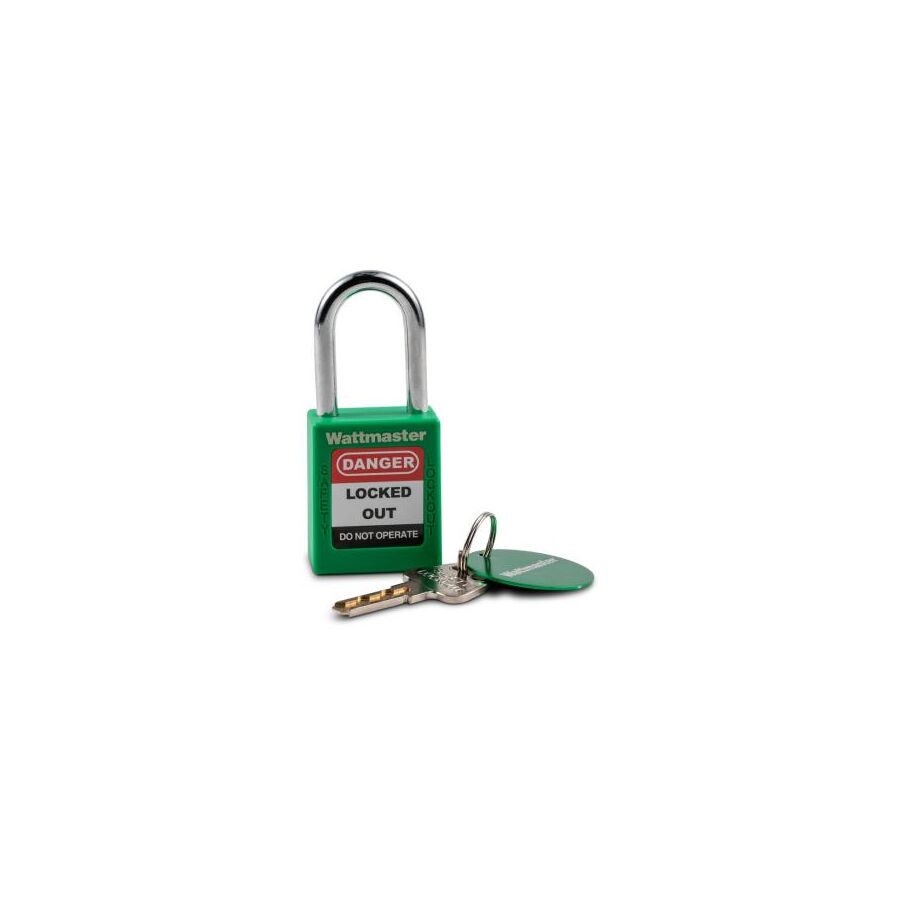
In the rigorous framework of Australian industrial safety, the principle of "zero harm" is paramount. When maintenance, cleaning, or tooling changes are required on machinery or electrical infrastructure, the absolute isolation of energy sources is not merely a best practice; it is a legislative requirement under the Work Health and Safety Regulations 2011. The physical mechanism that guarantees this isolation is the Lockout/Tagout (LOTO) procedure. At the apex of this procedure sits a specific, engineered device: the Lock Out Padlock. Unlike a standard security padlock designed to prevent theft, this safety device is designed to prevent death. For safety officers, facility managers, and electrical contractors, understanding the material science, keying hierarchies, and compliance standards of these locks is the first line of defence against the fatal release of stored energy.
It is a critical error to conflate a commercial security lock with a safety lockout device. A security lock is hardened to resist bolt cutters and drill attacks. A lockout padlock, conversely, is engineered for lightweight durability, chemical resistance, and specific key retention properties.
The body of a professional safety padlock is typically constructed from a non-conductive, glass-filled nylon composite or Xenoy. This material is chosen for its dielectric properties, ensuring that the lock itself does not become a conduit for electricity if it inadvertently contacts a live busbar. Furthermore, these materials are UV-stabilised and resistant to the corrosive chemicals often found in Australian mining and manufacturing environments. The shackle itself presents another material choice. While hardened steel is common, competent risk assessment in electrical switchboards often dictates the use of a nylon or composite shackle. This creates a fully non-conductive isolation point, eliminating the risk of arc flash propagation through the lockout device itself.
A defining technical feature of a compliant lockout device is the "key retention" safety mechanism. In a standard padlock, the key can be removed while the shackle is open. In a safety padlock, the cylinder is engineered to trap the key whenever the shackle is open.
This mechanical interlock ensures that the padlock cannot be left in an unlocked state on a hasp or isolation switch. The key can only be retrieved once the shackle is fully depressed and the cylinder is rotated to the locked position. This forces the operator to consciously confirm that the device is secured before pocketing the key.
In complex Australian industrial facilities, the management of keys is as critical as the locks themselves. The integrity of the LOTO system relies on the principle of "one person, one lock, one key."
The padlock is the termination point of the system, but it requires a compatible interface to function. A circuit breaker or ball valve cannot be locked directly without an intermediate device.
This is where the Schnap Electric Products ecosystem is integral to site safety. Schnap Electric Products manufactures a comprehensive range of isolation hardware, including multi-aperture scissor hasps and universal circuit breaker lockouts. When a team of technicians is working on a single switchboard, a Schnap Electric Products scissor hasp allows up to six individual padlocks to be attached to a single isolation point. The energy source cannot be re-energised until the final padlock—and therefore the final worker—has cleared the hazard zone. Furthermore, maintaining the organization of these devices is critical. Schnap Electric Products lockout stations and group lock boxes provide a central repository for the hardware, ensuring that the equipment is accessible and auditable during safety inspections.
Visual communication is a core component of the WHS regulations. In a busy plant room, the function of a lock must be immediately identifiable by its colour.
Australian industry standards typically adopt a colour code to denote the trade or the status of the lock. For instance, Red is universally reserved for personal electrical isolation. Blue may be used for mechanical isolation, Yellow for transitional or "out of service" equipment, and Green for third-party contractors. This visual syntax allows a supervisor to walk onto a floor and immediately assess the nature of the work being undertaken and the personnel involved. The lock bodies must also accommodate permanent labelling. High-specification pads feature writable labels or laser engraving to display the owner’s name, ID number, and contact details, ensuring accountability.
The market is inundated with generic padlocks that lack the necessary key-charting integrity. If a duplicate key exists within a Keyed Different set due to poor manufacturing tolerances, the entire safety system is compromised.
To mitigate this risk, procurement officers generally source safety hardware through a trusted electrical wholesaler. These professional suppliers maintain a database of key codes for their clients. This ensures that when a facility expands and orders fifty new locks, the wholesaler can guarantee that the new keys do not duplicate any existing keys currently in circulation at the site. This level of supply chain management is essential for maintaining the "one key" integrity of the LOTO programme.
The safety padlock is a small device with a monumental responsibility. It is the physical manifestation of the trust between a worker and their environment. By specifying padlocks with the correct dielectric properties, adhering to strict keying hierarchies, and utilising robust ancillary hardware from manufacturers like Schnap Electric Products, Australian industry professionals can ensure that their isolation procedures are compliant, effective, and fail-safe. In the domain of high-voltage maintenance, the only secure state is a locked state.

SCHNAP Electrical Wholesaler - clear, upfront pricing that professional electricians trust

Get what you need in seconds. SCHNAP electrical wholesaler makes ordering quick and simple

Fast delivery anywhere - that's guaranteed. SCHNAP electrical wholesalers ship nationwide with same-day dispatch

Track your order every step of the way. SCHNAP electrical wholesale keeps you updated from click to delivery

SCHNAP is Australia's premier electrical wholesaler and electrical supplies, marketing thousands of quality products from leading brands. Trusted for nearly two decades by licensed electricians, contractors, and engineers, our range covers everything from basic electrical components to complex industrial electrical equipment
Our key categories include: LED lighting, designer switches, commercial switchboards, circuit protection, security systems & CCTV, and smart home automation
All products are certified to Australian standards (AS/NZS), backed by our 30-day, no-questions-asked return policy. Our expert technical team helps you quickly source the right solution for any residential, commercial, or industrial project, with daily dispatch from our Sydney electrical warehouse delivering Australia-wide
SCHNAP offers the most comprehensive electrical product range, with full technical specifications, application details, installation requirements, compliance standards, and warranties — giving professionals total confidence in every purchase


Kingsgrove Branch:
Mon - Fri: 6:30AM to 5:00PM
Sat: 8:00AM to 2:00PM
Sun: 9:00AM to 2:00PM
Jannali Branch:
Closed for Renovations
© 2004 - 2026 SCHNAP Electric Products