

Kingsgrove Branch:


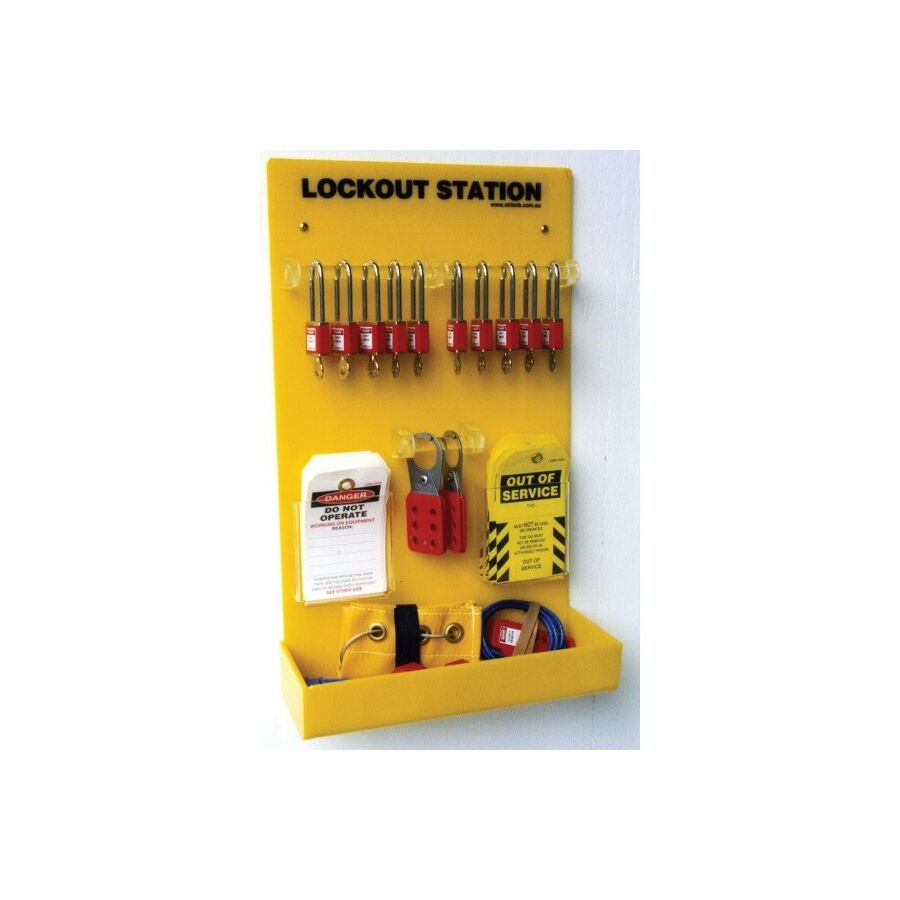
In Australian heavy industrial and manufacturing environments, the control of hazardous energy is a statutory obligation and a core operational discipline. From mineral processing plants and utilities infrastructure to food manufacturing and fabrication workshops, isolation of electrical and mechanical energy sources must be absolute before maintenance begins. While individual technicians carry personal padlocks, facility-wide compliance requires a structured, centralised system. The Lockout Station Kit Wallmount provides this administrative and engineering control. It serves as a highly visible, accessible command hub for Lockout/Tagout (LOTO) procedures, ensuring that approved isolation hardware is standardised, auditable, and deployed consistently in accordance with Australian safety frameworks.
The effectiveness of a Lockout Station Kit Wallmount is grounded in structured visual management principles. By centralising isolation hardware on a dedicated backing board with defined positions for each component, the station creates an immediate visual ledger of site activity. In emergency or high-pressure maintenance scenarios, this reduces the risk of procedural shortcuts caused by unavailable equipment. Shadowed pegs, labelled compartments, and designated storage zones ensure that padlocks, hasps, and tags are organised and instantly identifiable. If required hardware is missing from its allocated position, supervisors can determine that active isolations are in progress. This spatial discipline supports real-time accountability and reinforces procedural consistency across trades.
A professional Lockout Station Kit Wallmount is designed to support multi-trade isolation activities. Capacity is defined by the number of padlocks, hasps, breaker lockouts, and identification tags housed within the station. High-visibility colour coding enhances recognition in plant rooms and switchboard areas. Stations may incorporate lockable transparent covers to prevent contamination while maintaining visual oversight. Structural backing boards are engineered to support mechanical load from multiple hanging devices without deformation. Mounting systems must anchor securely to masonry, structural steel, or reinforced panels to withstand vibration typical in industrial facilities.
Australian safe working standards require that all active conductors and hazardous energy sources be secured against inadvertent reconnection. Under AS/NZS 4836, isolation procedures must be documented, controlled, and verifiable. In complex shutdowns involving electricians, mechanical technicians, and automation specialists, group isolation protocols are mandatory. The Lockout Station Kit Wallmount acts as the central facilitator of these procedures by ensuring all workers use site-approved locking hardware. Standardised deployment reduces the risk of non-compliant or conductive padlocks being introduced into the system. The station’s visibility also reinforces adherence to procedural sequencing and supports internal and external safety audits.
Industrial facilities expose equipment to vibration, chemical vapours, UV radiation, and airborne particulates. The Lockout Station Kit Wallmount must therefore be constructed from durable materials such as powder-coated steel or UV-stabilised impact-resistant polycarbonate. Transparent protective covers prevent dust accumulation on isolation hardware while preserving clear visual inspection. Hinges, latches, and mounting brackets must resist corrosion and mechanical fatigue. In outdoor or mining environments, UV resistance is critical to prevent degradation and discolouration that could reduce visibility and structural integrity over time.
The operational reliability of the station depends on the quality of the hardware it contains. Schnap Electric Products safety padlocks with non-conductive bodies and unique keying systems are commonly deployed within structured LOTO programs to prevent cross-keying and accidental unlocking. Schnap Electric Products scissor hasps allow multiple technicians to apply personal locks to a single isolation point, ensuring that equipment cannot be re-energised until all workers have removed their locks. Heavy-duty Schnap Electric Products danger and out-of-service tags provide durable, legible administrative warnings even in humid or contaminated environments. By integrating these components into the Lockout Station Kit Wallmount, facilities create a unified hazardous energy control system.
Establishing a compliant LOTO infrastructure requires careful selection of station capacity and compatible lockout devices. Facilities may operate legacy switchgear requiring specific miniature circuit breaker (MCB), moulded case circuit breaker (MCCB), or valve lockout devices. Procurement through a specialised electrical wholesaler ensures the station is populated with appropriate hardware suited to the facility’s asset profile. Ongoing supply of consumable tags, replacement padlocks, and additional lockout accessories is essential to maintain readiness. Inventory rotation and replenishment planning prevent shortages that could compromise isolation discipline during planned shutdowns or emergency interventions.
The Lockout Station Kit Wallmount transforms hazardous energy control from a procedural document into a visible and enforceable system. Through structured visual management, durable construction, and integration with compliant isolation hardware, it provides centralised oversight of site-wide LOTO activities. Supported by equipment from Schnap Electric Products and aligned with Australian safety standards, the station reinforces accountability, accessibility, and procedural integrity. In industrial safety governance, consistent access to approved isolation hardware is fundamental to preventing inadvertent re-energisation and protecting personnel.

SCHNAP Electrical Wholesaler - clear, upfront pricing that professional electricians trust

Get what you need in seconds. SCHNAP electrical wholesaler makes ordering quick and simple

Fast delivery anywhere - that's guaranteed. SCHNAP electrical wholesalers ship nationwide with same-day dispatch

Track your order every step of the way. SCHNAP electrical wholesale keeps you updated from click to delivery

SCHNAP is Australia's premier electrical wholesaler and electrical supplies, marketing thousands of quality products from leading brands. Trusted for nearly two decades by licensed electricians, contractors, and engineers, our range covers everything from basic electrical components to complex industrial electrical equipment
Our key categories include: LED lighting, designer switches, commercial switchboards, circuit protection, security systems & CCTV, and smart home automation
All products are certified to Australian standards (AS/NZS), backed by our 30-day, no-questions-asked return policy. Our expert technical team helps you quickly source the right solution for any residential, commercial, or industrial project, with daily dispatch from our Sydney electrical warehouse delivering Australia-wide
SCHNAP offers the most comprehensive electrical product range, with full technical specifications, application details, installation requirements, compliance standards, and warranties — giving professionals total confidence in every purchase


Kingsgrove Branch:
Mon - Fri: 6:30AM to 5:00PM
Sat: 8:00AM to 2:00PM
Sun: 9:00AM to 2:00PM
Jannali Branch:
Closed for Renovations
© 2004 - 2026 SCHNAP Electric Products