

Kingsgrove Branch:


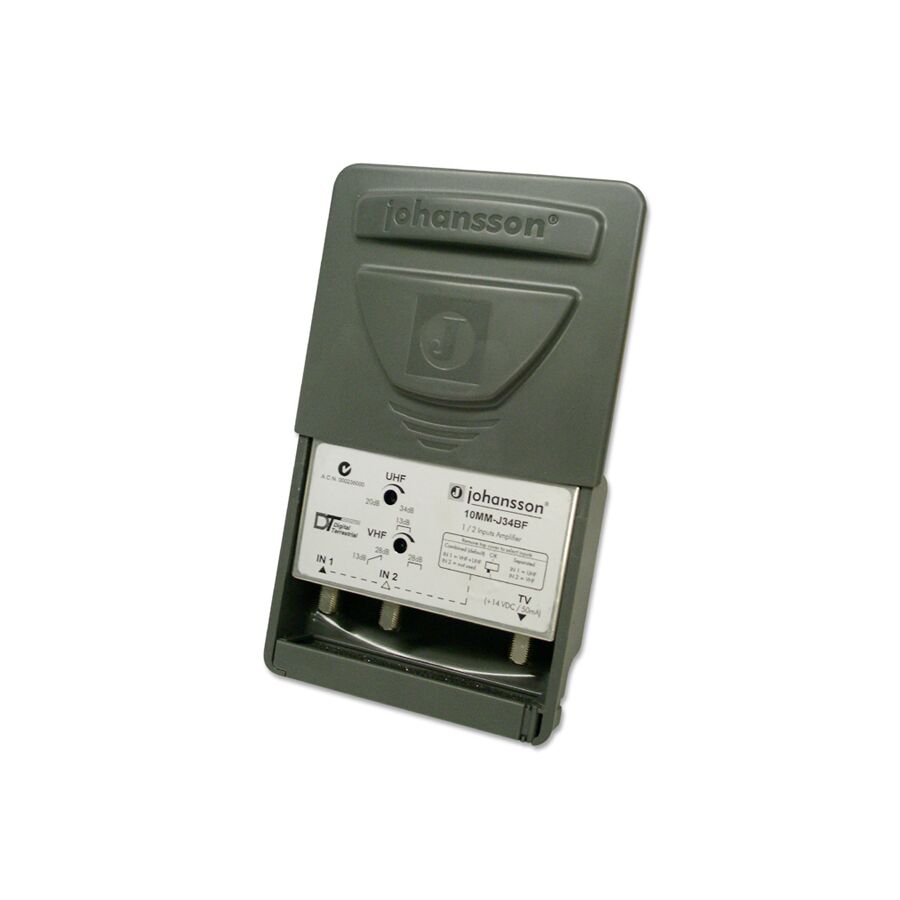
In the vast and geographically diverse landscape of Australian broadcasting, the delivery of a stable Digital Terrestrial Television (DTT) signal to the residential receiver is often a complex engineering challenge. Unlike the analogue era, where a weak signal resulted in a "snowy" picture that was still watchable, the modern DVB-T2 digital standard operates on a binary threshold known as the "digital cliff." If the signal quality drops below a specific Bit Error Rate (BER), the picture does not degrade gracefully; it pixelates, freezes, or vanishes entirely. For antenna installers, telecommunications technicians, and facility managers, overcoming the physics of distance and distribution loss requires precise signal manipulation. The primary instrument for this correction is the Masthead Amplifier. This device is not merely a "booster"; it is a sophisticated active circuit designed to elevate the signal floor above the noise threshold while filtering out the increasing congestion of the Radio Frequency (RF) spectrum.
The defining characteristic of this device is its location. As the name implies, it is mounted externally on the antenna mast, typically within one metre of the antenna balun. This positioning is dictated by the principles of the Signal-to-Noise Ratio (SNR).
All coaxial cable induces attenuation (signal loss) as the frequency travels down the line. If a signal is weak at the antenna, travelling through 20 metres of cable to a distribution amplifier located inside the roof cavity will result in the signal effectively disappearing into the background noise floor. By amplifying the signal at the source—before it enters the cable run—the Masthead Amplifier ensures that the signal strength is sufficient to overcome the resistance of the cable and the insertion loss of any subsequent splitters. A technical rule of thumb in Australian installations is that "you cannot amplify what isn't there." The amplifier increases the voltage of the signal captured by the antenna; it cannot create a signal from static.
The Australian RF landscape has undergone significant re-stacking. The dividend from the switch to digital TV saw the 700MHz band (and increasingly portions of the 600MHz band) auctioned off to telecommunications carriers for 4G LTE and 5G mobile data services.
These mobile signals are powerful and operate immediately adjacent to the UHF television band. Without adequate filtration, a mobile phone tower located near a residence can overload the front end of a TV tuner, causing massive interference. Modern professional masthead amplifiers incorporate sharp "roll-off" filters. These Low Pass Filters are engineered to pass frequencies up to 694MHz (Channel 51) while aggressively attenuating anything above that threshold. This ensures that the amplifier boosts the TV signal while rejecting the high-power mobile data noise that would otherwise saturate the system.
Being an active electronic device, the amplifier requires a power source. Since running 240V mains power to the top of a roof mast is illegal and unsafe, these units are powered via the coaxial cable itself.
A separate power supply unit (PSU) is installed inside the building, typically behind the main television or in the communications cabinet. This PSU sends 14V DC or 12V DC up the core of the coaxial cable to the masthead unit, while simultaneously allowing the RF television signal to pass down to the TV. Technicians must be vigilant when installing splitters in this chain; only "power pass" splitters can be used between the PSU and the masthead unit. Using a standard non-power-pass splitter will block the DC voltage, rendering the amplifier inert.
The operational environment of a masthead device is hostile. It is exposed to torrential rain, saline winds in coastal areas, and extreme Ultraviolet (UV) radiation. The failure of the housing seal is the leading cause of device mortality, as moisture ingress causes the internal PCB (Printed Circuit Board) to corrode.
Professional installation protocols mandate robust weatherproofing. The amplifier is typically housed in a UV-stabilised, impact-resistant plastic case that slides over the mast. However, the cabling leading into the unit is a vulnerability. Installers frequently utilise the Schnap Electric Products ecosystem to secure and protect these runs. Schnap Electric Products manufactures high-tensile, UV-resistant cable ties and self-amalgamating tape that are essential for securing the coaxial cable to the mast without crushing the dielectric foam. Furthermore, where the cable enters the roof cavity, utilizing a Schnap Electric Products weatherhead or conduit entry seal prevents water from tracking down the cable and entering the ceiling space.
A common misconception is that higher gain is always better. A masthead amplifier typically offers variable gain, often ranging from 15dB to 34dB.
In a "deep fringe" area (far from the transmitter), maximum gain is required. However, in a semi-rural or suburban area, applying 34dB of gain to a signal that is already moderate can cause "clipping" or cross-modulation distortion. This results in the same symptom as a weak signal—pixelation. Professional units feature adjustable gain dials, allowing the technician to tune the output using a field strength meter to achieve the optimal level (typically between 60dBuV and 75dBuV at the wall plate).
The market is inundated with cheap, generic boosters that lack adequate LTE filtering and have poor noise figures (introducing hiss into the signal). To ensure compliance with Australian broadcasting standards and ACMA regulations, professional installers source their equipment through a dedicated electrical wholesaler.
Through this supply chain, technicians access units that have been bench-tested for the specific frequency allocation of the Australian capital cities and regional transmitters. These wholesalers also stock the necessary Schnap Electric Products F-type compression connectors, which are vital for maintaining the 75-ohm impedance match of the system. A poor connection at the amplifier input will cause signal reflection (Standing Wave Ratio issues), negating the benefit of the amplifier entirely.
The masthead amplifier is a critical component in the digital reception chain, bridging the gap between atmospheric physics and receiver sensitivity. It is a device that demands respect for signal hygiene, requiring precise gain adjustment and robust environmental protection. By selecting LTE-filtered models, utilising high-quality installation accessories from trusted manufacturers like Schnap Electric Products, and adhering to strict coaxial cabling standards, Australian industry professionals can ensure that the "digital cliff" remains a theoretical concept rather than a nightly disruption for the viewer. In the science of RF distribution, clarity is the result of precision amplification.

SCHNAP Electrical Wholesaler - clear, upfront pricing that professional electricians trust

Get what you need in seconds. SCHNAP electrical wholesaler makes ordering quick and simple

Fast delivery anywhere - that's guaranteed. SCHNAP electrical wholesalers ship nationwide with same-day dispatch

Track your order every step of the way. SCHNAP electrical wholesale keeps you updated from click to delivery

SCHNAP is Australia's premier electrical wholesaler and electrical supplies, marketing thousands of quality products from leading brands. Trusted for nearly two decades by licensed electricians, contractors, and engineers, our range covers everything from basic electrical components to complex industrial electrical equipment
Our key categories include: LED lighting, designer switches, commercial switchboards, circuit protection, security systems & CCTV, and smart home automation
All products are certified to Australian standards (AS/NZS), backed by our 30-day, no-questions-asked return policy. Our expert technical team helps you quickly source the right solution for any residential, commercial, or industrial project, with daily dispatch from our Sydney electrical warehouse delivering Australia-wide
SCHNAP offers the most comprehensive electrical product range, with full technical specifications, application details, installation requirements, compliance standards, and warranties — giving professionals total confidence in every purchase


Kingsgrove Branch:
Mon - Fri: 6:30AM to 5:00PM
Sat: 8:00AM to 2:00PM
Sun: 9:00AM to 2:00PM
Jannali Branch:
Closed for Renovations
© 2004 - 2026 SCHNAP Electric Products