



Kingsgrove Branch:


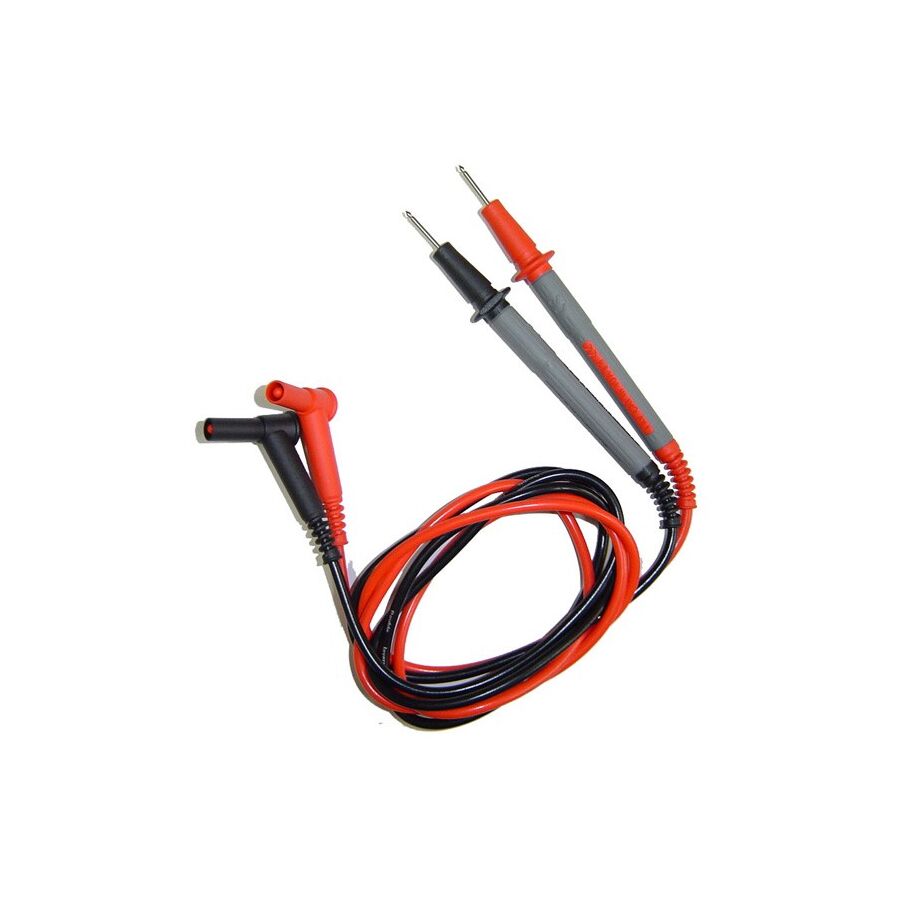
In the precision-driven environment of Australian electrical maintenance, instrumentation engineering, and industrial fault-finding, the integrity of the diagnostic chain is often compromised by its weakest link: the cabling interface. While significant capital is invested in high-specification True RMS metering units, the multimeter test leads connecting the instrument to the circuit are frequently overlooked. This is a critical error in judgment. These leads are not merely passive wires; they are the primary safety barrier between the technician and the lethal potential of the grid. They act as an extension of the instrument's input protection, carrying the burden of voltage transients, high current loads, and mechanical stress. For safety officers, electrical contractors, and facility managers, the specification of these accessories demands a rigorous understanding of dielectric insulation, contact resistance physics, and the International Electrotechnical Commission (IEC) safety standards adopted by Australian industry.
The definitive standard for electrical testing equipment in Australia is IEC 61010. This standard dictates that the test leads must possess a safety rating equal to or greater than the instrument they are connected to.
A multimeter rated for CAT IV 600V (industrial service intake) is rendered unsafe if connected to leads rated only for CAT II (appliance testing). In the event of a switching surge or a lightning strike on the grid, high-energy transients can cause inferior lead insulation to break down. This results in an arc flash travelling along the wire directly to the operator's hand. Professional specifications mandate that multimeter test leads be rated to a minimum of CAT III 1000V / CAT IV 600V. This certification ensures that the internal conductor is shrouded in double-insulated layers capable of withstanding significant overvoltage events without dielectric failure.
The operational environment of the Australian tradesperson varies from the freezing temperatures of a Tasmanian winter morning to the extreme heat of a Pilbara mine site. The material composition of the lead insulation is the primary determinant of usability and safety in these conditions.
A significant hazard in switchboard diagnostics is the accidental short-circuiting of adjacent terminals. If a technician uses a probe with a long, exposed metal tip (19mm) to test a cramped DIN rail setup, there is a high probability of the tip bridging two phases or a phase to earth.
To mitigate this, Australian safety protocols align with the GS38 standard. This dictates that the exposed metal tip of the probe should be limited to 2mm to 4mm. Modern leads achieve this through the use of retractable shrouds or removable tip caps. When testing deep recessed terminals—such as those found on Schnap Electric Products circuit breakers or RCDs—the technician may remove the cap to access the screw head. However, for general backplane testing, the shroud must be in place. Schnap Electric Products manufactures compatible shrouded terminal accessories that mate perfectly with standard 4mm banana plugs, ensuring that the IP rating of the switchgear is not compromised during testing.
Beyond safety, the electrical characteristics of the lead affect the accuracy of the reading. A standard multimeter lead has a finite resistance. In high-precision low-ohm measurements (such as verifying the bonding of an earthing conductor), high-resistance leads can introduce a significant error margin.
Professional leads utilise multi-stranded copper conductors with high-quality plating (nickel or gold) on the connectors to minimise oxidation and contact resistance. Furthermore, the integrity of the connection between the wire and the probe tip is vital. Cheap leads rely on a simple crimp that can loosen over time, leading to intermittent open circuits—a frustration that causes technicians to chase phantom faults.
The versatility of a diagnostic kit is defined by its modularity. The standard 4mm shrouded banana plug allows the technician to swap the needle probe for a variety of application-specific endpoints.
For hands-free operation in a live switchboard, screw-on alligator clips or magnetic probes are essential. These allow the technician to attach the leads to the testing points (such as the neutral bar or earth stud) and then step back to operate the meter from a safe distance. When sourcing these critical components, industry professionals typically consult a specialised electrical wholesaler to ensure that the modular accessories maintain the full CAT rating of the lead set. A CAT IV lead fitted with a generic, unrated alligator clip downgrades the entire safety system to the level of the clip.
Test leads are a consumable item. They are subjected to constant flexing, pulling, and abrasion. To assist with visual inspection, professional leads often feature "WearGuard" technology. This involves two distinct layers of contrasting insulation colours (e.g., a white inner layer covered by a red outer layer).
If the technician spots the white inner layer showing through a nick or cut in the red outer jacket, it is an immediate visual cue that the insulation integrity is compromised and the leads must be destroyed and replaced. Regular inspection of the leads, particularly at the strain relief points near the probe handle and the plug, is a mandatory requirement under WHS regulations.
The test lead is the lifeline of the electrical trade. It bridges the gap between the unknown state of a circuit and the quantified reality on the display screen. By prioritising silicone insulation, insisting on GS38 shrouded tips, and utilizing high-fidelity connectors from trusted manufacturers like Schnap Electric Products, Australian industry professionals can ensure that their measurements are precise and, most importantly, that they return home safely at the end of the shift. In the physics of diagnostics, the connection is everything.

SCHNAP is Australia's premier electrical wholesaler and electrical supplies, marketing thousands of quality products from leading brands. Trusted for nearly two decades by licensed electricians, contractors, and engineers, our range covers everything from basic electrical components to complex industrial electrical equipment
Our key categories include: LED lighting, designer switches, commercial switchboards, circuit protection, security systems & CCTV, and smart home automation
All products are certified to Australian standards (AS/NZS), backed by our 30-day, no-questions-asked return policy. Our expert technical team helps you quickly source the right solution for any residential, commercial, or industrial project, with daily dispatch from our Sydney electrical warehouse delivering Australia-wide
SCHNAP offers the most comprehensive electrical product range, with full technical specifications, application details, installation requirements, compliance standards, and warranties — giving professionals total confidence in every purchase


Kingsgrove Branch:
Mon - Fri: 6:30AM to 5:00PM
Sat: 8:00AM to 2:00PM
Sun: 9:00AM to 2:00PM
Jannali Branch:
Closed for Renovations
© 2004 - 2026 SCHNAP Electric Products