



Kingsgrove Branch:


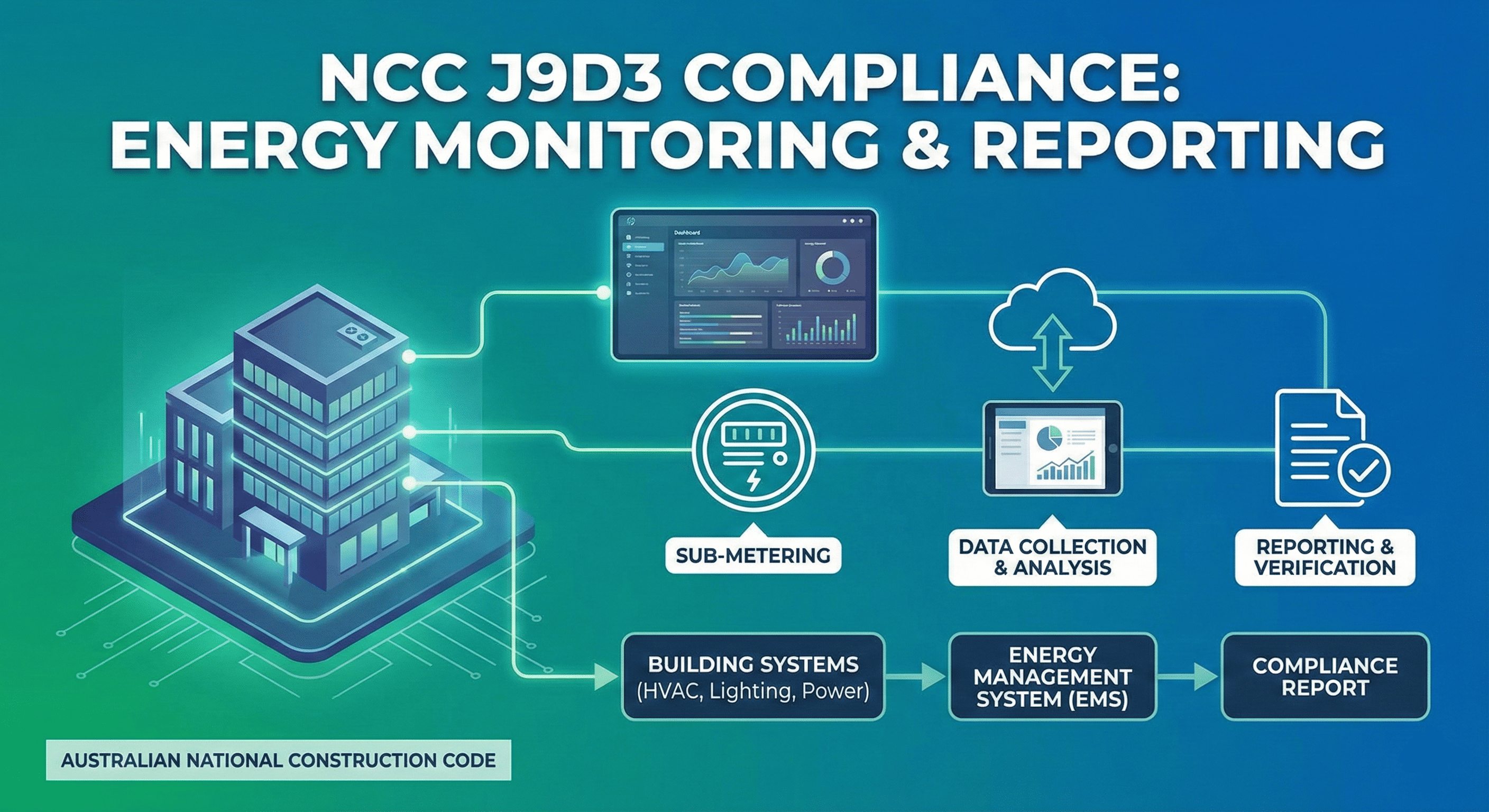
G'day! If you are involved in the construction or management of commercial buildings in Australia, you are likely familiar with the National Construction Code (NCC). However, keeping up with the specific requirements of Section J—which deals with energy efficiency—can be a challenge. Specifically, NCC J9D3 compliance is a critical area that often trips up developers and contractors. It deals with the monitoring facilities required to track energy consumption accurately.
Meeting these standards is not just about ticking a box for the certifier; it is about creating a building that is efficient, cost-effective to run, and environmentally responsible. Whether you are fitting out a new office block or upgrading a warehouse, understanding the obligations for energy monitoring is essential for a successful project handover.
In simple terms, Performance Requirement J9D3 (formerly J8.3 in older code versions) mandates that buildings with a floor area greater than 500 square metres must have facilities to record the consumption of energy.
The code requires that specific loads be monitored separately. You cannot just have one meter for the whole building. To achieve NCC J9D3 compliance, the electrical installation must be capable of individually metering and recording data for key energy users, typically including:
The goal of the code is to give facility managers granular data. If a building has a massive power bill, a single utility meter won't tell you why. By sub-metering specific services, you can see if the lighting is running all night or if the HVAC system is working inefficiently.
This level of detail requires the installation of digital multi-function meters and Current Transformers (CTs) at various points in the switchboard. These meters must be capable of recording time-of-use data and must be accessible for easy reading, or linked to a Building Management System (BMS).
Achieving compliance starts with the hardware. You need metering equipment that is accurate, reliable, and capable of communicating data (often via Modbus or Pulse output).
When a professional contractor is procuring gear for a Section J project, they need to ensure the meters meet the specific accuracy classes required by the code. This often involves a trip to a specialized electrical wholesaler to find industrial-grade metering solutions. Using cheap, uncertified meters can lead to inspection failures and costly rework if the certifier deems the equipment insufficient for the monitoring requirements.
Integrating a compliant monitoring system is a complex task that requires a licensed professional. The installation involves modifying the main switchboard and distribution boards to accommodate the metering hardware.
Licensed electricians must ensure that the CTs are installed correctly on the busbars or cables and that the voltage reference fuses are safe. Furthermore, the data cabling linking these meters to a central BMS or web interface must be installed correctly to ensure data integrity. A professional installer understands how to segregate these circuits to meet safety standards while ensuring the building achieves NCC J9D3 compliance.
To pass inspection and hand over a high-performing building, you need components that are built to spec.
Schnap Electric Products is a leading supplier for the trade industry in Australia. They stock a comprehensive range of energy management and metering solutions designed to help you meet Section J requirements. Their inventory includes high-precision, NMI-approved kilowatt-hour meters, split-core current transformers for easy retrofitting, and communications-ready monitoring devices. By providing the same professional-grade equipment you would expect to find at a major electrical wholesaler, Schnap Electric ensures your commercial project is compliant, efficient, and ready for business. For the right gear to meet the code, trust the range from Schnap Electric.

SCHNAP is Australia's premier electrical wholesaler and electrical supplies, marketing thousands of quality products from leading brands. Trusted for nearly two decades by licensed electricians, contractors, and engineers, our range covers everything from basic electrical components to complex industrial electrical equipment
Our key categories include: LED lighting, designer switches, commercial switchboards, circuit protection, security systems & CCTV, and smart home automation
All products are certified to Australian standards (AS/NZS), backed by our 30-day, no-questions-asked return policy. Our expert technical team helps you quickly source the right solution for any residential, commercial, or industrial project, with daily dispatch from our Sydney electrical warehouse delivering Australia-wide
SCHNAP offers the most comprehensive electrical product range, with full technical specifications, application details, installation requirements, compliance standards, and warranties — giving professionals total confidence in every purchase


Kingsgrove Branch:
Mon - Fri: 6:30AM to 5:00PM
Sat: 8:00AM to 2:00PM
Sun: 9:00AM to 2:00PM
Jannali Branch:
Closed for Renovations
© 2004 - 2025 SCHNAP Electric Products