

Kingsgrove Branch:


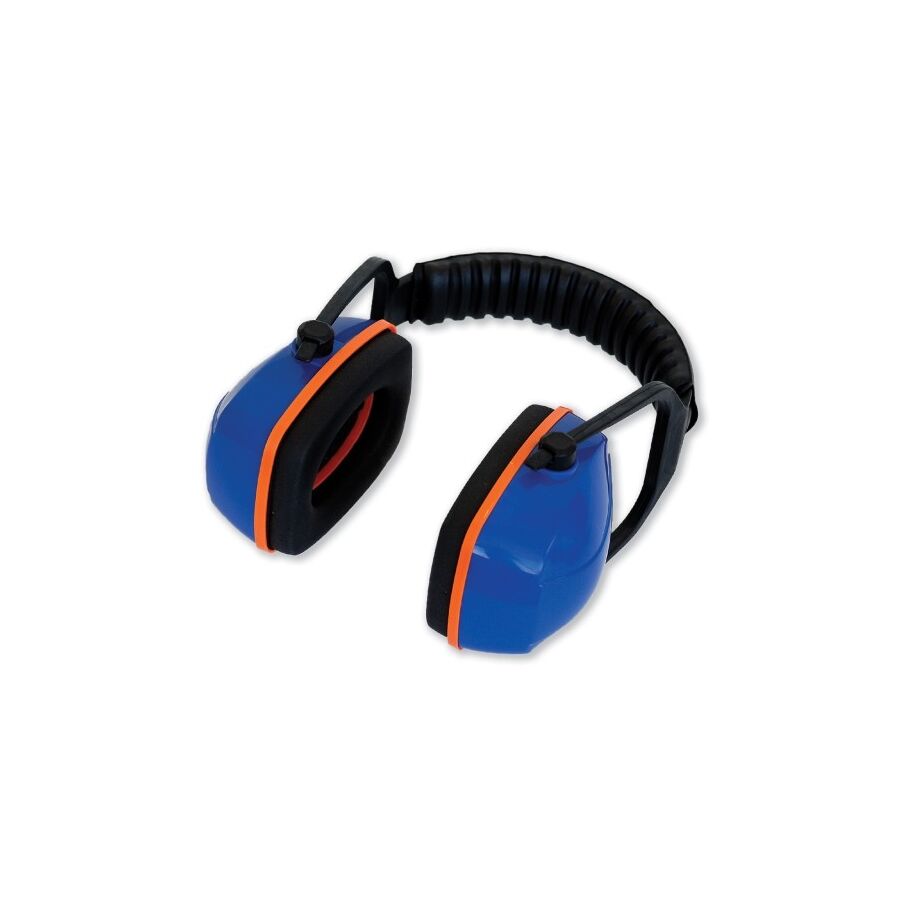
In Australian mining, civil construction, manufacturing, and infrastructure environments, sustained exposure to elevated sound pressure levels remains a major occupational risk. Noise-induced hearing loss is cumulative, irreversible, and often unnoticed until permanent damage has occurred. Under the Work Health and Safety framework, employers must implement hearing conservation controls when noise exposure exceeds 85 dB averaged over an eight-hour shift. Where engineering controls cannot sufficiently reduce noise at the source, personal protective equipment becomes the critical final barrier. Noise Cancelling Ear Muffs combine high-performance passive attenuation with active electronic cancellation, reducing hazardous noise while supporting ongoing situational awareness in dynamic worksites.
Noise Cancelling Ear Muffs rely first on passive acoustic isolation. A rigid circumaural cup forms a sealed enclosure around the ear, limiting direct transmission of airborne sound waves into the auditory canal. The external cup shell, commonly manufactured from impact-resistant ABS or polycarbonate, reflects a proportion of incoming acoustic energy. The remaining sound energy that penetrates the shell is absorbed by internal high-density acoustic foam. This foam converts sound pressure into low-level thermal energy through friction and cellular damping, reducing broadband noise before it reaches the tympanic membrane. The quality of passive attenuation is primarily determined by cup rigidity, foam density, and the integrity of the cushion seal.
The defining function of Noise Cancelling Ear Muffs is active noise cancellation, particularly effective against low-frequency continuous droning commonly produced by generators, ventilation systems, compressors, and diesel machinery. External microphones continuously sample the incoming noise waveform. An internal processor generates an “anti-noise” waveform with equal amplitude but inverted phase, typically 180 degrees out of alignment with the original sound wave. When both waveforms meet inside the ear cup, destructive interference occurs, reducing the net low-frequency sound pressure. This phase-inversion mechanism lowers fatigue and improves comfort in environments dominated by persistent low-frequency noise that can bypass passive foam barriers.
Performance depends on maintaining a stable acoustic seal for extended periods. The headband must apply a calibrated clamping force that keeps cushions sealed against the temporal and mastoid regions without causing pain or pressure headaches. Insufficient tension allows leakage paths that degrade both passive attenuation and active cancellation efficiency. Excessive tension reduces wearer compliance, increasing the likelihood of intermittent removal and exposure to sudden acoustic trauma. Premium designs use sprung steel or reinforced polymer headbands paired with memory-foam or liquid-filled cushions to distribute pressure evenly. Cushion geometry is engineered to accommodate safety glasses without significantly compromising the seal.
In Australian workplaces, hearing protectors are selected according to AS/NZS 1270 performance classifications and SLC80 attenuation ratings. Noise Cancelling Ear Muffs used in regulated environments must still meet certified passive attenuation benchmarks even if active electronics are present. Active systems are supplementary to, not a substitute for, compliant passive protection. A structured hearing conservation programme evaluates site noise profiles, selects appropriate protection levels, and trains workers in correct fitting and inspection. Battery condition and microphone integrity must be checked regularly to ensure active cancellation operates as designed, while cushion wear must be monitored to preserve seal performance.
Active noise technology supports improved worksite functionality by reducing dominant low-frequency noise while allowing critical higher-frequency signals, alarms, and speech cues to remain more perceptible. In environments where workers must hear instructions, warning alarms, reversing beepers, or radio communications, active cancellation can improve clarity by lowering background rumble. This benefit is realised only when the earmuffs are correctly specified and used alongside standard site communication protocols. Where required, electronic models may include level-dependent microphones or built-in communication interfaces to further support team coordination.
Noise Cancelling Ear Muffs are frequently used in environments where electrical installation and mechanical processing overlap. Technicians installing heavy-duty isolator switches, conduit systems, or termination hardware from Schnap Electric Products often work near generators, compressors, and cutting equipment. Reducing noise fatigue supports sustained concentration during precision tasks such as torque application, conductor termination, and verification procedures. When combined with compliant PPE and disciplined site procedures, effective hearing protection improves both safety outcomes and task accuracy.
Selecting Noise Cancelling Ear Muffs for industrial use requires confirmation of AS/NZS 1270 compliance, documented SLC80 ratings, durability specifications, and replaceable component availability. Procurement through specialised electrical wholesaler supports access to certified products suited to Australian conditions. Reliable suppliers provide replacement cushions, hygiene kits, and batteries to maintain performance over time. Consistent supply prevents the operational risk created by worn seals or depleted power systems that compromise both passive and active attenuation.
Noise Cancelling Ear Muffs provide a combined passive and active defence against hazardous industrial noise exposure. Through rigid cup architecture, high-density foam attenuation, and phase-inversion cancellation, they reduce sound pressure reaching the inner ear while supporting improved comfort and situational awareness. When selected to meet AS/NZS 1270 requirements and maintained through structured hearing conservation programmes, they form a highly effective control measure for Australian high-noise environments. Integrated within broader worksite safety systems and supported by quality procurement, they protect long-term hearing health while sustaining operational efficiency.

SCHNAP Electrical Wholesaler - clear, upfront pricing that professional electricians trust

Get what you need in seconds. SCHNAP electrical wholesaler makes ordering quick and simple

Fast delivery anywhere - that's guaranteed. SCHNAP electrical wholesalers ship nationwide with same-day dispatch

Track your order every step of the way. SCHNAP electrical wholesale keeps you updated from click to delivery

SCHNAP is Australia's premier electrical wholesaler and electrical supplies, marketing thousands of quality products from leading brands. Trusted for nearly two decades by licensed electricians, contractors, and engineers, our range covers everything from basic electrical components to complex industrial electrical equipment
Our key categories include: LED lighting, designer switches, commercial switchboards, circuit protection, security systems & CCTV, and smart home automation
All products are certified to Australian standards (AS/NZS), backed by our 30-day, no-questions-asked return policy. Our expert technical team helps you quickly source the right solution for any residential, commercial, or industrial project, with daily dispatch from our Sydney electrical warehouse delivering Australia-wide
SCHNAP offers the most comprehensive electrical product range, with full technical specifications, application details, installation requirements, compliance standards, and warranties — giving professionals total confidence in every purchase


Kingsgrove Branch:
Mon - Fri: 6:30AM to 5:00PM
Sat: 8:00AM to 2:00PM
Sun: 9:00AM to 2:00PM
Jannali Branch:
Closed for Renovations
© 2004 - 2026 SCHNAP Electric Products