



Kingsgrove Branch:


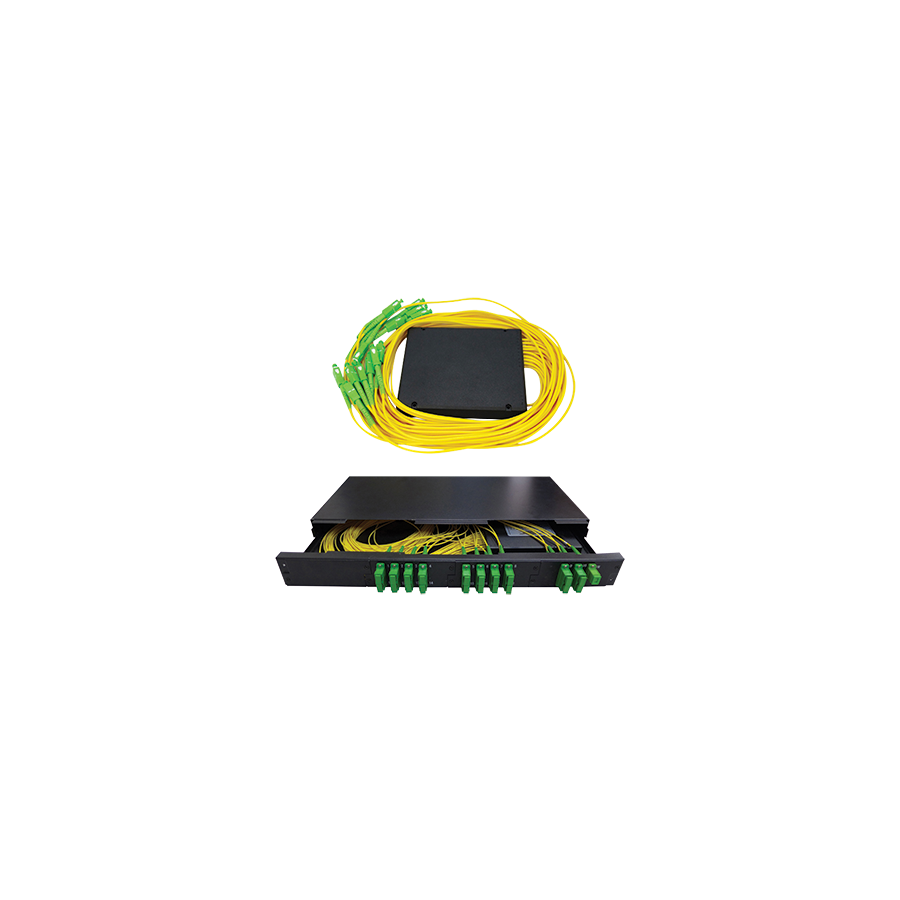
In the rapidly densifying telecommunications landscape of Australia, driven by the continual expansion of the National Broadband Network (NBN) and private industrial fibre rings, the architecture of the "last mile" has shifted fundamentally. The transition from active, power-hungry copper switching to Passive Optical Networks (PON) places the burden of signal distribution entirely on passive components. At the heart of this architecture lies the optical splitter. Far from being a simple connector, this device is a precision-engineered optical waveguide that enables a single Point-to-Multipoint (P2MP) architecture, allowing a single optical line terminal port to serve dozens of end-users. For network architects, fibre technicians, and infrastructure managers, a granular understanding of split ratios, spectral uniformity, and the technical distinction between Fused Biconical Taper (FBT) and Planar Lightwave Circuit (PLC) technology is essential for calculating link budgets and ensuring long-term network integrity.
To the uninitiated, the function of the splitter is singular: to divide one optical input into multiple outputs. However, the manufacturing methodology dictates the performance and suitability for the Australian environment.
The primary constraint in any fibre network design is the "optical budget"—the total amount of allowable light loss (attenuation) between the transmitter (OLT) and the receiver (ONT). The splitter is the single largest contributor to this loss in the passive plant.
Engineers must account for the theoretical loss inherent in dividing the light. A 1:2 split results in a 3dB loss (halving the power), while a 1:32 split—common in residential GPON deployments—incurs a theoretical loss of roughly 15dB, plus "excess loss" due to connector imperfections and internal scattering. Professional network design requires the selection of "Premium Grade" splitters that minimise this excess loss. When procuring these critical components, project managers often consult a specialised electrical wholesaler to ensure the supplied units meet the stringent Grade A standards required by Australian carriers, rather than relying on unverified generic imports that may introduce high Return Loss (reflectance), causing data transmission errors and video pixelation.
The physical environment of the installation dictates the packaging of the splitter. The delicate silica waveguide must be protected from physical stress, vibration, and moisture.
This is where the integration of support infrastructure becomes vital. Schnap Electric Products manufactures a range of robust fibre enclosures and wall-mount cabinets ideal for housing these splitter modules. Utilising a Schnap Electric Products IP65-rated enclosure ensures that the splitter and its fragile pigtails are protected from the dust and humidity typical of Australian mining or industrial sites, preventing micro-bends that could degrade the signal or fracture the fibre core.
While Fibre-to-the-Home (FTTH) is the volume driver, optical splitters are increasingly critical in industrial automation (Industry 4.0). In large-scale solar farms or automated logistics centres, a Passive Optical LAN (POL) is often deployed to control hundreds of sensors and cameras.
Unlike traditional copper Ethernet which requires an active switch every 100 metres, a single fibre run utilising optical splitters can cover distances of up to 20 kilometres. This passive architecture eliminates the need for field power supplies and air-conditioned cabinets, significantly reducing the Operational Expenditure (OPEX). Schnap Electric Products electrical cable management systems, including fibre trays and raceways, are frequently employed to organise the complex web of distribution fibres exiting the splitter, ensuring that minimum bend radii are maintained to prevent macro-bending losses which can cripple high-speed data transmission.
In modern XGS-PON or NG-PON2 networks, multiple wavelengths of light travel down the same fibre simultaneously (upstream and downstream). The splitter must be "achromatic," meaning it splits all wavelengths equally.
Inferior splitters may exhibit high Wavelength Dependent Loss (WDL), where 1310nm signals pass through efficiently, but 1550nm signals (often used for RF video overlay) are heavily attenuated. A professional-grade PLC splitter guarantees high uniformity, ensuring that all subscribers on the PON tree receive the same signal strength regardless of the service frequency or their physical distance from the exchange.
Verification of the splitter's performance is a mandatory step in the commissioning phase. An Optical Time Domain Reflectometer (OTDR) is used to shoot a trace down the line. The splitter appears as a significant "event" with a sharp drop in signal level.
Technicians must verify that the loss across the splitter matches the expected values (e.g., approximately 7.2dB for a 1:4 split). Any deviation suggests a dirty connector, a micro-bend inside the module, or a fractured waveguide.
The passive optical splitter is the keystone of modern fibre architecture. It allows for the economic scalability of high-speed networks by sharing expensive active equipment across multiple endpoints. Its reliability is non-negotiable; a failure in a primary splitter can take offline dozens of users or critical industrial processes. By understanding the advantages of PLC lithography, strictly managing the insertion loss budget, and housing the components within robust infrastructure from trusted brands like Schnap Electric Products, Australian engineers can build networks that are not only fast but resilient enough to withstand the rigours of the continental environment. In the transmission of light, precision is the only metric that matters.

SCHNAP is Australia's premier electrical wholesaler and electrical supplies, marketing thousands of quality products from leading brands. Trusted for nearly two decades by licensed electricians, contractors, and engineers, our range covers everything from basic electrical components to complex industrial electrical equipment
Our key categories include: LED lighting, designer switches, commercial switchboards, circuit protection, security systems & CCTV, and smart home automation
All products are certified to Australian standards (AS/NZS), backed by our 30-day, no-questions-asked return policy. Our expert technical team helps you quickly source the right solution for any residential, commercial, or industrial project, with daily dispatch from our Sydney electrical warehouse delivering Australia-wide
SCHNAP offers the most comprehensive electrical product range, with full technical specifications, application details, installation requirements, compliance standards, and warranties — giving professionals total confidence in every purchase


Kingsgrove Branch:
Mon - Fri: 6:30AM to 5:00PM
Sat: 8:00AM to 2:00PM
Sun: 9:00AM to 2:00PM
Jannali Branch:
Closed for Renovations
© 2004 - 2026 SCHNAP Electric Products