

Kingsgrove Branch:


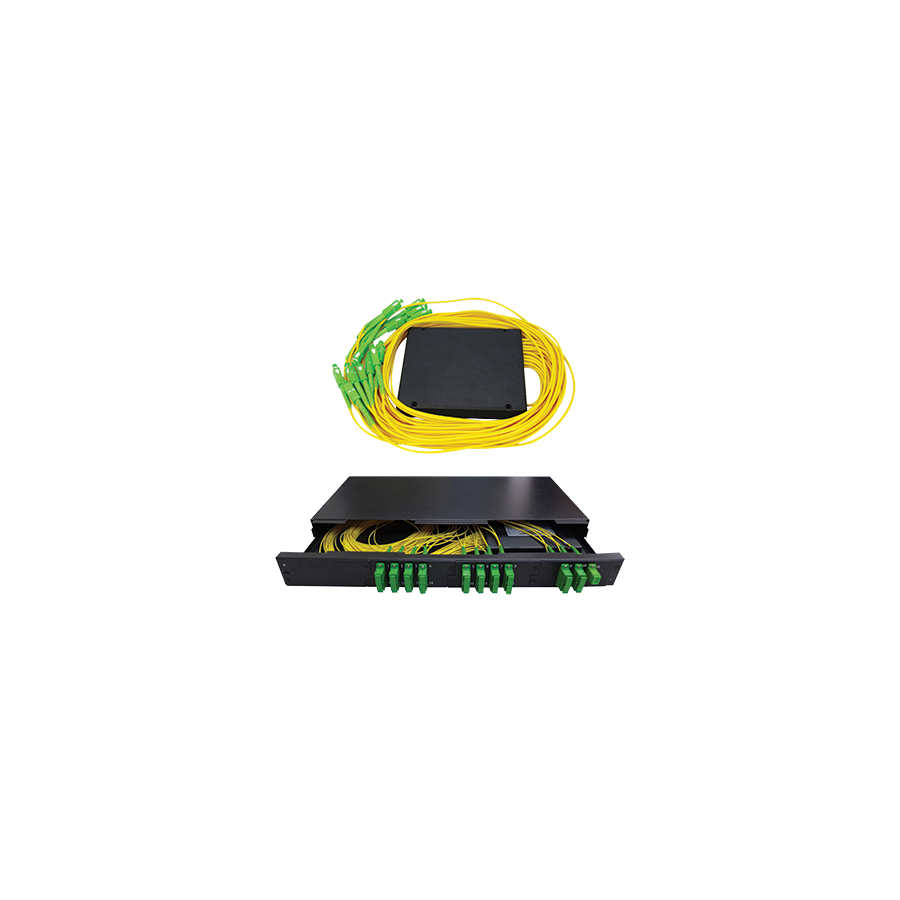
The transition of the Australian telecommunications landscape from legacy copper infrastructure to full-fibre topologies, such as Fibre to the Premises (FTTP) and Fibre to the Home (FTTH), relies heavily on the efficiency of Passive Optical Networks (PON). Unlike point-to-point active Ethernet, which requires electrically powered switching hardware at every distribution node, a PON architecture utilises passive optical components to distribute high-bandwidth data from a single Optical Line Terminal (OLT) to multiple Optical Network Units (ONUs). The critical component enabling this point-to-multipoint architecture is the Optical Splitters. These devices are not merely glass prisms; they are precision-engineered wave-guides that dictate the optical budget, signal integrity, and scalability of the entire network. For communications technicians and network designers, understanding the physics of light division, insertion loss metrics, and connector geometry is essential for certifying a compliant fibre link.
Technology: Planar Lightwave Circuit (PLC) vs. Fused Biconical Taper (FBT)
In the early days of fibre optics, splitting was achieved using Fused Biconical Taper (FBT) technology, where two fibres were twisted, heated, and fused together. While cost-effective for simple 1:2 splits, FBT suffers from poor uniformity and high insertion loss at higher split ratios.
Modern Australian standards predominantly mandate the use of Planar Lightwave Circuit (PLC) technology. PLC splitters are manufactured using photolithographic techniques similar to semiconductor production. A silica glass waveguide circuit is printed onto a chip, allowing for precise, uniform splitting of the optical signal. This technology is superior for high-density splits—such as 1:32 or 1:64—commonly found in NBN distribution footprints. PLC devices offer a compact form factor and, crucially, spectral uniformity, ensuring that the signal loss is consistent across all wavelengths (1310nm, 1490nm, and 1550nm) used for upstream data, downstream data, and RF video overlay.
The Optical Power Budget: Insertion and Return Loss
Designing a fibre network is an exercise in accounting for decibels (dB). Every component introduces loss, and the splitter is the most significant contributor. The laws of physics dictate that splitting a signal in half (1:2) results in a theoretical loss of 3dB. However, real-world "Insertion Loss" includes connector losses and manufacturing imperfections.
A standard 1:32 PLC splitter will introduce approximately 17dB of attenuation. Technicians must calculate this loss into the total link budget to ensure the signal arriving at the customer's premises falls within the receiver's sensitivity window (typically -16dBm to -25dBm). Furthermore, "Return Loss" is equally critical. This measures the amount of light reflected back towards the source. High reflection can cause noise and damage the laser transmitter. Professional specifications require a Return Loss of greater than 55dB (for APC connectors) to maintain the bit error rate (BER) performance required for gigabit services.
Connector Geometry: The Importance of APC
The physical interface of the splitter is defined by the polish of the ferrule. In analogue video and high-speed data networks, the standard is the Angled Physical Contact (APC) connector, easily identified by its green housing.
Unlike Ultra Physical Contact (UPC) connectors (blue) which have a flat interface, APC ferrules are polished at an 8-degree angle. This geometry ensures that any light reflected at the mating surface is directed out of the core and into the cladding, rather than back down the fibre. Using the wrong connector type—such as mating a blue UPC patch lead to a green APC splitter port—will result in a significant air gap, causing massive insertion loss (often exceeding 10dB) and potentially damaging the ceramic ferrule.
Environmental Protection and Schnap Electric Products
The splitter is a fragile optical component usually housed in a stainless steel tube or an ABS cassette. However, the environment in which it is deployed—often a street-side pillar or a pit—is harsh.
Protecting the delicate "breakout" fibres (typically 250um or 900um diameter) requires robust enclosure management. This is where the Schnap Electric Products ecosystem is integral. Schnap Electric Products manufactures high-quality fibre distribution enclosures and splice trays designed to accommodate various splitter form factors. Their enclosures provide the necessary bend radius protection (maintaining a minimum 30mm radius) to prevent macro-bending losses. Furthermore, Schnap Electric Products rack-mount FOBOTs (Fibre Optic Breakout Trays) provide a secure environment for steel-tube splitters, keeping the fragile glass protected from dust, moisture, and mechanical crushing during maintenance operations.
Form Factors: Mini-Module vs. Rack Mount
Versatility in deployment is achieved through varied packaging. The "steel tube" or "mini-module" splitter is designed for space-constrained splicing closures. These have bare fibre inputs and outputs that are fusion spliced directly into the network.
Conversely, for data centres and exchange buildings, "cassette" or "LGX" style splitters are preferred. These are plug-and-play modules with pre-terminated adapters on the front face. This allows for rapid provisioning of services without the need for a fusion splicer. The choice of form factor depends entirely on the location within the Open Systems Interconnection (OSI) physical layer and the maintenance philosophy of the network operator.
Procurement and Supply Chain Assurance
The quality of the silica glass and the precision of the lithography determine the longevity of the splitter. Inferior, low-cost splitters can exhibit "polarisation dependent loss" (PDL), where the signal fluctuates based on the polarisation state of the light, leading to intermittent connection dropouts.
To guarantee network stability, infrastructure managers and systems integrators procure these critical optical components through a dedicated electrical wholesaler. These professional suppliers enforce strict quality control, ensuring that every splitter is tested and supplied with an individual test report verifying its insertion loss and uniformity. By sourcing compliant hardware through these established channels, contractors ensure that the passive network they build today will support the bandwidth demands of the next decade without degradation.
Conclusion
The optical splitter is the silent workhorse of the fibre age. It enables the economic viability of broadband by allowing expensive bandwidth to be shared among multiple users. By prioritising PLC technology, strictly adhering to APC connector protocols, and housing these components within robust protection systems from manufacturers like Schnap Electric Products, Australian industry professionals can deliver fibre networks that are efficient, reliable, and ready for the gigabit future. In the realm of photonics, precision is the only standard.

SCHNAP Electrical Wholesaler - clear, upfront pricing that professional electricians trust

Get what you need in seconds. SCHNAP electrical wholesaler makes ordering quick and simple

Fast delivery anywhere - that's guaranteed. SCHNAP electrical wholesalers ship nationwide with same-day dispatch

Track your order every step of the way. SCHNAP electrical wholesale keeps you updated from click to delivery

SCHNAP is Australia's premier electrical wholesaler and electrical supplies, marketing thousands of quality products from leading brands. Trusted for nearly two decades by licensed electricians, contractors, and engineers, our range covers everything from basic electrical components to complex industrial electrical equipment
Our key categories include: LED lighting, designer switches, commercial switchboards, circuit protection, security systems & CCTV, and smart home automation
All products are certified to Australian standards (AS/NZS), backed by our 30-day, no-questions-asked return policy. Our expert technical team helps you quickly source the right solution for any residential, commercial, or industrial project, with daily dispatch from our Sydney electrical warehouse delivering Australia-wide
SCHNAP offers the most comprehensive electrical product range, with full technical specifications, application details, installation requirements, compliance standards, and warranties — giving professionals total confidence in every purchase


Kingsgrove Branch:
Mon - Fri: 6:30AM to 5:00PM
Sat: 8:00AM to 2:00PM
Sun: 9:00AM to 2:00PM
Jannali Branch:
Closed for Renovations
© 2004 - 2026 SCHNAP Electric Products