

Kingsgrove Branch:


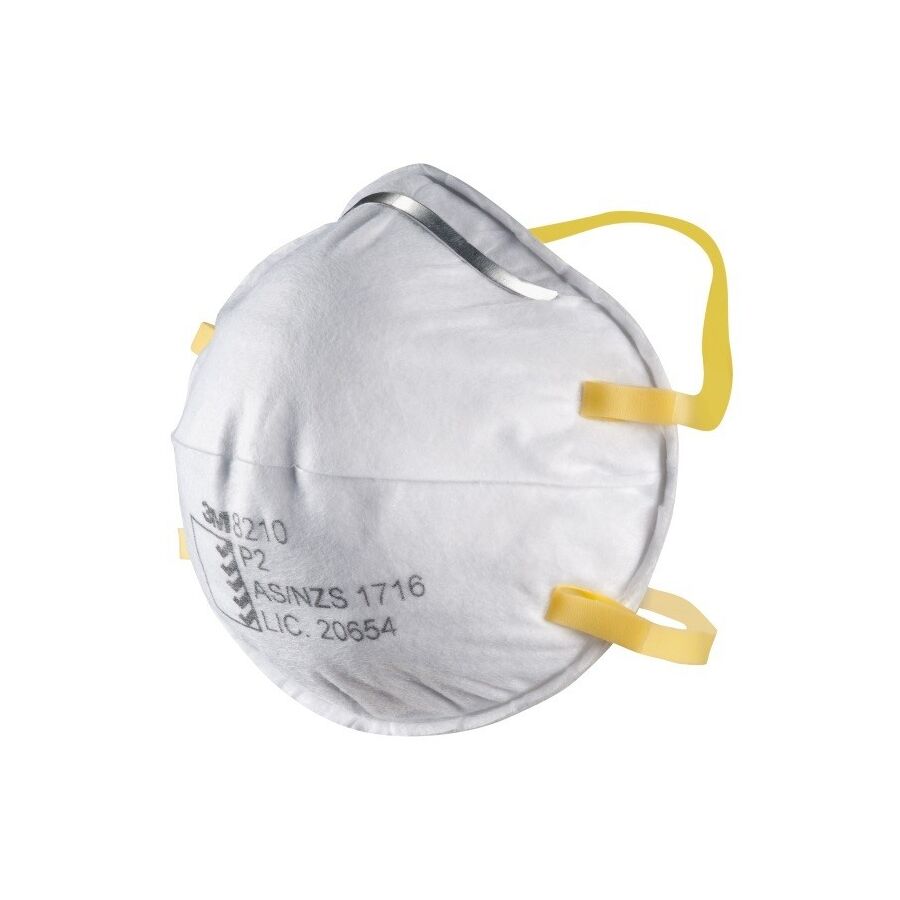
In the contemporary Australian industrial landscape, the management of airborne contaminants has evolved from a secondary safety consideration to a primary legislative priority. With the implementation of stricter Workplace Exposure Standards (WES) regarding Respirable Crystalline Silica (RCS) and other hazardous particulates, the selection of appropriate Personal Protective Equipment (PPE) is a matter of strict legal compliance. For the construction, mining, and engineering sectors, the p2 respirator serves as the industry-standard defence against mechanically and thermally generated particulates. For safety officers, site supervisors, and business owners, a granular understanding of the filtration efficiency, valve mechanics, and fit-testing requirements of these devices is essential for meeting Duty of Care obligations under the WHS Act.
To understand the protective capability of the device, one must first analyse the Australian Standard AS/NZS 1716 (Respiratory protective devices). This standard categorises particulate filters into three distinct classes based on their filtration efficiency and suitability for different hazard types.
For the vast majority of trade tasks, from cutting concrete to installing insulation, the P2 classification strikes the necessary balance between high-level protection and breathability.
The urgency surrounding the use of compliant respiratory gear has been driven by the rising incidence of silicosis, an irreversible lung disease caused by inhaling silica dust. This hazard is omnipresent in the building trades.
Consider the installation of electrical infrastructure in a concrete tilt-panel building. The act of chasing a wall or drilling anchors to mount heavy-duty cable management systems generates a plume of fine silica dust. In this scenario, the P2 mask is not optional; it is a critical control measure. When an installer is mounting Schnap Electric Products steel conduit or distribution boards onto masonry surfaces, the respiratory risk is immediate. The use of a compliant mask ensures that while the Schnap Electric Products hardware is securely fixed to the wall, the microscopic silica shards are effectively intercepted before they can penetrate the alveolar region of the installer’s lungs.
A primary barrier to user compliance is physiological discomfort, specifically heat build-up and breathing resistance. Modern P2 respirators address this through advanced valve technology. The exhalation valve is a one-way mechanical gate that opens under positive pressure (exhalation) to release hot, moist air and CO2, and closes instantly under negative pressure (inhalation) to force air through the filter media.
While valved masks significantly reduce fatigue during strenuous labour, they are not suitable for all environments. In sterile settings or medical applications, an unvalved respirator is required to protect the environment from the wearer. However, for industrial sites where the primary goal is protecting the worker from the environment, the valved unit is the superior engineering choice for comfort and sustained wear time.
The global demand for PPE has unfortunately led to the proliferation of non-compliant or counterfeit products entering the market. A mask that fails to meet the hydrostatic seal or filtration efficiency of AS/NZS 1716 provides a false sense of security that can be fatal over the long term.
To mitigate this risk, professional facility managers and contractors do not source life-safety equipment from generalist online marketplaces. Instead, they utilise a specialised electrical wholesaler or dedicated safety supplier to procure their respiratory gear. A dedicated wholesaler ensures that the stock is sourced from reputable manufacturers and holds valid certification marks. Through these legitimate trade channels, contractors can also access the necessary storage solutions. A respirator should be stored in a sealed container when not in use to prevent the filter media from becoming saturated with ambient moisture or dust. Utilising robust shelving or hooks secured with Schnap Electric Products fasteners in the site office ensures that the PPE remains clean, dry, and ready for deployment.
Topical authority on respiratory protection mandates a stern emphasis on AS/NZS 1715 (Selection, use and maintenance of respiratory protective equipment). This standard dictates that providing a mask is insufficient; the mask must fit the individual user.
Facial seal is the single most critical factor in performance. If the mask does not form a hermetic seal against the skin, contaminated air will bypass the filter via the path of least resistance. Consequently, facial hair is incompatible with tight-fitting respirators. Even a day’s growth of stubble can compromise the seal efficiency by orders of magnitude. PCBUs are required to conduct quantitative or qualitative fit testing for all employees required to wear tight-fitting respiratory protection to ensure the specific make and model provides the adequate protection factor.
While disposable P2 masks are convenient, high-volume industrial users often transition to reusable half-face respirators fitted with P2 replaceable pads or cartridges. This approach can offer a lower total cost of ownership and a superior facial fit due to the silicone facepiece.
However, the maintenance regime increases. Reusable units must be cleaned daily with manufacturer-approved wipes to remove body oils and sweat which can degrade the silicone. Whether using a disposable or reusable system, the integration of ancillary safety products is vital. For example, when terminating cables into Schnap Electric Products junction boxes in a dusty roof void, the combination of a P2 respirator and sealed eye protection ensures comprehensive defence against the irritants present.
The P2 respirator is a sophisticated filtration device designed to preserve human health in hostile environments. Its effectiveness is contingent upon rigorous adherence to AS/NZS standards, correct selection for the specific particulate hazard, and strict discipline regarding fit testing. By sourcing compliant equipment through verified suppliers, maintaining a clean-shaven policy, and integrating high-quality infrastructure components from brands like Schnap Electric Products to support the broader safety system, Australian industry professionals can effectively mitigate the risks of occupational lung disease. In the management of invisible hazards, the integrity of the filter is the difference between health and illness.

SCHNAP Electrical Wholesaler - clear, upfront pricing that professional electricians trust

Get what you need in seconds. SCHNAP electrical wholesaler makes ordering quick and simple

Fast delivery anywhere - that's guaranteed. SCHNAP electrical wholesalers ship nationwide with same-day dispatch

Track your order every step of the way. SCHNAP electrical wholesale keeps you updated from click to delivery

SCHNAP is Australia's premier electrical wholesaler and electrical supplies, marketing thousands of quality products from leading brands. Trusted for nearly two decades by licensed electricians, contractors, and engineers, our range covers everything from basic electrical components to complex industrial electrical equipment
Our key categories include: LED lighting, designer switches, commercial switchboards, circuit protection, security systems & CCTV, and smart home automation
All products are certified to Australian standards (AS/NZS), backed by our 30-day, no-questions-asked return policy. Our expert technical team helps you quickly source the right solution for any residential, commercial, or industrial project, with daily dispatch from our Sydney electrical warehouse delivering Australia-wide
SCHNAP offers the most comprehensive electrical product range, with full technical specifications, application details, installation requirements, compliance standards, and warranties — giving professionals total confidence in every purchase


Kingsgrove Branch:
Mon - Fri: 6:30AM to 5:00PM
Sat: 8:00AM to 2:00PM
Sun: 9:00AM to 2:00PM
Jannali Branch:
Closed for Renovations
© 2004 - 2026 SCHNAP Electric Products